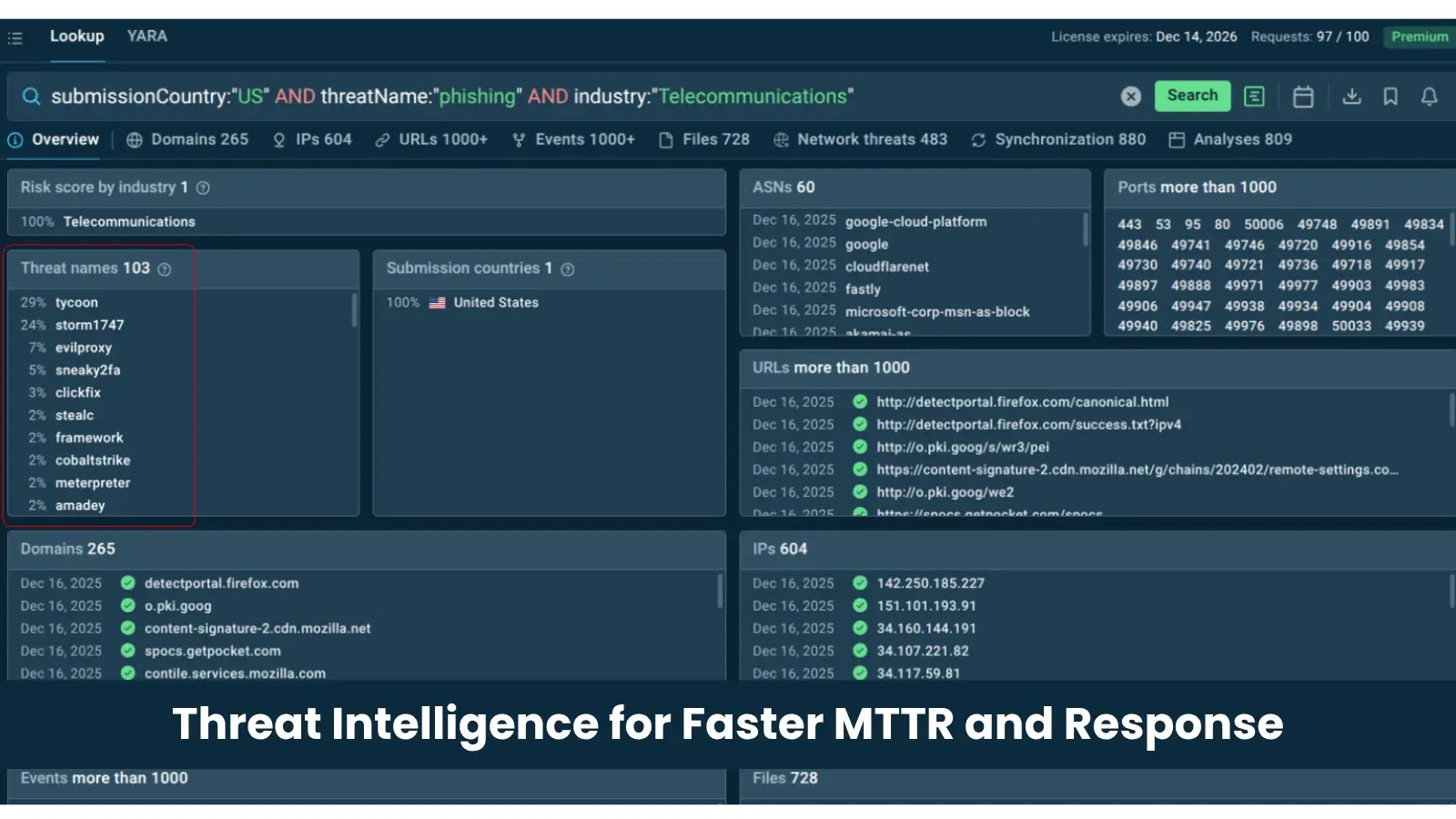
Reducing Mean Time to Respond (MTTR) is one of the most persistent challenges for modern SOC teams.
Despite investments in SIEM, EDR, and automation, many organizations still struggle to investigate alerts quickly and make confident decisions under pressure.
The issue is not a lack of tools, it is the growing gap between alert volume and investigation capacity.
As threat volume increases, SOC efficiency becomes the limiting factor. And that is where threat intelligence begins to play a decisive role.
Problem: SOCs Are Overloaded with Alerts and Slow Investigations
Modern SOCs are expected to process thousands of alerts daily, while dealing with increasingly sophisticated malware and phishing attacks.
In practice, this leads to a structural bottleneck.
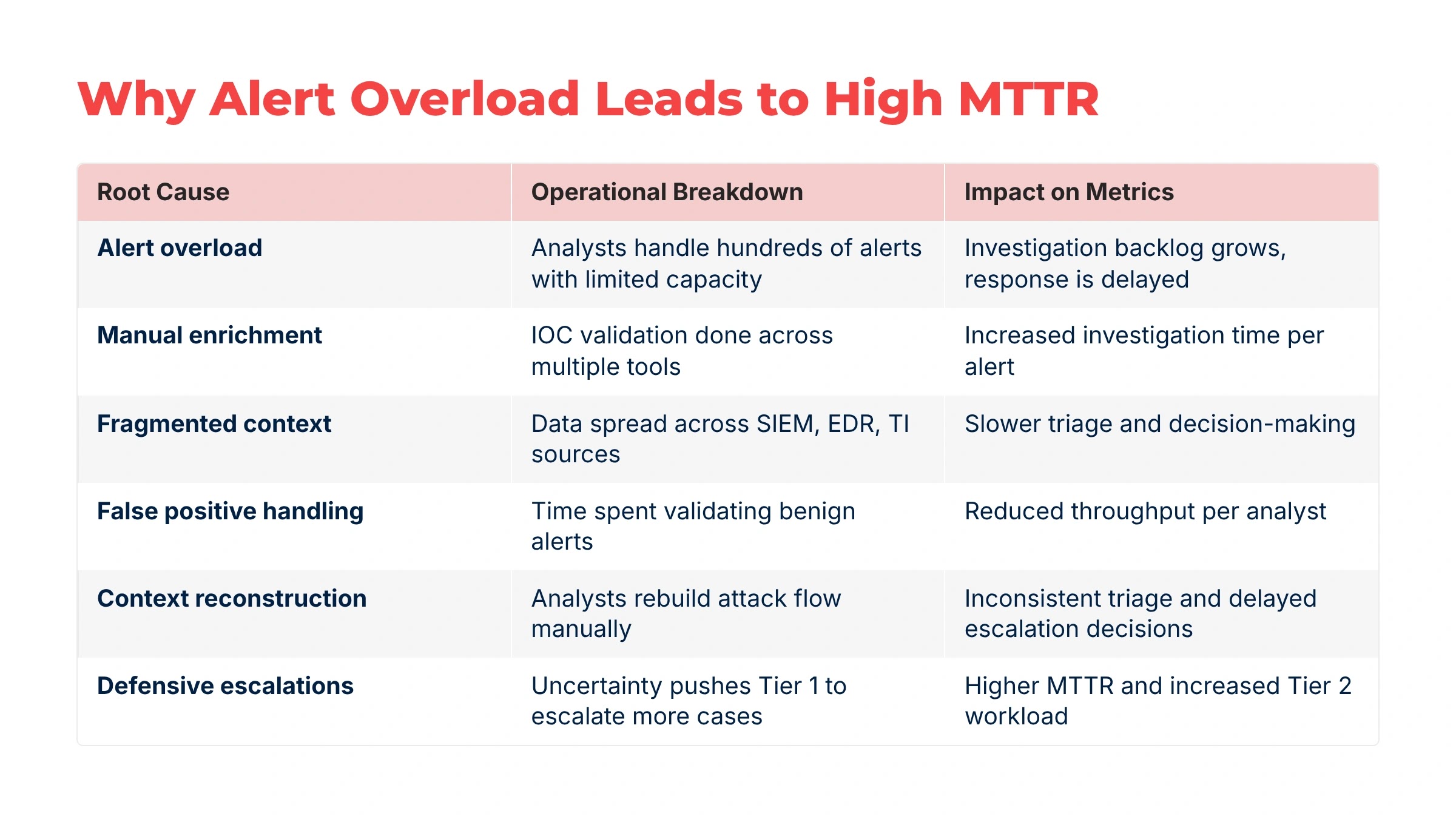
Analysts spend a significant portion of their time on manual IOC enrichment, cross-tool data correlation, validation of false positives, and reconstructing partial attack context.
Instead of making decisions, they are forced to assemble the information required to make those decisions.
This has measurable consequences:
- Longer investigation cycles per alert
- Increased backlog during peak attack periods
- Higher Tier 1-to-Tier 2 escalation rates
- Inconsistent triage outcomes
Even high-performing teams hit a ceiling, because their workflow depends on manual context-building.
Slow SOC Means Higher Business Risk and Cost
Operational inefficiency in the SOC directly translates into business risk.
When investigations take longer:
- Threats remain active in the environment for longer (increased dwell time)
- Containment is delayed, increasing potential damage
- Phishing and credential abuse incidents escalate more frequently
- Incident response costs grow due to prolonged investigations
At the same time, alert overload leads to analyst fatigue and missed signals, increasing the probability of false negatives.
As a result, organizations face a higher breach likelihood, longer service disruption windows, and increased financial and reputational impact.
This aligns with a broader industry reality: incidents are often not caused by missing tools, but by delayed detection and slow decision-making.
Solution: Threat Intelligence as an Operational Layer
The key to reducing MTTR is not adding more alerts or more tools. It is eliminating the need to reconstruct context manually.
Threat intelligence, when operationalized correctly, becomes a layer that provides:
- Pre-analyzed attack data
- Behavioral context linked to indicators
- Relationships between infrastructure, malware, and campaigns
- Continuously updated intelligence from live threats
Instead of starting from raw data, analysts start from already contextualized information. This fundamentally changes the workflow.
Rather than asking:
- “What is this indicator?”
Analysts can immediately answer:
- “What does this threat do, and how relevant is it to us?”
Embedding this intelligence layer across SOC workflows leads to immediate improvements across:
- Monitoring (earlier detection)
- Triage (faster validation)
- Incident response (quicker containment)
- Threat hunting (more accurate hypotheses)
Threat Intelligence Built on Live Attack Data from 15K Organizations
Over 15,000 organizations and more than 600,000 security professionals continuously analyze the latest malware and phishing inside the sandbox.
This creates a constantly updated dataset of real-world attack activity, rather than static or delayed intelligence.
Because the data originates from live interactive analysis, it includes:
- Full behavioral context
- Execution chains
- Infrastructure relationships
- Attacker techniques (TTPs)
This allows SOC teams to work with intelligence that reflects what attackers are doing now, not what they did weeks ago.
Expanding Threat Coverage and Boosting Early Detection of Emerging Attacks
One of the primary challenges in SOC operations is incomplete visibility into emerging threats. Traditional feeds often contain outdated or duplicated indicators, limiting their usefulness.
- Real-time, sandbox-validated indicators
- Infrastructure observed in active attacks
- High-confidence malicious data with minimal noise
With up to 99% unique indicators and near real-time delivery, these feeds significantly expand threat coverage.
Operationally, this results in:
- Higher detection rate of phishing campaigns and malware infrastructure
- Reduced blind spots in monitoring
- Improved Mean Time to Detect (MTTD)
By moving detection closer to the start of the attack lifecycle, SOC teams reduce the likelihood of threats progressing into incidents.
Increasing Tier 1 Alert Handling Capacity and Spotting Incidents in Advance
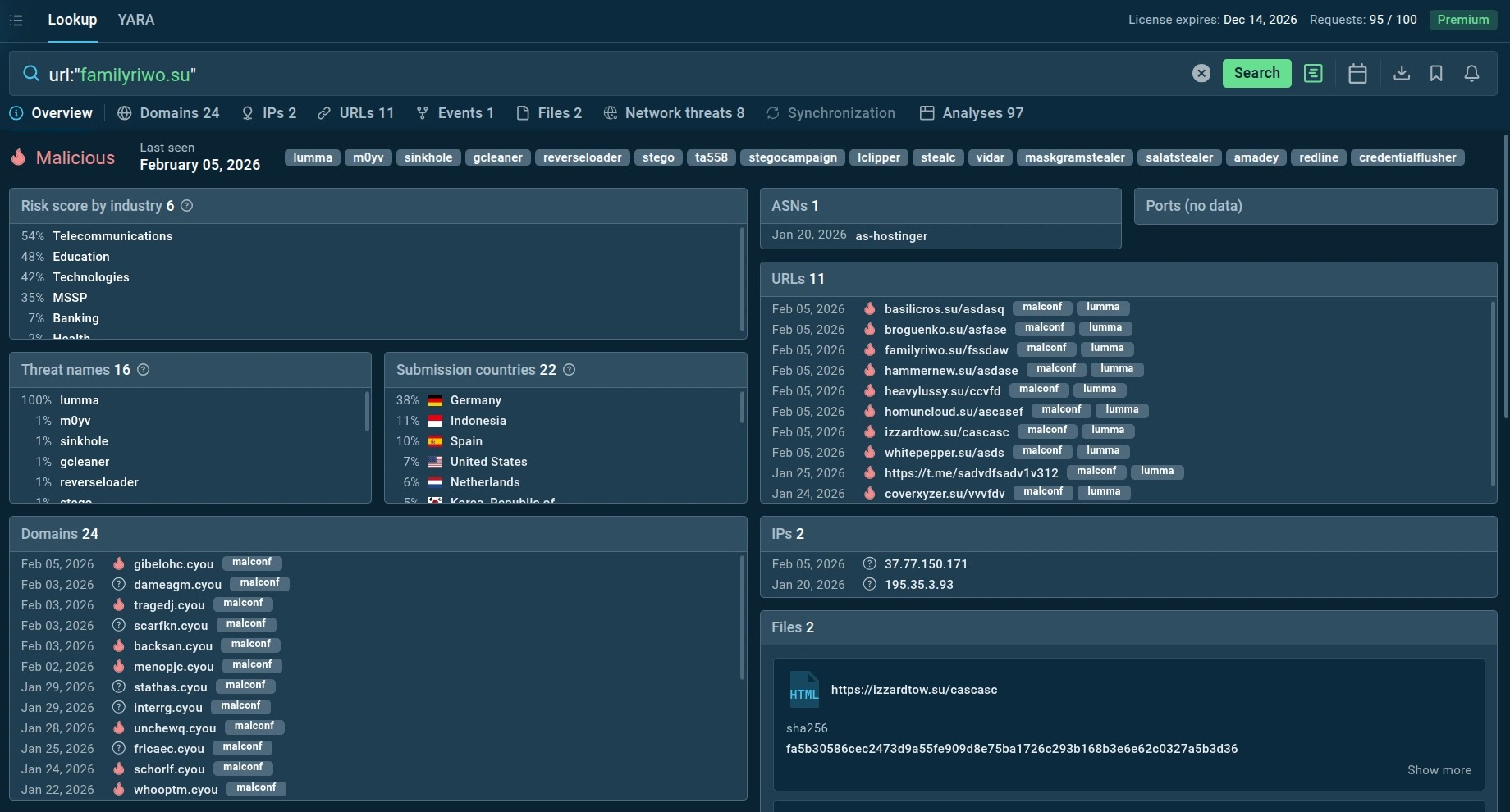
Instead of manually enriching indicators across multiple tools, analysts receive:
- Instant context for IPs, domains, hashes, and URLs
- Links to related attacks and campaigns
- Historical and behavioral insights
This reduces investigation time per alert and enables teams to handle more cases without increasing headcount.
In practice, organizations report:
- Up to 20% lower Tier 1 workload
- Up to 30% fewer escalations to Tier 2
- Significantly faster triage cycles
The result is a measurable increase in alert handling capacity and overall SOC throughput.
Accelerating Response Speed to Stop Breaches Before Impact
Speed in incident response depends on how quickly teams can understand the scope and nature of a threat.
TI Lookup enhances this by providing behavioral data from sandbox executions, mapped attacker techniques (TTPs), and infrastructure relationships across incidents.
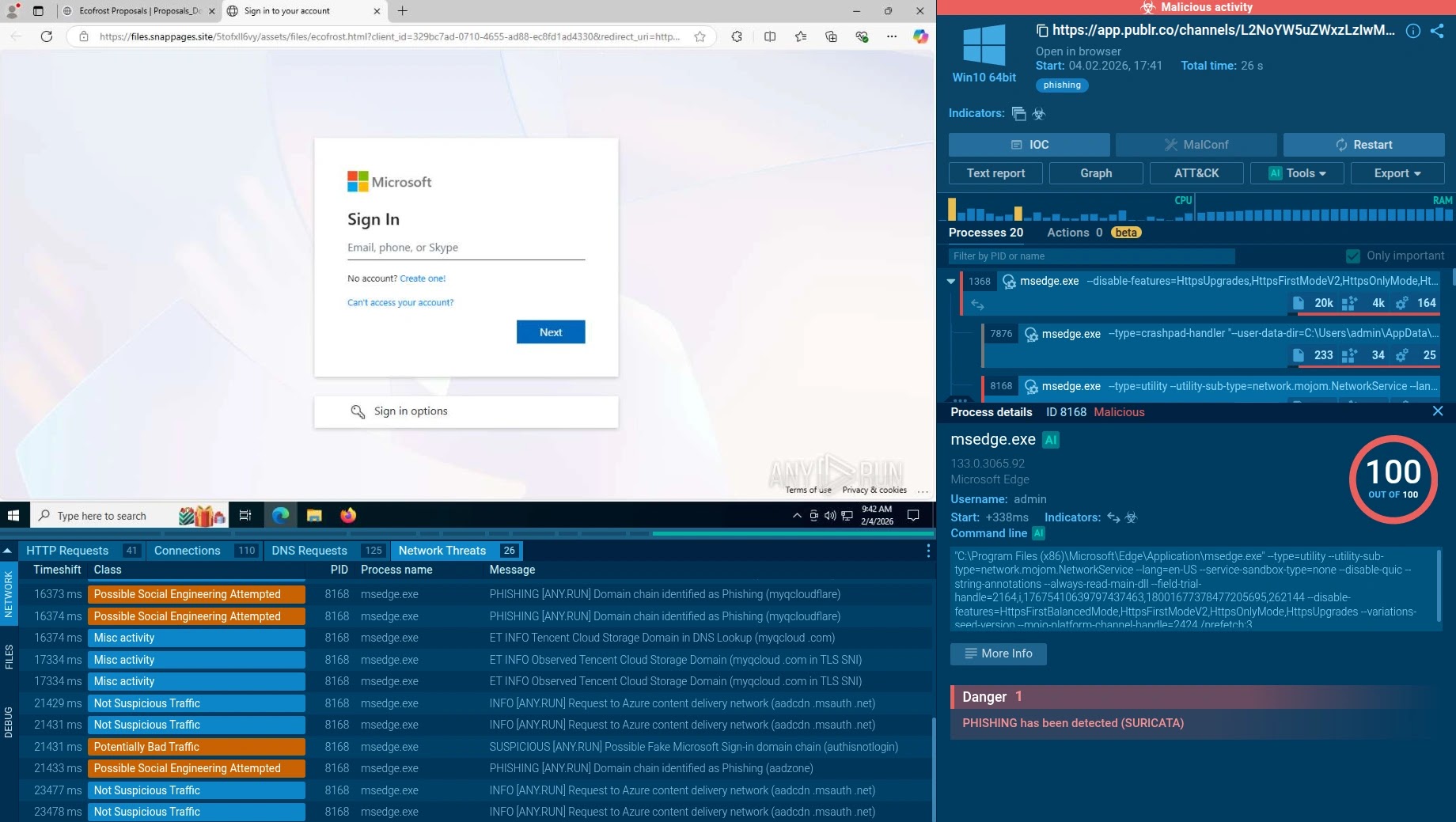
This allows responders to:
- Identify root cause faster
- Understand attack progression
- Apply more accurate containment actions
Instead of reacting to isolated indicators, teams respond to fully contextualized threats.
This leads to faster Mean Time to Respond (MTTR), reduced dwell time, and fewer repeated incidents.
According to performance benchmarks, SOCs using behavioral intelligence achieve up to 21 minutes faster response times.
Strengthening Proactive Defense with TI Reports
Beyond reactive workflows, threat intelligence also enables proactive security.
This allows SOC teams to:
- Validate existing detection logic
- Identify blind spots before they are exploited
- Prioritize threat hunting based on real-world activity
Instead of relying on generic frameworks, teams operate based on current, relevant threat scenarios.
Conclusion
Reducing MTTR is not just a matter of speed, it is a matter of starting with the right information.
SOC teams that rely on manual enrichment and fragmented intelligence will always be limited by investigation time.
Those that adopt threat intelligence as an operational layer gain faster triage, higher alert processing capacity, quicker and more accurate response, and improved detection coverage.
In other words, they shift from reactive investigation to efficient, intelligence-driven operations.