Automated traffic is no longer on the fringes of consideration. From e-commerce to financial services, businesses are suffering every day from the loss of revenue, user trust and data integrity due to malicious bots. These threats are not theoretical but very concrete and ever-evolving, ranging from fake accounts, credential stuffing, content scraping, to inventory manipulation.
In response, today’s platforms are adopting bot detection solutions: specialized tools designed to detect, analyze and repel malicious traffic before it can cause harm. This article explains what these tools are, why they are becoming imperative and how to choose the right tool based on your real risk profile.
What are Bot Detection Tools?
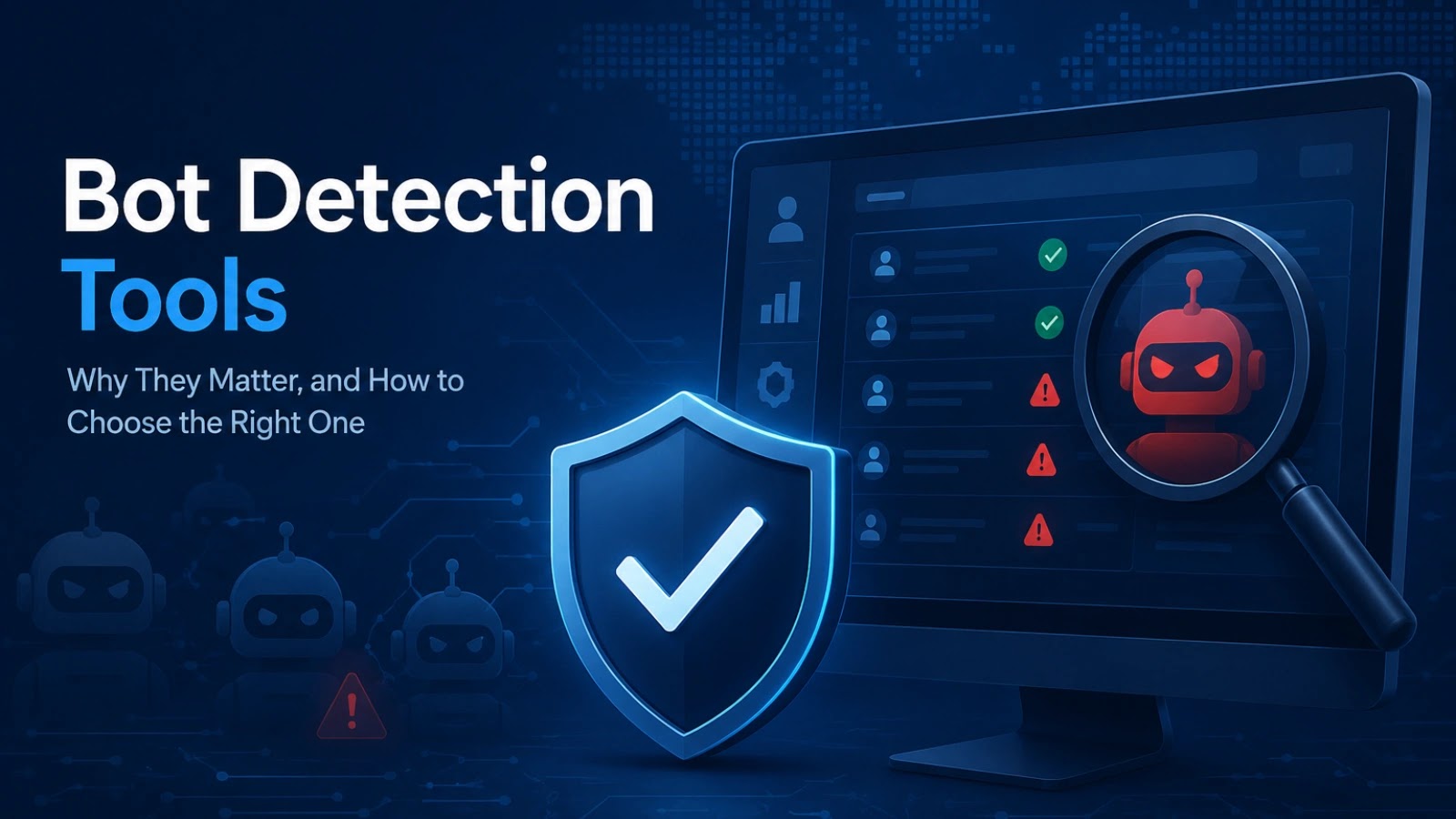
Bot detection tools are software programs that help identify traffic as automated (bot) or real human traffic. They lie at the crossroads between security and user experience, as they’re able to stop malicious bots from wreaking havoc while ensuring that legitimate users are not blocked.
These solutions operate at the security and user experience layers, stopping malicious bots from committing fraud, scraping data, or disrupting services, all without preventing real users from accessing sites or apps. They have a broad application in industries such as e-commerce, financial service, gaming and digital platform to defend system, maintain performance and enhance data quality.
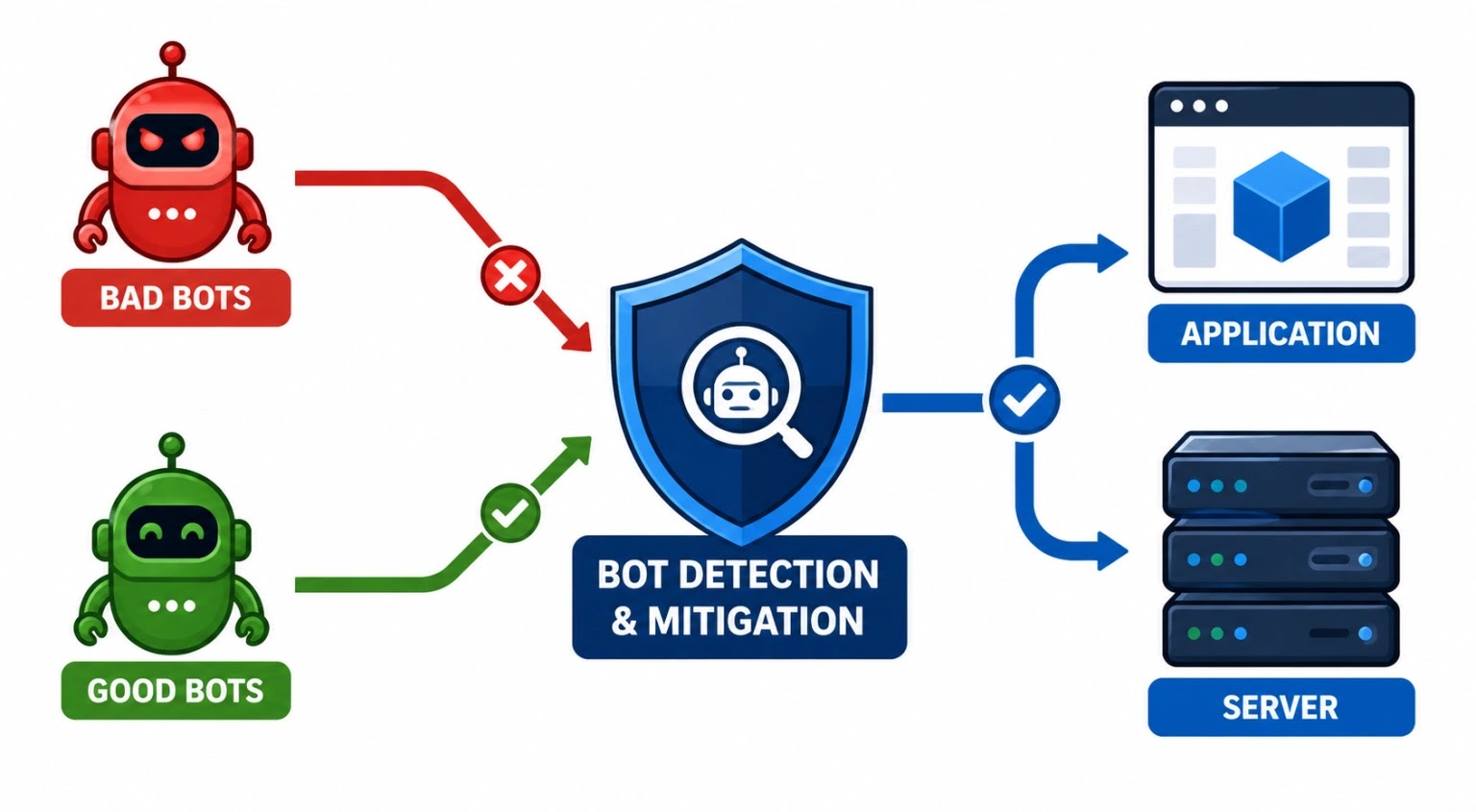
Modern solutions integrate several layers of detection to create a solid profile of each of the visitors. These layers are usually comprised of:
- Behavior analysis: Tracking users’ movement, clicks, scroll and interaction with a page. Bots generally behave in a predictable, unnatural manner that is different from that of humans.
- Hardware: Assessing devices, screen size and the installed plugins for the automation environment.
- IP reputation: The ability to look for IP addresses that are on the list of known threats, known data centers and known proxy networks.
- Browser fingerprint: Creating an identifier based on the characteristics of the browser to identify headless browsers and emulators.
- Analysis of traffic patterns: Detecting unusual request levels, timings and frequencies in the traffic that could signal automated or scripted requests.
- Risk scoring: Each session is given a confidence level to be used to apply the correct level of friction to that session.
- Machine learning models: Training continuously to new attack patterns for increased detection accuracy over time.
- CAPTCHA verification: Challenging (image selection, slider puzzles etc.) to ensure that the interaction is made by a man at high risk touchpoints.
Before moving on, it’s important to note that CAPTCHA is actually just one of the security measures in a multi-layered risk identification process and not a standalone bot detection measure.
The traditional CAPTCHAs are deceptive because they are easily accessible to automated systems. Good bot detection tools don’t view CAPTCHA as an all-or-nothing barrier but rather as a carefully selected point in the user journey to stop bots.
Why Bot Detection Tools Matter More Than Ever?
It has been quite some time since the bot scene has evolved. The automated attack has evolved from simple scripts to complex, distributed attacks that can be difficult to defend against and are able to mimic human activity to scale at extreme levels.
The evolution of Bot threats
The early bots could be easily identified through rate limiting or IP blocking. Today, sophisticated bots are capable of rotating IP addresses and randomizing the requests they make, of getting their requests through residential proxy networks and solving simple CAPTCHAs by leveraging third party services.
Some even run real JavaScript code and render out pages such as a real browser, and you can’t tell at a glance.
The monetary impact is large. When it comes to account fraud, checkout abuse, and data scraping, it all comes down to dollars and sense: money lost, infrastructure costs up, compliance risk up. Industries such as fintech, retail and online gaming are the prime targets for hackers in particular because of the payout where it’s concerned.
Problems of the traditional bot protection.
What is no longer enough are “legacy” solutions such as static CAPTCHAs, simple rate limits or blocked IP ranges. They have three major shortcomings:
- High false positive rates: When blocking or challenging legitimate users, it will cause friction thus affecting conversions and user experience.
- Lack of flexibility: Static rules are not able to keep up with ever-changing bot strategies.
- Poor visibility: Single layer of defense is unable to detect multi-vector attacks that involve a mix of normal and abnormal behavior.
That’s why businesses are turning to layered bot detection solutions that are intelligent and rule-less.
Common Business Scenarios That Need Bot Detection

Bot risks are not even distributed throughout a business. There are various types of threats that can affect different workflows, and it’s important to know what kind is affecting you first to be able to take appropriate action.
Below are six scenarios that are high impact and where the detection of bots is important:
1. User Registration Flows
Registration bots are frequently used to register lots of users in a short amount of time, for spamming, referral fraud, account testing, and other nefarious reasons. This can lead to user metrics being inflated, SMS and email verification costs, and downstream fraud risks.
Bot detection can be used to detect suspicious sign-up and risk scoring can be used to stop fake accounts being added to the database.
2. Login and Authentication
Another key area that is often a hotspot for credential stuffing attacks are login portals, where bots are used to try out a combination of usernames and passwords to various services in an automated fashion. Successful attacks result in account takeover, data exposure, financial losses and regulatory risks.
Bot detection helps to eliminate these risks by detecting unusual login attempts and activating adaptive authentication actions to prevent automated logins, with minimal friction for the legitimate user.
4. E-Commerce Flash Sales & Promotions
Promotional campaigns and flash sales are common targets of bots, which buy up products quickly, or misuse discount codes before real customers can redeem them. This can lead to lower product availability, loss of customer confidence and loss of revenues to resellers.
Bot detection can be used to safeguard these events by detecting automated purchasing activity and implementing verification at checkout and payment gates.
5. SMS Verification Services for Social Media
SMS verification systems are frequently misused by bots to overload limits, raise messaging fees, or find out valid phone numbers.Bots can be used to spam SMS verification systems, causing overloading of limits, charges, or to identify valid phone numbers.
This can result in increased operating costs, lost service and SMS pumping fraud. By analyzing user activity, bot detection can lessen these risks by preventing the processing of OTPs and by blocking bots from sending unnecessary messages.
6. Content Platforms and Community Forums
Spammers typically post large amounts of spam or fake reviews/content on content platforms to boost engagement and help create a false image. This can lead to lower quality content, loss of user trust, and a negative impact on platform reputation.
Bot detection can be used to ensure content integrity by looking at user behavior when posting and when a user submits a review for publication; suspicious automated activity can be filtered out before the user’s content is published.
7. Data Scraping and Competitive Intelligence Theft
Items like pricing data, product information, and proprietary content are often obtained via high-frequency automated requests, which is known as scraping. This can lead to higher infrastructure expenses, reduced competitive edge and compromised business information.
Bot detection can mitigate these risks by detecting automated browsing patterns and limit access by bots without blocking access for the legitimate users.
Key Features to Look for in Bot Detection Tools
Not every bot detection solution is created equal. When considering choices, businesses should not only consider what is being marketed, but how well it can be done in the following areas:
| Feature | What It Means in Practice |
| Behavioral Analysis | Detection of non-human user interactions in real-time without any visible challenges. |
| Adaptive Challenge Types | Multiple verification formats (slider, image selection, invisible) compatible with risk level without unnecessary hassle. |
| Cross-Platform Compatibility | Protection that works everywhere, such as web browsers, mobile applications and light applications such as mini programs. |
| Real-Time Risk Scoring | A dynamic score is calculated for each request, in order to render proportional decisions (block/allow) rather than binary decisions. |
| AI Model Updating | The system automatically adjusts to new attack patterns via regular updates of detection models without the need for manual rule updates. |
| Transparent Analytics | Performance dashboards, which help security teams track traffic breakdowns, challenge pass rates and trends of anomalies, to track performance and fine-tune their strategy. |
| Integrate with APIs and SDKs | Lightweight integration paths with less engineering effort and time to deployment. |
| Low FPR – a low false positive rate | A high accuracy rate to differentiate bots from real users, and avoid blocking or challenging legitimate customers. |
How To Evaluate Bot Detection Tools by Risk Level
The error people make when creating a bot protection plan is that they assume all touchpoints are equal. In reality, your platform has various risk levels and this should match the right tools configuration. Too much protection of low risk flows causes friction, too little protection of high risk flows causes exposure.
The following framework helps to think about protection requirement by risk tier:
| Risk Level | Example Scenarios | Recommended Approach |
| Low Risk | Standard, “public” HTML pages with information content | Monitoring behavior without any intervention needed; no action taken until an anomaly is found. Minimal user friction. |
| Medium Risk | Registration, submission of comments/reviews and signing up for newsletters. | Use conditional CAPTCHA challenge for sessions that are over the anomaly threshold. Challenges are not meant to be observed by human users, except in rare cases. |
| High Risk | Add to cart, log in, payment, OTP trigger, flash sale checkout, changing account settings | Active behavioural verification at each session. If confidence threshold is not met, then CAPTCHA challenge is given for any session. Multi-signal analysis (IP, device and behaviour). |
Businesses ought to diagram their essential operations with this framework in mind prior to the vendor assessment process. The aim is not to choose the tool with the most features – it’s to find a tool that provides an appropriate level of granularity and doesn’t interfere too much with legitimate user journeys to cover your actual risk points.
An important evaluation criterion for any vendor is how the system responds to “high-risk” touchpoints and what happens to legitimate users. The response indicates if the product is focused on security theater or true and intelligent bot detection.
Where EngageLab CAPTCHA Fits in Bot Detection Strategy?
If your business requires a modern verification layer with behavior-based verification, then EngageLab CAPTCHA may be one of the components you should consider for your complete bot protection solution.
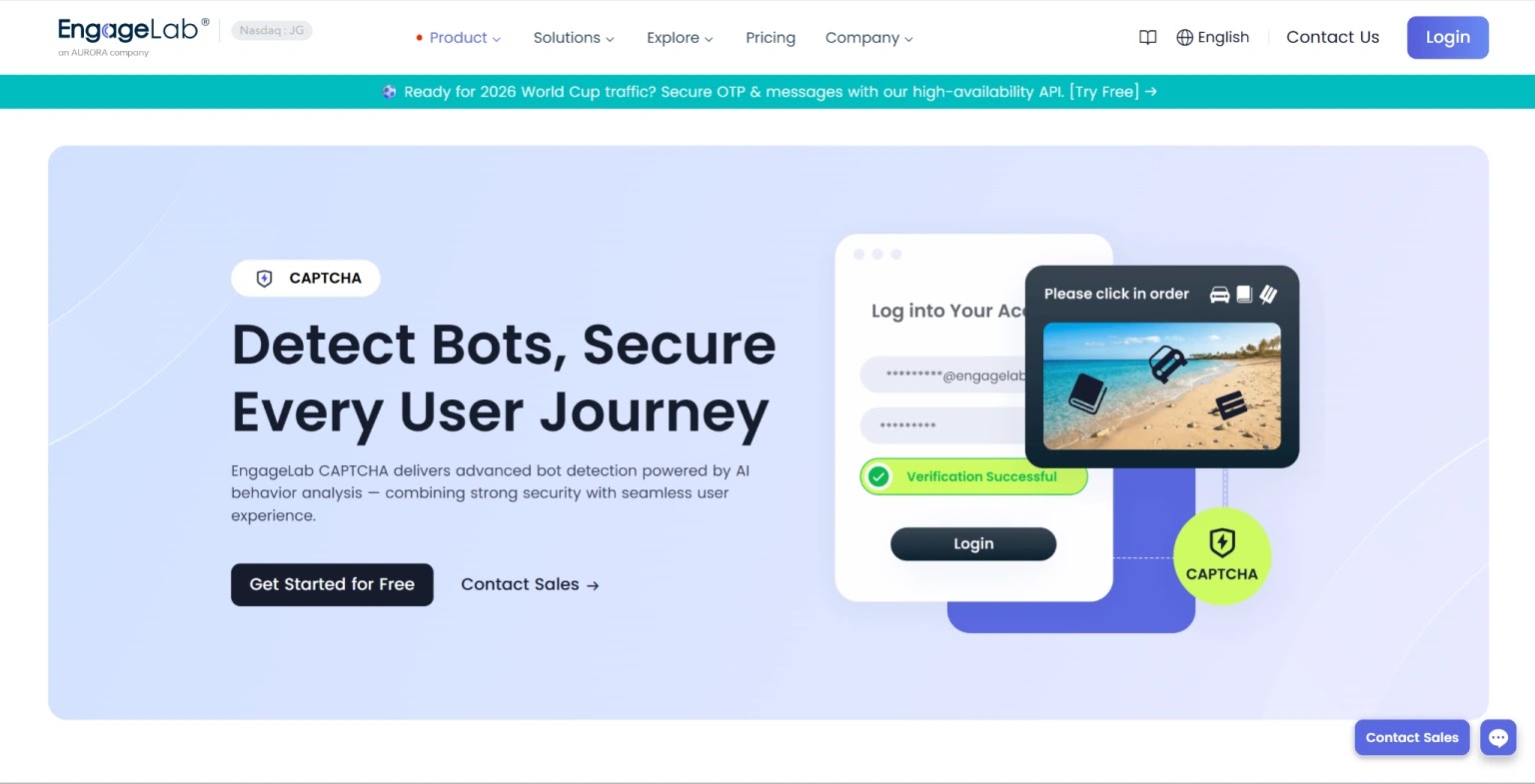
It is not meant to replace the traditional, full security infrastructure; rather, it is meant to be a new security component that can be intelligently and adaptively applied at specific and critical touchpoints — such as registration, login, checkout, and API entry points — without compromising user experience.
The offering is unique in that it is a blend of behavioral and dynamic challenge updating. From a behavioral perspective, it monitors the verification requests and the trend of interactions in real time and learns to filter requests from real users from those from bots, based on the signals received from the front end, as well as from their models on the server.
On the defensive side, AI image rotation of image pools and frequent image changes make template-based attack strategies less effective as time goes on.
There are three technical skills that are more relevant when teams are considering fit:
- Emulator detection: Even if they look like real browsers, server-side analysis will detect automation tools and headless browsers.
- API call detection: Stale or unusual API calls can be detected by protocol breach detection and aid in the identification of bots that avoid the front-end altogether.
- Invisible verification: Most real users will be verified without their realizing it. Only active challenges appear if there is a behavioral signal that signals an increase in risk.
In addition, there are a variety of deployment scenarios on the platform, such as the standard web application, mobile application, and the lightweight app such as WeChat Mini Programs, which can be deployed with a unified API and SDK integration model. A CAPTCHA ID may be used multiple times in scenarios, but it is recommended to use distinct IDs for each use case to get an accurate performance report and tunable granularity.
If you have a security solution in place, and want to introduce a CAPTCHA layer on top of it, EngageLab CAPTCHA provides a reasonably well specified answer. There is a free demo you can try out to ensure the accuracy of the detection before you integrate.
FAQs
Which is better: a bot detection tool or a CAPTCHA?
CAPTCHA is a single challenge-response verification technique, which requires a person to perform a task to prove that they are human.
Bot detection tools are more comprehensive systems which utilize behavioral analysis, device intelligence, risk scoring, IP reputation and machine learning to detect automated traffic throughout the complete session, not just at one point. One of the elements that could be targeted using bot detection tools is CAPTCHA.
What are the chances of sophisticated bots beating modern bot detection?
Advanced bots now have a greater ability to pass single checks. That is why multi-layered detection is more effective and superior to single-signal detection. Behavioral analysis, fingerprinting, and protocol monitoring, along with continually updated AI models, makes it much more difficult to defeat than rule-based or static CAPTCHA systems.
Will this affect the performance of my website or app if I use any bot detection service?
A good bot detection tool is designed to be low impacting. Client-side scripts are generally small and behavioral analysis is asynchronously executed and does not slow down page loading time. Most actual users will be able to use the site without any problems, in this case the overhead for actual traffic is practically non-existent.
How to identify the touchpoints that require bot protection?
The first step is to determine where automated abuse is going to have the greatest effect on your business – usually account creation, login, payment flows and any API endpoint that has a cost or creates a database record. Then measure the real bot traffic that is hitting those endpoints. Most bot detection platforms offer analytics dashboards which can bring to light the areas where bot activity is focused.
Are the goals of bot detection and fraud prevention the same?
They overlap, but are not the same. Bot detection is about detecting and blocking non-human traffic at the access layer. Fraud prevention encompasses a wider range of downstream processes, such as transaction monitoring, identity verification, and behavioural analytics over a user’s lifecycle.
A first step in detecting bots is to decrease the number of fraudsters that fraud prevention systems must analyze, which is often achieved by bot detection as an upstream process.
Which industries do the best with bot detection tools?
E-commerce, financial services, online gaming, and content platforms typically see the greatest value from bot detection tools because they face the highest levels of automated abuse. These tools help protect revenue, prevent fraud, improve security, and maintain fair user experiences by blocking malicious bots before they can cause damage.
Conclusion
Whether it’s registering with a site, accessing content or checkout, there is a constant and ongoing battle against bot traffic going on in business. Bot detection has evolved from a ‘nice to have’ to a must have for any platform that processes substantial digital traffic as automated threats become increasingly sophisticated.
However, for companies considering CAPTCHA verification as part of that plan, options such as EngageLab CAPTCHA can provide a reasonable method of integration, flexibility, and security for high-risk touchpoints while avoiding the extra complexity and annoyance to those entering legitimate forms. Like all security solutions, the best one for you will depend on your level of risk, technical environment, and workflows that are important to your business.