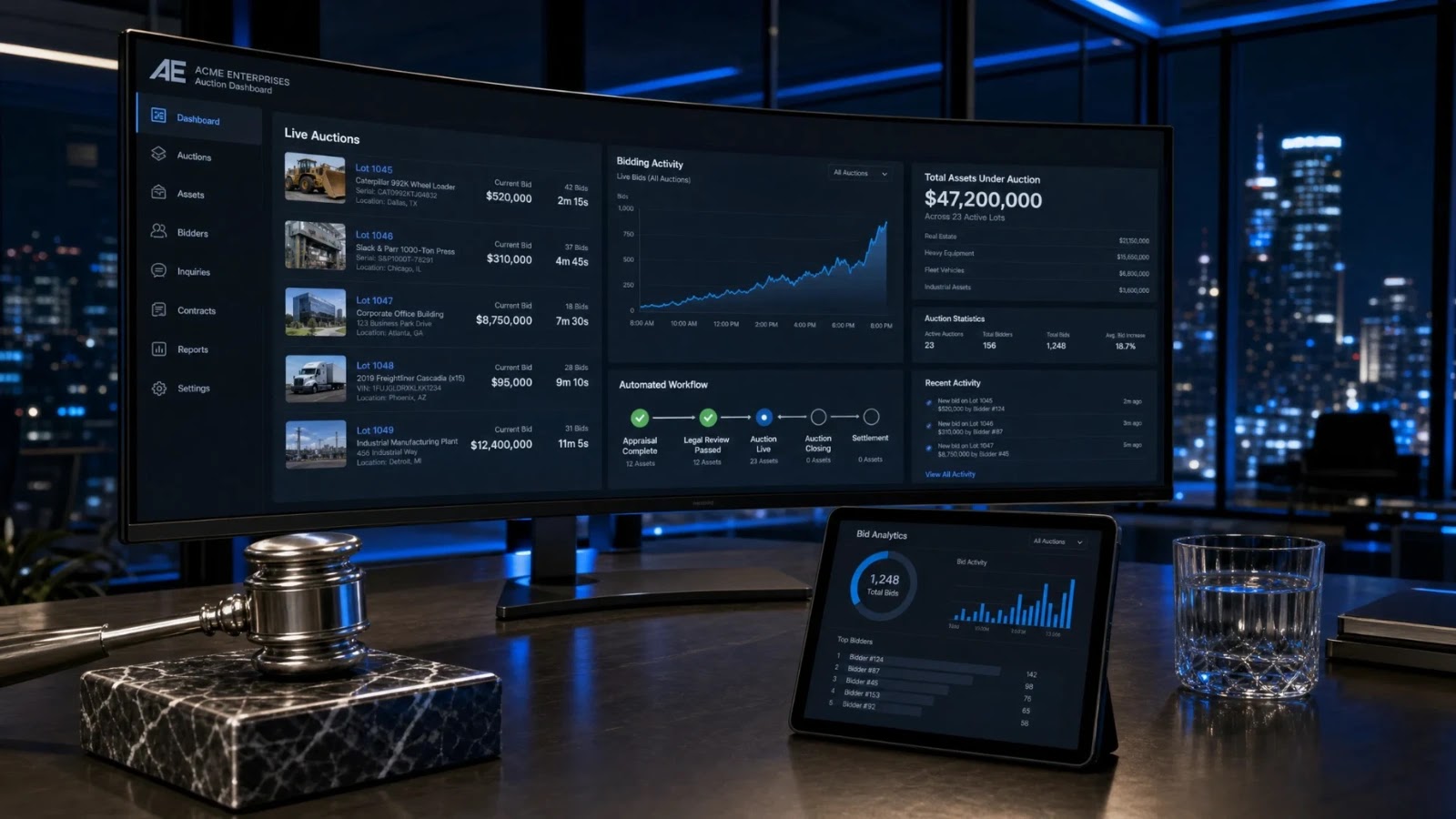
Online commerce has long moved beyond fixed-price listings. Buyers want competition, and sellers want maximum value. That’s why auction platforms continue to attract significant investment: they create dynamic pricing environments where demand directly determines the final cost of goods or services.
The challenge, however, is that building such a platform is considerably more complex than launching a standard e-commerce store. Real-time bidding, payment escrow, fraud prevention, and user trust mechanics all need to work together seamlessly.
Given this, teams planning to enter this space need a clear technical roadmap before writing a single line of code.
What Is an Auction Website?
An auction website is a digital marketplace where items or services are listed for a set period, and registered users compete by placing incremental bids. The highest bid at the close of the auction wins. In other words, the platform acts as a neutral intermediary that manages listing, bidding, payments, and dispute resolution automatically.
Auction platforms can follow several formats, including, but not limited to:
- English auctions: open ascending bids, most common format
- Dutch auctions: descending price, first buyer wins
- Reserve auctions: seller sets a hidden minimum acceptable price
- Penny auctions: users pay per bid regardless of outcome
Each format requires different logic on the backend. That’s why early product decisions about auction type will heavily influence the entire architecture of the system.
When Does It Make Sense to Build a Custom Auction Platform?
A lot of businesses consider third-party auction plugins or white-label solutions before committing to custom development. Those options may work for simple use cases. However, you should attentively analyze whether a pre-built tool can actually handle your specific business model, user volume, and integration requirements.
Here’s when auction website development from scratch makes the most sense:
- The platform needs proprietary bidding logic not available in off-the-shelf tools
- The target niche is highly specialized (real estate, automotive, industrial equipment, art)
- The business model includes unique monetization layers such as subscription tiers, bid packages, or premium listing slots
- Long-term scalability and brand ownership are strategic priorities
If the answer to a majority of these points is yes, custom development will serve better in the long run, even if it requires a larger upfront investment.