Google has officially released Gemini 3.5 Flash with native “computer use” capabilities, marking a significant shift toward autonomous AI agents that can interact directly with digital environments.
Announced on June 24, 2026, the update enables developers to build intelligent agents capable of performing actions across browsers, mobile devices, and desktop systems.
The newly integrated feature was previously limited to a standalone Gemini 2.5 model but is now embedded directly into Gemini 3.5 Flash.
This integration enhances performance and simplifies deployment for developers building automation tools and enterprise workflows.
Gemini 3.5 Flash Released
Gemini 3.5 Flash introduces advanced agentic behavior, allowing AI systems to “see, reason, and act” within computing environments.
These agents can execute multi-step tasks such as navigating web interfaces, conducting software testing, and managing enterprise applications.
The model also builds on Gemini’s existing strengths, including function calling and integration with tools like Search and Maps.
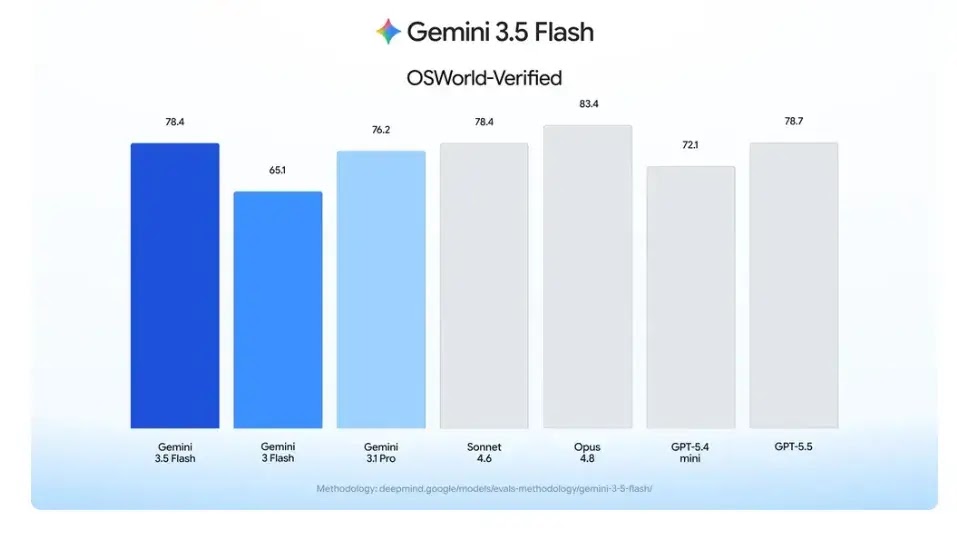
With computer use capability, it can now perform long-horizon tasks that require persistent interaction and contextual decision-making.
This functionality significantly expands the attack surface in enterprise environments, particularly where AI agents are granted access to sensitive systems or workflows.
To address potential cybersecurity risks, Google has implemented targeted adversarial training to reduce prompt injection attacks, one of the primary threats to agent-based AI systems.
Prompt injection can manipulate AI behavior by feeding malicious instructions through external content.
Additionally, two enterprise-grade safeguards have been introduced: Mandatory user confirmation for sensitive or irreversible actions, Automatic task termination upon detection of indirect prompt injection attempts.
Google recommends a defense-in-depth strategy, urging organizations to combine these protections with sandboxing, strict access controls, and human-in-the-loop verification.
Despite these measures, security experts warn that autonomous agents interacting with live environments could introduce new exploitation vectors, particularly if improperly configured.
Gemini 3.5 Flash with computer use is now available through the Gemini API and the Gemini Enterprise Agent Platform. Developers can also test the feature in a live demo environment hosted by Browserbase.
Early adopters are already leveraging the technology for automation-heavy tasks, including continuous software testing and enterprise knowledge workflows.
Google has also released reference implementations on GitHub to accelerate development and integration. The introduction of built-in computer use in a mainstream AI model represents a pivotal moment for both innovation and security.
While the technology enables powerful automation, it also raises concerns around unauthorized actions, data exposure, and AI-driven exploitation.
Organizations adopting agent-based AI must prioritize secure deployment practices and continuously monitor agent behavior to mitigate emerging threats.