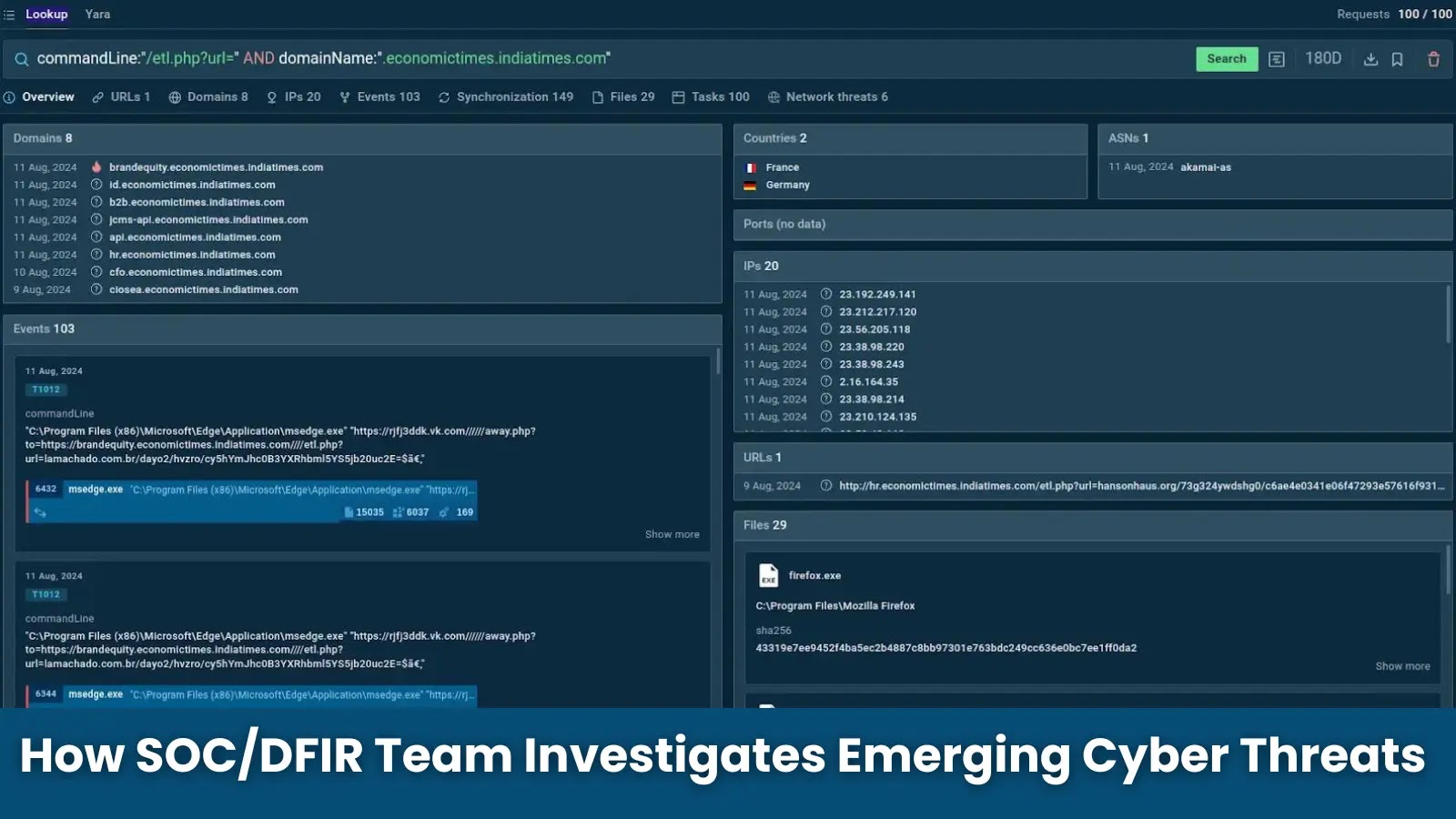

In the rapidly evolving world of cybersecurity, emerging threats pose significant challenges to organizations worldwide. These threats, characterized by their novelty and complexity, often exploit new vulnerabilities and technologies, making them difficult to predict and defend against.
Emerging threats differ from persistent threats in several ways:
-
Novel Techniques : They involve new methods and tools that have not been widely seen before.
-
Continuous Evolution : Attackers constantly refine their strategies to evade detection.
-
Unpredictability : Their unpredictable nature makes them particularly challenging to defend against.
-
Potential Impact : They can have severe implications for victims, including financial losses and reputational damage.
Why Monitoring Emerging Threats is Crucial
Many organizations struggle to handle emerging threats due to a lack of awareness, resources, or expertise. These threats can disrupt operations, lead to data breaches, and erode customer trust. Staying informed about emerging threats and taking proactive measures is essential for safeguarding organizational assets.
How Threat Intelligence Lookup Assists
Key Features of TI Lookup:

-
Comprehensive Search : Users can search through 2TB of the latest threat data using over 40 different search parameters.
-
Quick Results : Each search provides quick results with corresponding sandbox sessions.
-
YARA Search : A built-in rule editor allows users to use custom YARA rules for more precise searches.
-
API Integration : TI Lookup can be integrated with existing security systems for seamless operation.
Examples of Emerging Threats and Investigation Methods
1. New Phishing Threats
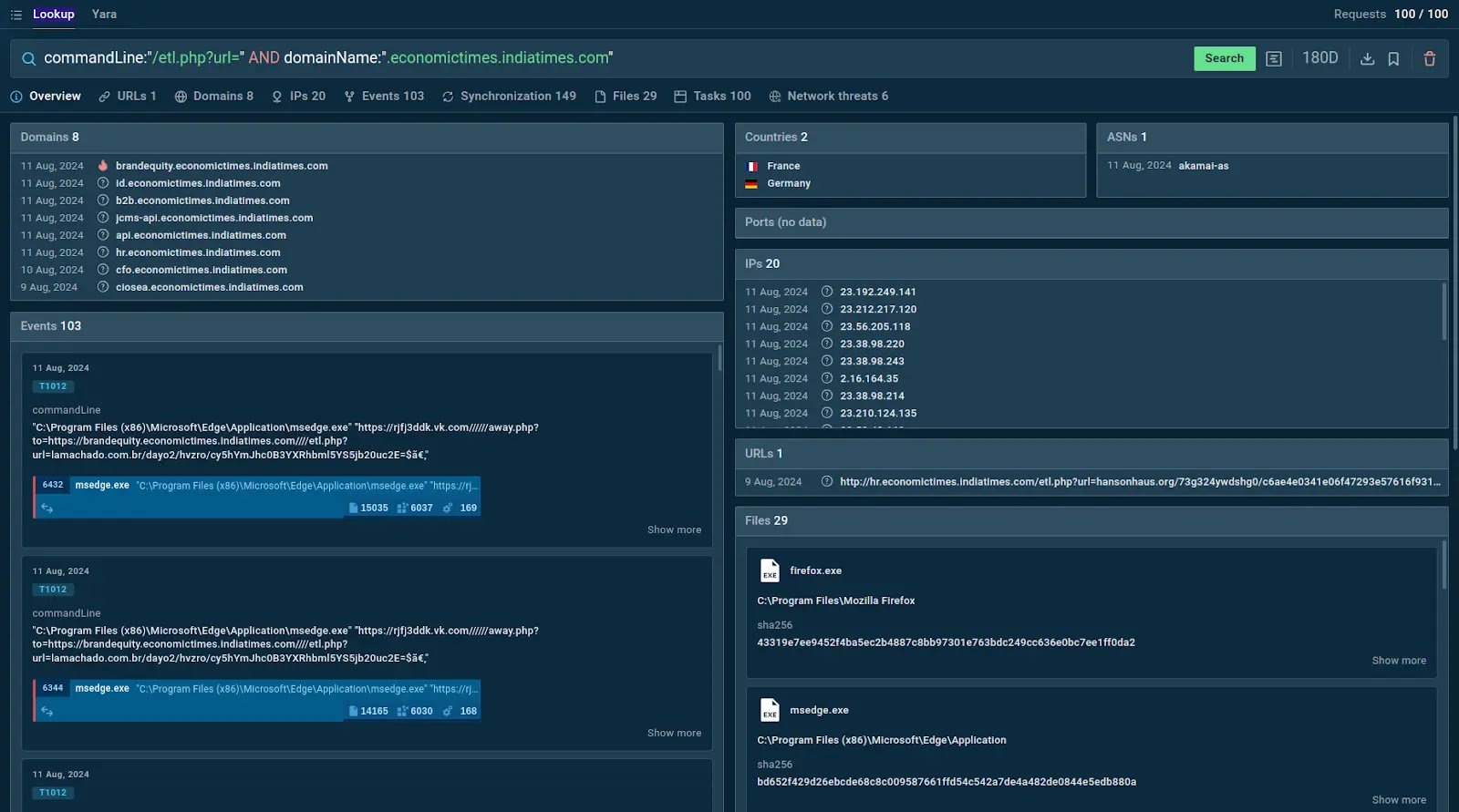
Cybercriminals continually devise new phishing tactics, often abusing legitimate services to deceive users. For example, a recent campaign exploited Amazon Simple Email Service (SES) accounts to distribute phishing emails.
Example: Abuse of SES Accounts by Tycoon 2FA Phish-kit
2. New and Evolving Malware Families
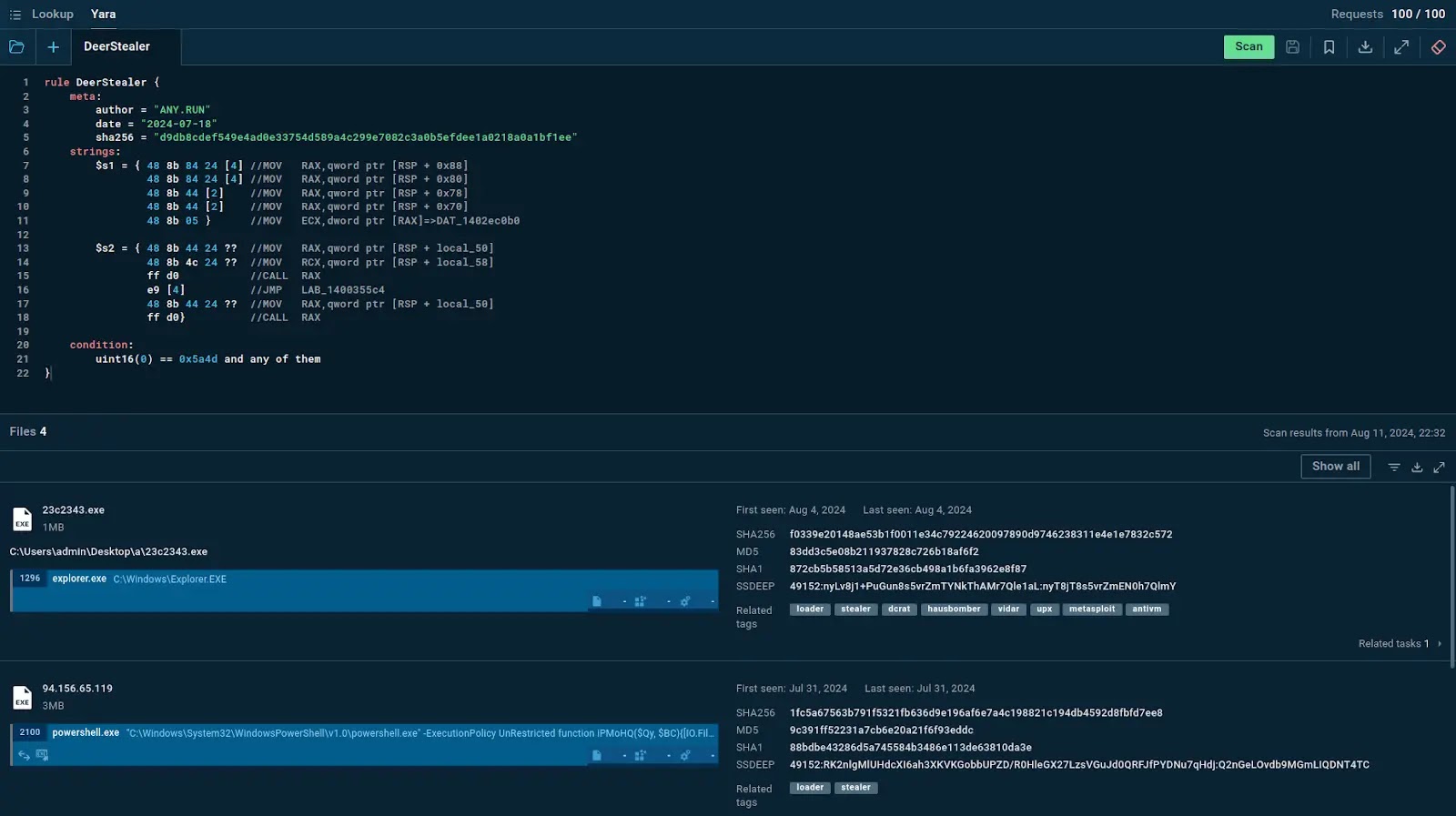
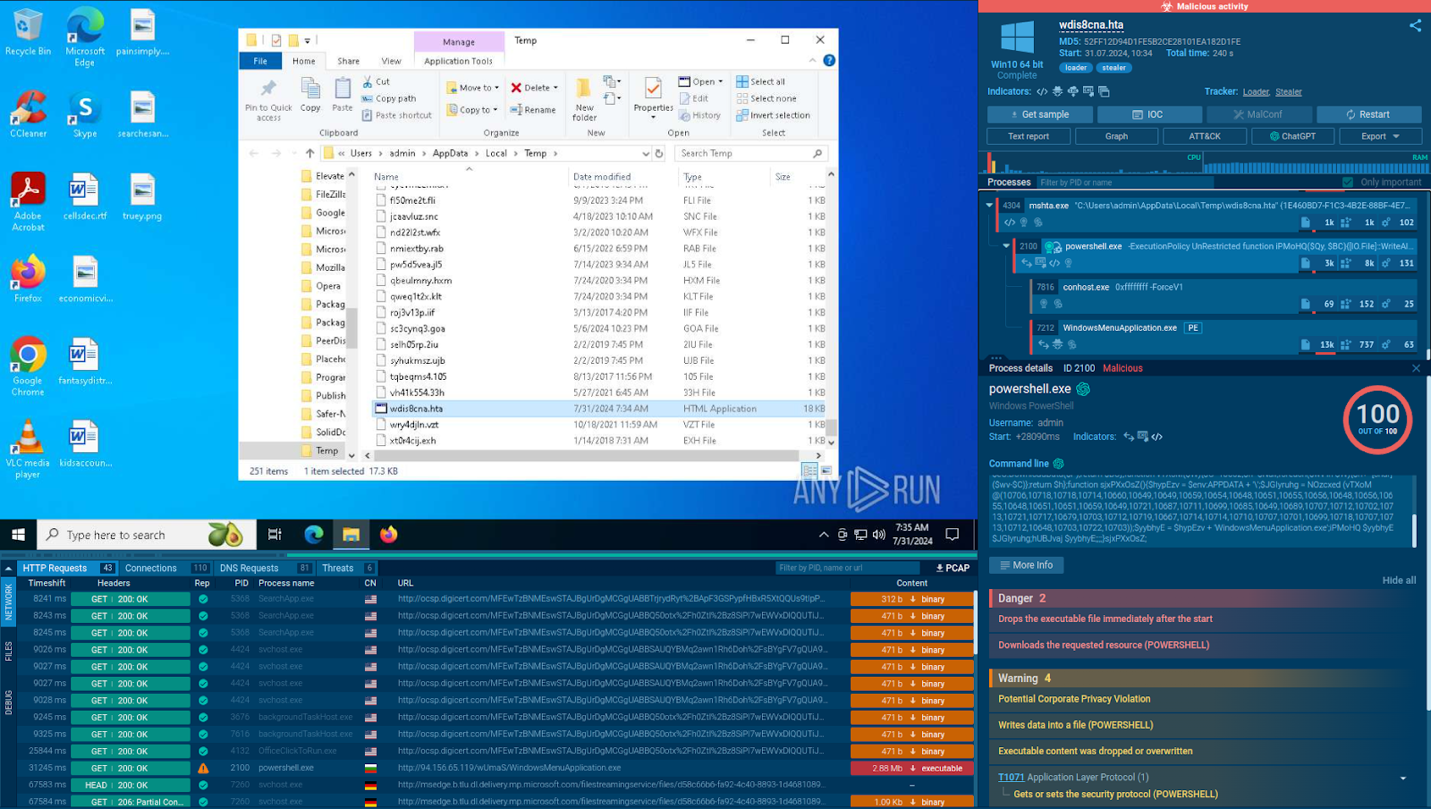
New malware strains, like the recently discovered DeerStealer, pose significant threats. These malware types often employ advanced evasion techniques. TI Lookup allows users to gather information on these threats using YARA Search, providing detailed sandbox reports for further analysis.
Example: DeerStealer Malware
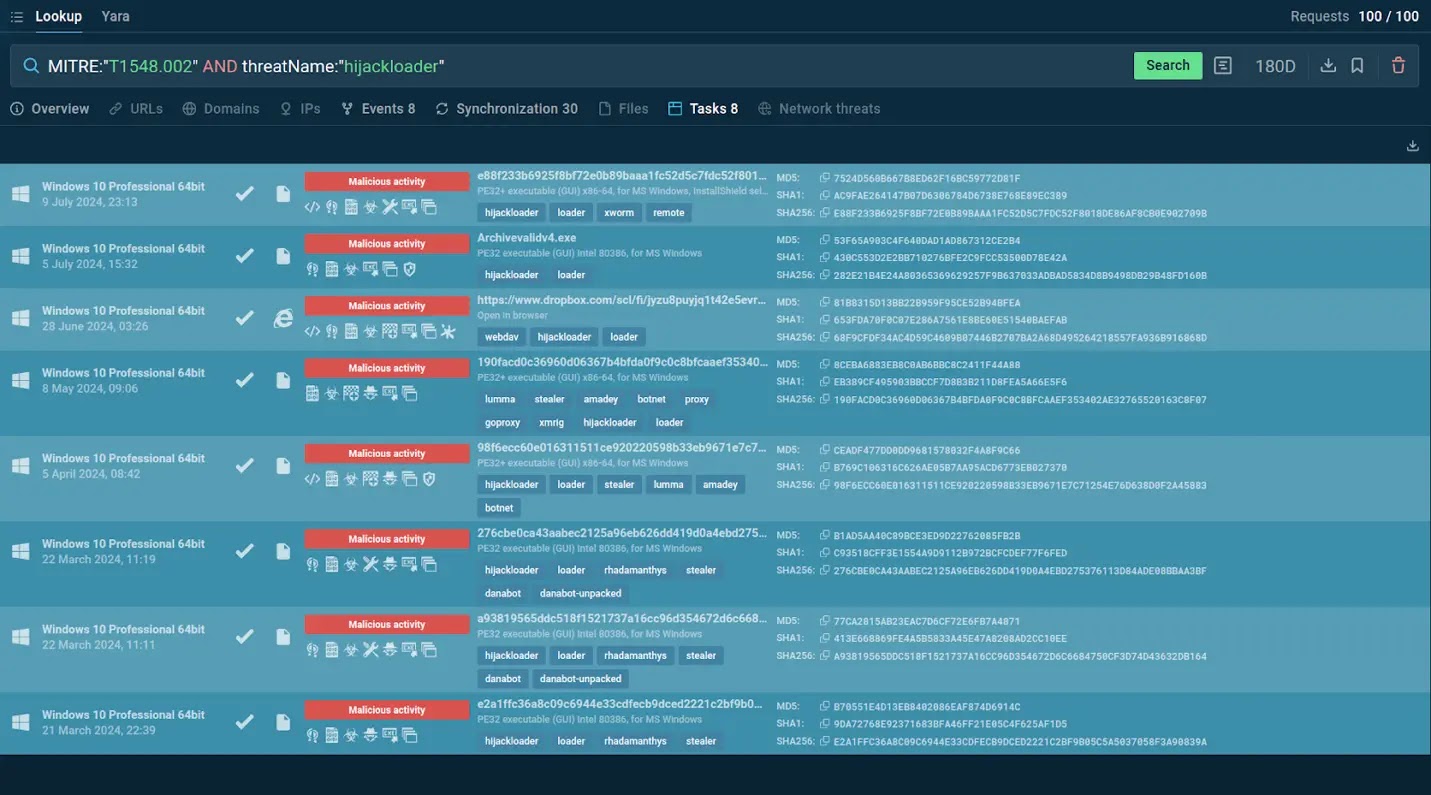
3. Tactics, Techniques, and Procedures (TTPs)
Example: Samples of New HijackLoader Version
4. Exploitation of World Events
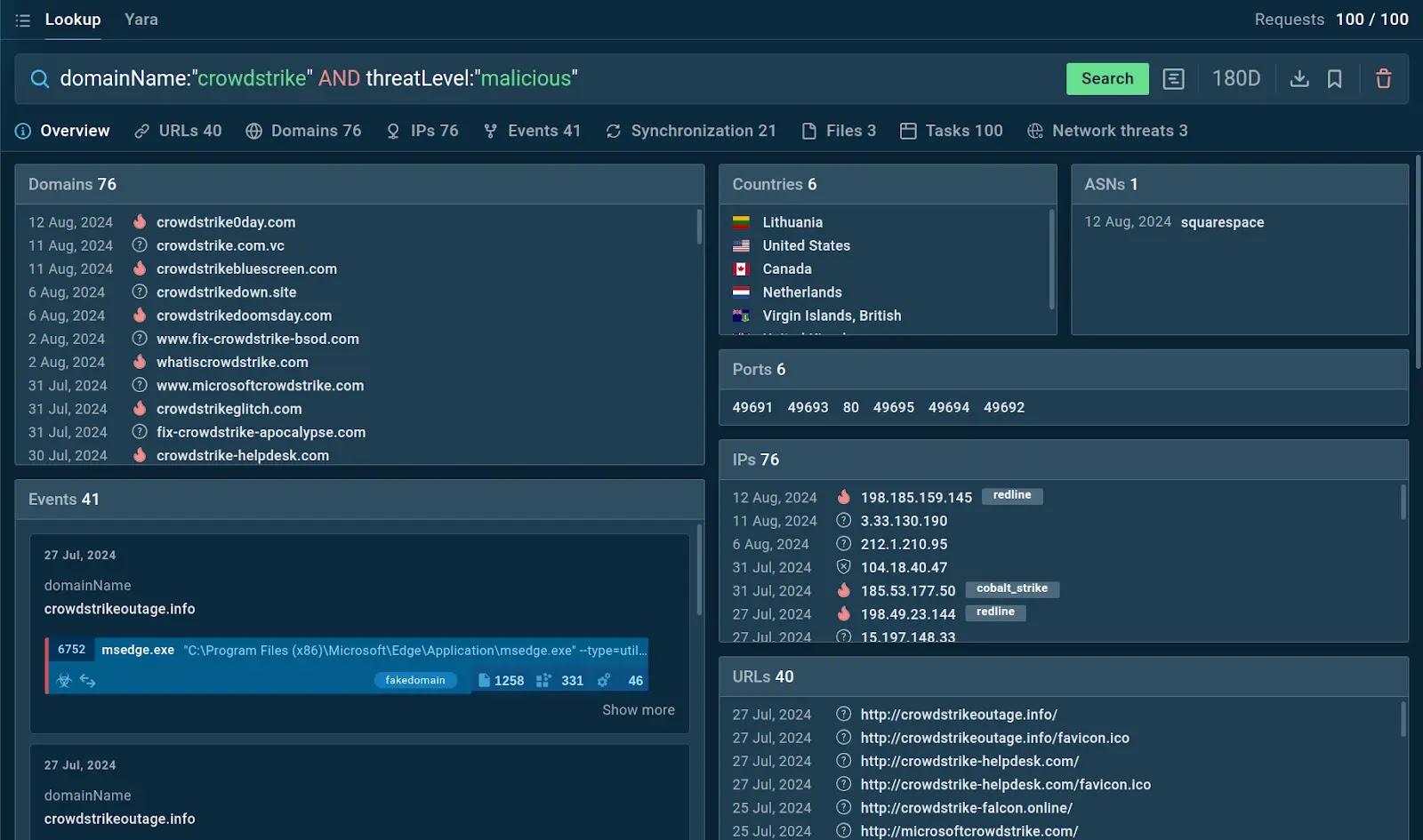
Cybercriminals often exploit global events to launch attacks. During the CrowdStrike outage, attackers launched phishing campaigns to exploit the confusion. TI Lookup helped identify malicious domains mimicking official sites, aiding in the investigation.
Example: CrowdStrike Incident
Additional Investigation Techniques with TI Lookup
-
Check Suspicious Connections : Quickly determine the threat level of suspicious IPs.
-
Enrich Intelligence on C2 Infrastructure : Stay updated on changes in command and control infrastructure used by attackers.
-
Discover Malicious Network Activity : Use Suricata IDS rules to detect and analyze network threats.
-
Learn about the Current Threat Landscape : Explore threats specific to certain regions based on local submissions.