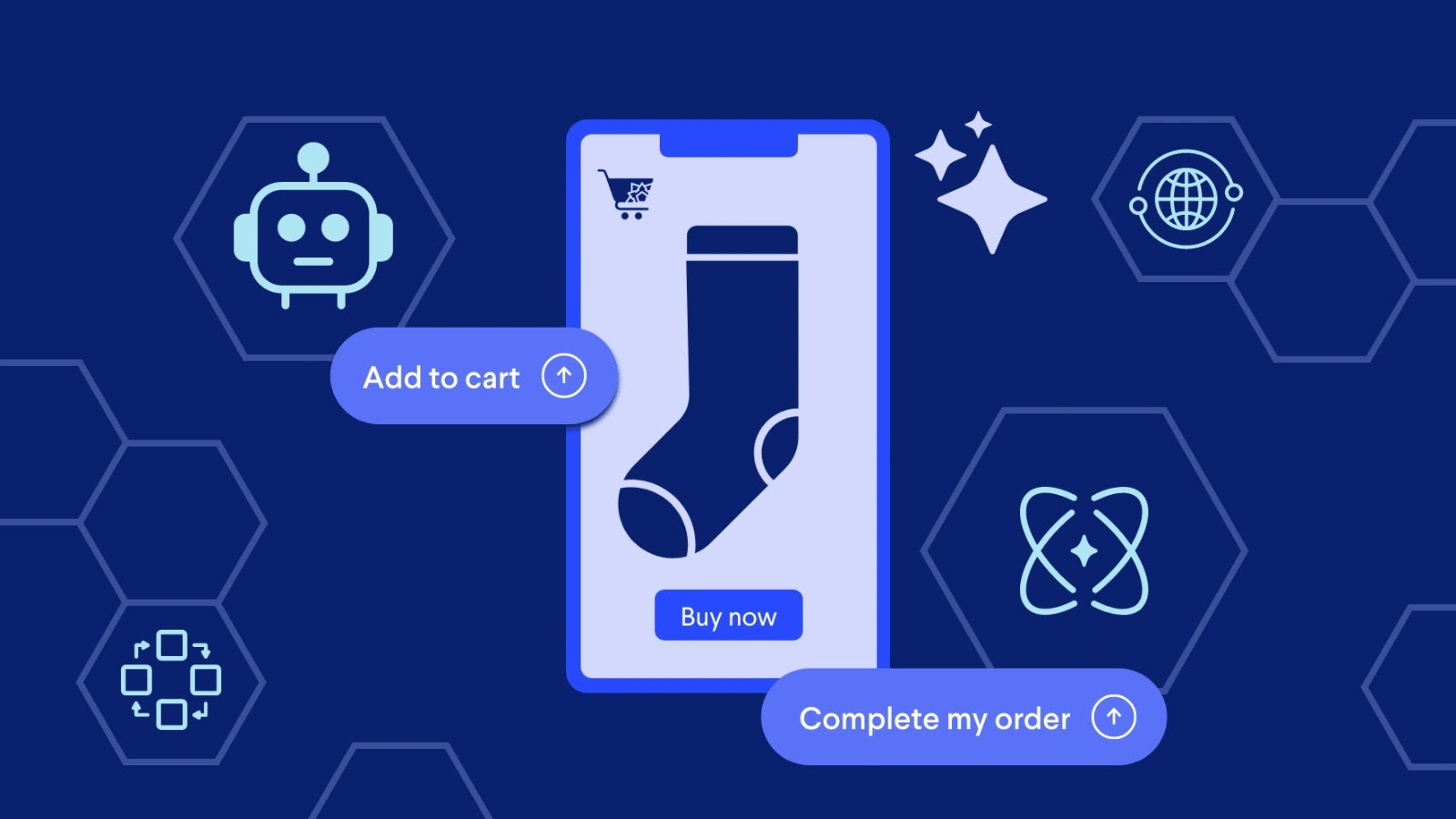
Agentic commerce is massively on the rise. This new model involves AI agents acting on a shopper’s behalf by, for example, finding and comparing products, and even making purchases. The aim is to blend context, buyers’ preferences, and automation so that buying feels effortless, with tech actually doing the heavy lifting in the background.
While this sounds great, agentic commerce makes the job of bot detection significantly more challenging, as AI agents behave like real users. These agents compare thoughtfully, browse naturally, and act in a generally human-like manner.
For businesses, spotting and recognizing the difference between an agentic bot and a bad bot out to cause mischief has become extremely difficult, meaning smarter and more nuanced detection processes are crucial.
What Damage Can Bad Bots Cause?
Bad bots can cause huge damage to businesses, overwhelming servers and causing downtime, stealing customer payment details, scraping and stealing content, and more. As well as impacting revenue, this can have a devastating effect on brand trust and reputation, with the cost of recovering from a bot attack significant.
By allowing this to continue, the constant pressure of staving off bad bot attacks forces businesses to spend more on infrastructure and security – money that could otherwise be spent on innovating new products or services.
Common Bot Attacks
AI-powered bot attacks can take many different forms, and it’s important to understand the difference between each. Some common types of attack are:
Credential Stuffing
Bots use stolen usernames and passwords to break into customer accounts, with bots testing thousands of combinations in an attempt to find matches. If successful, this can lead to serious damage to brand trust, but even where attacks are unsuccessful, they can take a significant toll on a business’s system and support teams.
Scraping and Data Harvesting
This type of attack is where bots copy product details, prices, and even proprietary content. Bad actors or competitors can then use this information to clone catalogs, undercut prices, or manipulate markets.
Over time, this can result in the erosion of an enterprise’s competitive edge and distortion of customer analytics, making it very hard to understand real customer behavior.
Scalper Bots and Inventory Hoarding
These bots’ mission is to quickly purchase high-demand items instantly or add them to their cart, locking out authentic customers. This creates artificial scarcity (as well as annoying real buyers) and inflates resale markets, potentially damaging a business’s reputation.
DDoS and Traffic Flooding
Flooding bots overwhelm APIs or websites with vast volumes of fake traffic, which slows servers or takes services offline completely, especially when it happens during peak times. DDoS attacks result in lost sales and also force businesses to divert their resources to sorting out the issue instead of focusing on growth.
API Abuse
Bots are increasingly targeting APIs directly to manipulate pricing or get hold of large amounts of sensitive data. As APIs often power checkout and inventory systems and mobile apps, these attacks can put sensitive information at risk and disrupt operations.
Real World Bot Attacks in 2025
AI bot attacks caused chaos for many major brands in 2025.
An attack on UK-based Jaguar Land Rover in September 2025 severely disrupted sales and production, with the incident having a wide-ranging effect on the whole automotive industry in the UK, with many dealers finding they couldn’t register new Jaguar Land Rover vehicles on September 1st, one of the busiest periods in the year for new car registrations.
Soundcloud, the audio streaming platform, also suffered a cybersecurity incident in 2025. As well as a DDoS attack, which temporarily took the platform offline, users’ accounts were breached, with an estimated 20% of members being affected. This demonstrates how criminals regularly deploy a combination of attack modes when targeting a business.
Other cyberattacks were experienced in 2025 by organizations including the University of Pennsylvania, the US Congressional Budget Office (CBO), the Washington Post, Petco, SitusAMC, DoorDash, Qantas Airways, the Volvo group, and FinWise Bank.
How to Detect AI Bots?
While it’s difficult, it is possible to detect malicious AI-powered bots and stop them before they can wreak havoc. Careful monitoring can help, looking for unusual patterns of behavior, inconsistencies, and browsing that doesn’t quite match natural curiosity.
It’s also crucial to deploy an adaptive, AI-fuelled bot management solution to prevent bad bots in real time. The best platforms analyze every single request in real time using hundreds of signals to both identify AI-powered bots and give access to “good” bots (such as Googlebot) without relying on manual rules.
There are other basic ways to protect against AI bots, but these methods all have serious limitations. These include:
- Try adding disallow rules to Robots.txt to tell crawlers not to visit your site, although this directive could be ignored.
- Deploying a web application firewall for user-agent filtering.
- Adding meta tags and HTTP headers to signal content shouldn’t be used for AI training.
- Blocking specific IP addresses.
- Using rate limiting and throttling techniques to prevent servers from becoming overwhelmed.
- Deploying a honeypot trap to spot AI bots.
How a Bot Management Platform Can Help
Implementing a powerful bot management platform is the best way to protect against bad AI bots. Such solutions monitor online traffic in real time and can spot and classify a bot in milliseconds.
Modern AI-driven bots can mimic human behavior with surprising subtlety, but the best solutions assess patterns, intent, and minuscule behavioral clues that are almost impossible for malicious AI bots to fake.
A bot management solution typically blends behavioral analysis, machine learning, and threat intelligence to separate helpful bots from bad entities without slowing down real visitors.
If a bad bot attempts a scraping, credential-stuffing, or other type of attack, the platform responds instantly to block the threat before it can cause damage. It’s able to adapt as threats evolve, updating its understanding of how bots behave to keep businesses ahead of the curve.
It’s not just about defence, it’s about clarity, too. Stable performance, clearer analytics, and well-protected customer accounts give businesses the confidence and resources to grow without the concern of hidden automated threats. With AI agents becoming more sophisticated every day, a reliable, adaptable layer of defence is crucial.
How to Choose the Best Bot Management Solution
When choosing the best bot management solution platform for your needs, it’s important to keep several key considerations in mind:
- Look for a platform offering real-time protection that analyzes all requests individually and uses hundreds of technical and behavioral signals to distinguish human users from AI bots.
- Consider platforms that are great at identifying AI-fuelled automation without relying on signatures, static rules, or blocklists that are outdated.
- Think about solutions able to classify traffic in milliseconds to ensure attacks are immediately stopped in their tracks without slowing real users down.
- Prioritize behavioral analysis engines that detect micro-patterns, intent, and anomalies that AI bots often struggle to mimic.
- Make sure the platform protects against a wide range of attacks, including scaping, credential stuffing, DDoS, API abuse, and scalping.
- Check that the solution has adaptive machine learning models that continuously retrain as new threats emerge.
- Choose a provider that has strong global threat intelligence and is capable of spotting emerging attack infrastructures with ease.
- Ensure the platform provides good analytics to give teams a clear insight into attack trends, traffic quality, and the impact on the business.
- Take into account how easy the solution is to deploy, the level of maintenance it’s likely to require, and its rate of false positives.
Protecting Your Brand Against AI Bots
Agentic commerce doesn’t have to mean surrendering control to the bots. How your business deals with bot management, however, needs to change to keep bad bots from causing damage.
With the right protection in place, your enterprise can focus on innovation and growth while keeping bots at bay. Choose a reliable and adaptive bot management solution for the peace of mind you – and your customers – deserve.