CrashStealer, a native C++ macOS infostealer that disguises itself as Apple’s built-in crash-reporting utility to harvest browser credentials, cryptocurrency wallets, password manager data, and keychain contents before encrypting and exfiltrating everything to a remote command-and-control server.
Jamf first spotted a suspicious sample on VirusTotal in early May 2026 that appeared to be an infostealer still under construction. By early July, in-the-wild detections confirmed the malware had matured into active deployment, prompting researchers to formally track it as CrashStealer.
Unlike commodity macOS stealers typically built on AppleScript droppers or thin Objective-C wrappers, CrashStealer is written entirely in native C++ around an internal class called MacOSData, setting it apart from families like Atomic (AMOS), MacSync, and Phexia despite overlapping objectives.
Initial access begins with a disk image named “Werkbit Setup,” containing an application bundle signed with a legitimate Developer ID and a stapled notarization ticket allowing it to clear Gatekeeper on first launch.
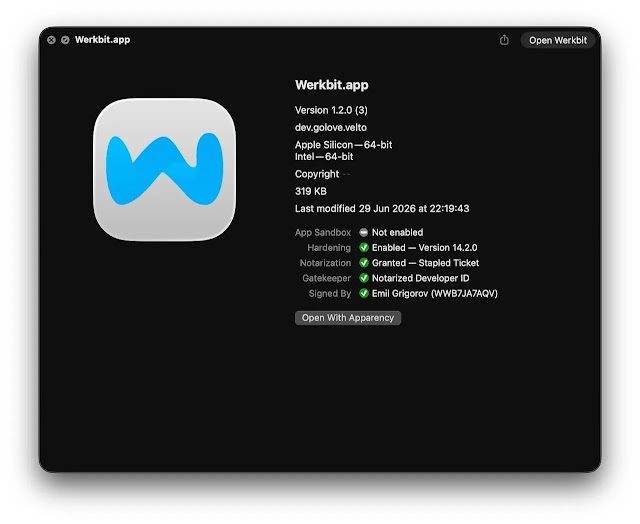
This is unusual: even the disk image container itself is signed, a rare touch in malicious DMG campaigns. Once opened, the dropper quietly retrieves an obfuscated shell script from GitHub-hosted infrastructure, decodes multiple layers of Base64-encoded commands, and downloads the actual payload disguised as “CrashReporter.app” complete with Apple’s bundle identifier com.apple.crashreporter and a matching icon.
Once running, CrashStealer validates the victim’s login password locally via dscl, unlocks the keychain, and profiles installed security tools before beginning collection. Its scope is extensive:
- Chromium-family browsers (Chrome, Brave, Edge, Opera, Vivaldi) and Firefox credential stores
- Roughly 80 cryptocurrency wallet extensions spanning Ethereum, Solana, Cosmos, TON, and other ecosystems
- 14 password managers including 1Password, Bitwarden, and LastPass
- The user’s login keychain and broader file-system reconnaissance of Documents and Downloads
This breadth mirrors patterns seen across the modern macOS stealer landscape, where crypto-focused credential theft has become a dominant objective.
What distinguishes CrashStealer technically is its use of client-side AES-256-GCM encryption via Apple’s CommonCrypto framework to encrypt staged data before packaging it into ZIP archives and exfiltrating it over libcurl, a level of operational security not typically seen in commodity AppleScript-based stealers.
This encryption-first approach, paired with anti-analysis measures like control-flow flattening and layered anti-debugging checks, reflects a broader trend of macOS malware families professionalizing their tradecraft, a shift researchers across the industry have flagged as macOS threats evolve from opportunistic scripts into structured, business-like operations.
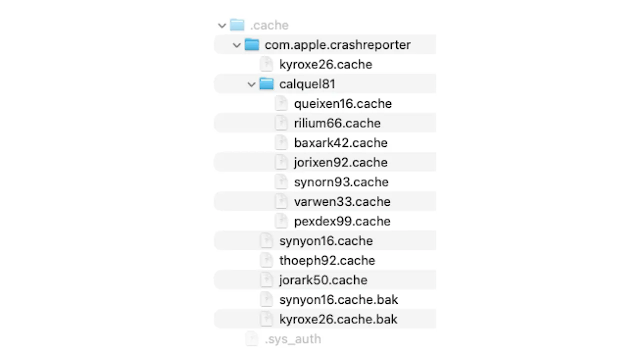
For persistence, CrashStealer copies and re-signs itself ad hoc, then installs a LaunchAgent labeled com.apple.crashreporter.helper to survive reboots, continuing the Apple-impersonation theme into its persistence layer.
Jamf also linked the campaign to a live operator panel and additional infrastructure domains, suggesting CrashStealer is part of a larger, multi-platform operation rather than an isolated tool.
This discovery adds to a growing body of research showing macOS infostealers rapidly closing the sophistication gap with their Windows counterparts, with detection volumes and technical complexity both climbing sharply through 2025 and into 2026.