Running a small business can often lead to the misconception that cyber-security is not a priority due to the company’s size. This false assumption can have devastating consequences if a cyber-attack occurs. To ensure that your business remains operational in the face of any threat, it is essential to have a robust security system in place. This includes using a sandbox.
What is a Malware Sandbox?
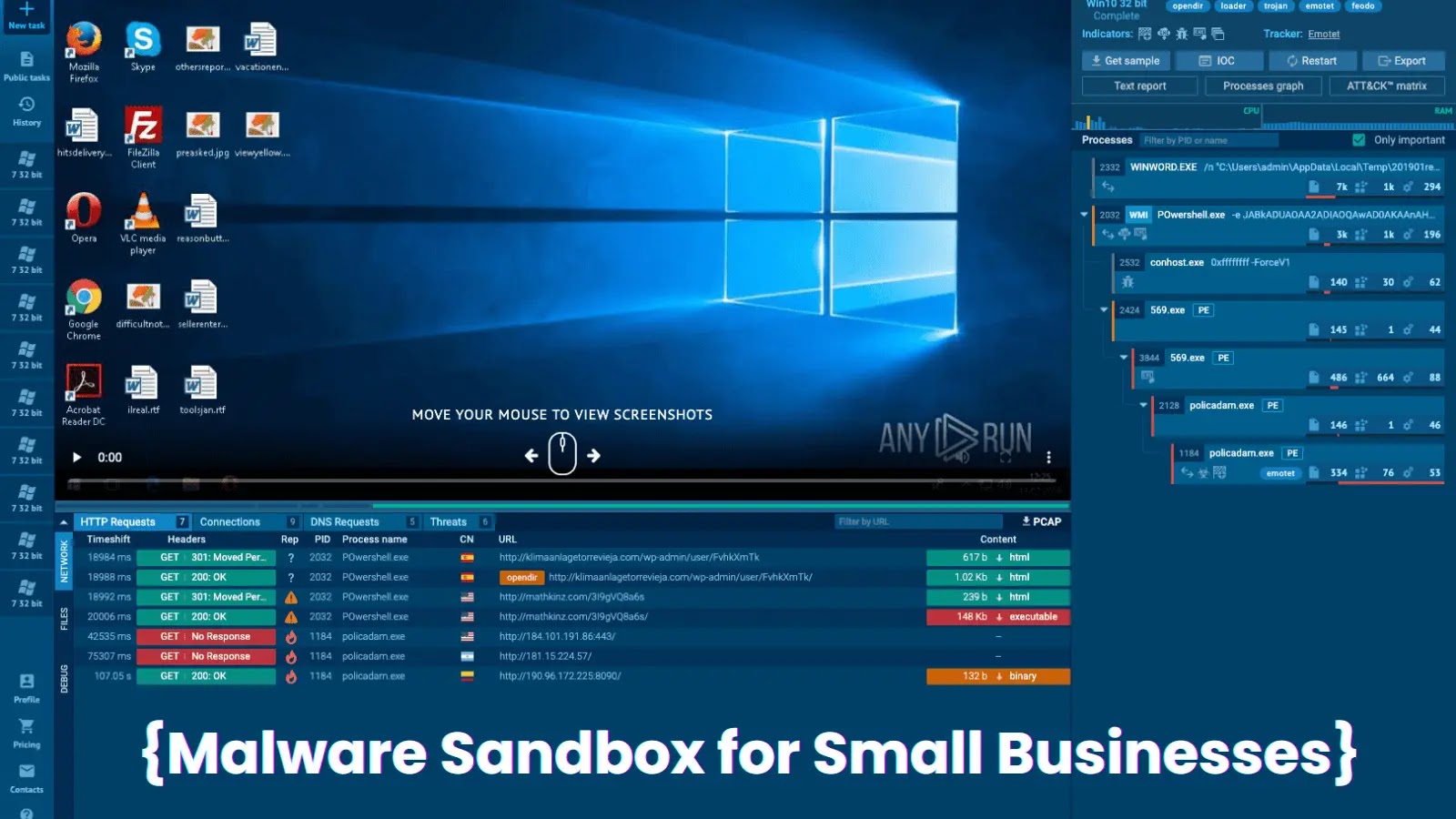
A malware sandbox is a critical tool that provides a safe and isolated virtual machine environment to analyze and evaluate malware. By executing malware in a sandbox, users can closely observe its behavior and gain valuable insights into its functionality.
Additionally, sandboxes streamline the process of collecting indicators of compromise (IOCs), which are unique artifacts associated with each malware, such as file hashes, network signatures, and behavioral patterns. These IOCs can then be used to identify and detect the malware in the future.
Here is how they can be of help to small businesses.
Document
14 Days FREE Trial
Try Unlimited Interactive Malware Analysis with ANY.RUN Sandbox.
They Help You Analyze Suspicious Files and Links
Small businesses are usually easy prey for attackers who exploit their security vulnerabilities. One common tactic criminals employ is social engineering, particularly in phishing campaigns.
They create fake emails or documents, such as invoices and shipping papers, that closely resemble legitimate ones in order to trick unsuspecting employees. These emails may contain harmful attachments or malicious links that, if clicked on, can compromise the organization’s entire network of computers.
This not only enables you to analyze files and links within a secure environment and quickly determine if they are malicious, but also force malware to expose all of its capabilities by interacting with it.
For instance, small businesses often receive phishing emails that include attachments in the form of password-protected archives containing malicious executables.
They Let You Respond to Incidents Faster
Still, the possibility of a successful attack can never be completely ruled out. Yet, businesses can mitigate the risk by implementing an effective incident response plan. This plan should guide the team through restoring the infrastructure to its pre-attack state, including investigating the compromised system or network.
This can help you identify the specific malware that was used against your organization and observe its behavior in a safe environment. This information can then be used to develop a remediation plan to remove the malware from your system.
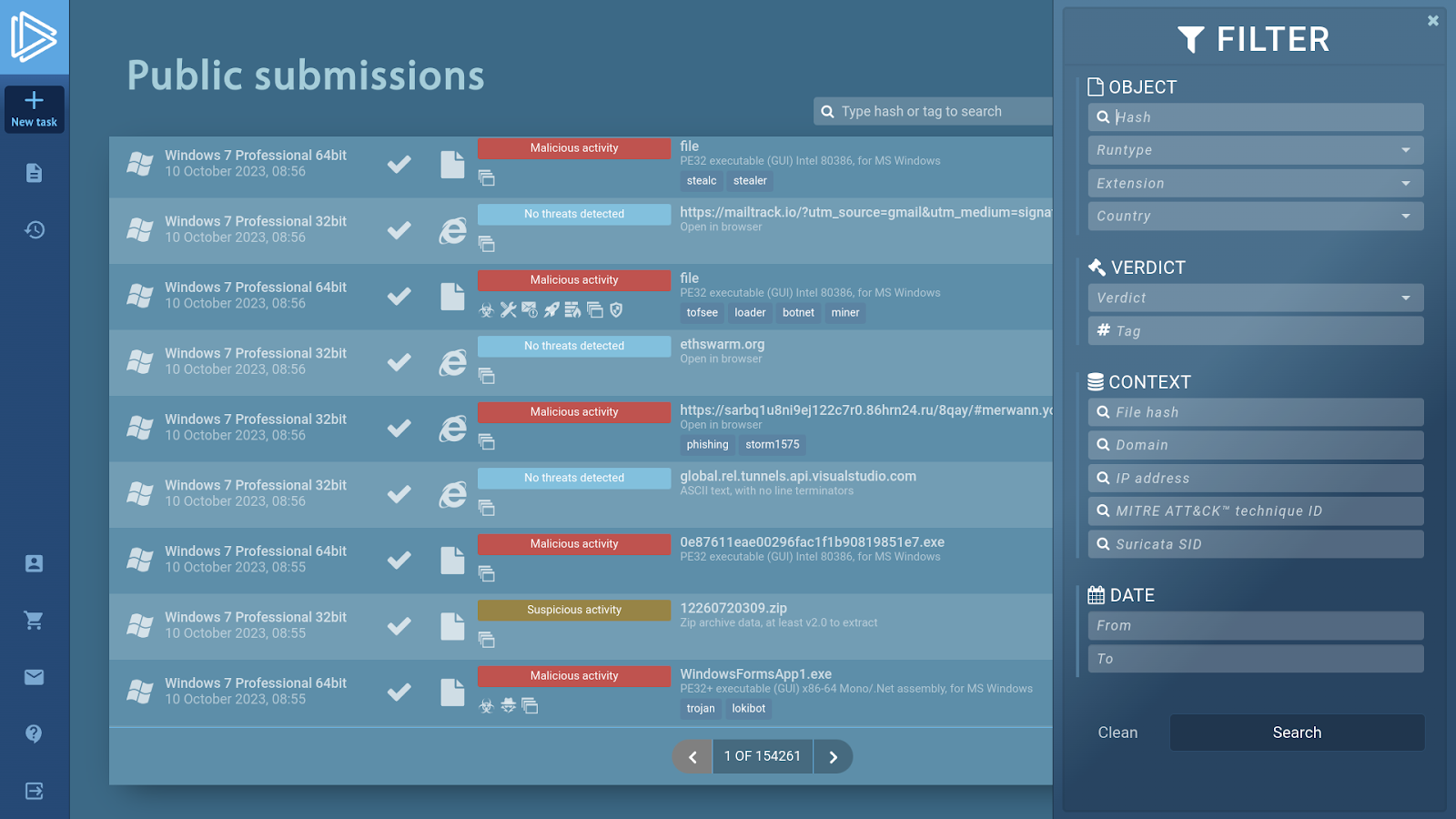
They Improve Proactive Detection
However, small businesses’ priority in cyber security should be a proactive approach. They can utilize security information and event management solutions (SIEMs) along with threat intelligence feeds to achieve this. These feeds provide the necessary data for early detection of malware.