A data breach makes headlines for a day. The damage it leaves behind lasts years. Critical business risk isn’t one catastrophic moment — it’s a slow-motion erosion: dwell time compounding into lateral movement, a compromised supplier becoming your breach, a compliance gap becoming a seven-figure penalty.
Reactive security responds to the moment. Only proactive security builds resilience against the accumulation. The operational layer that makes that shift possible is threat intelligence. Mature SOCs have already figured this out. Here’s how the best of them operationalize it.
Tactic 1: Shrink the Window of Exposure with Real-Time Intelligence
Attackers move fast. Every minute between initial compromise and detection expands business exposure — more systems touched, more credentials harvested, more regulatory consequences. MTTR isn’t just a technical metric; it’s the active duration of business risk.
Traditional enrichment workflows create dangerous delays. Analysts pivot between platforms, manually validate indicators, and waste time determining whether an alert matters at all. Mature SOCs eliminate that bottleneck through continuous intelligence delivery.
Tactic 2: Turn Indicators into Actionable Triage Decisions
Many SOCs still operate flooded with disconnected indicators: hashes, domains, IPs, URLs. But raw indicators rarely explain risk, intent, or operational relevance. The result is noise, false positives, and inconsistent decision-making.
Tactic 3: Manage Cognitive Load Before It Breaks Your SOC
Alert fatigue is the most underestimated threat to SOC performance. Organizations face an average of 960 security alerts daily. According to the Tines Voice of the SOC Analyst report, 71% of SOC analysts report burnout, with some teams seeing turnover cycles under 18 months. When experienced analysts leave, the institution loses tacit pattern recognition no onboarding document can replace.
- TI Feeds deliver pre-filtered, deduplicated IOCs, eliminating redundant SIEM alerts for the same malicious indicator
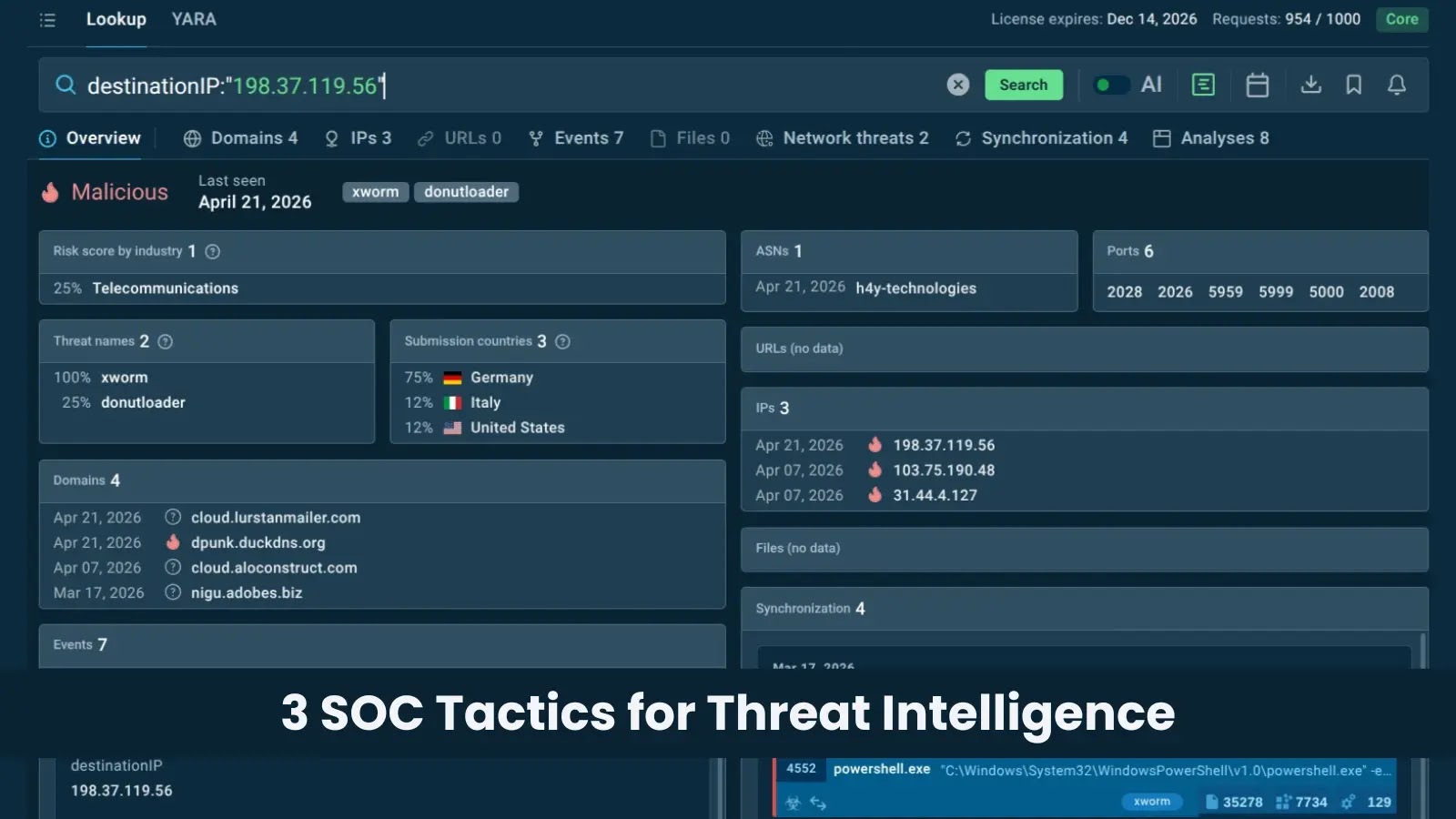
- TI Lookup resolves the “what is this?” question in seconds versus the 30 minutes of manual cross-referencing
- YARA Search lets analysts validate and refine detections against real-world malware samples
- TI Reports deliver curated intelligence summaries on active malware families and observed TTPs, providing structured situational awareness under time pressure
The compounding effect: less time on repetitive enrichment, improved detection quality, fewer false positives, and a SOC that doesn’t depend on constant human overextension to survive.
Threat Intelligence as Business Resilience Infrastructure
The most mature SOCs no longer treat threat intelligence as a supporting add-on — they treat it as operational infrastructure. Real-time intelligence reduces exposure windows. Context transforms raw alerts into decisions. Cognitive resilience protects the analysts who execute them. Together, these three tactics reduce the cascading business risks that quietly accumulate beneath every security program: operational disruption, financial exposure, compliance failure, and unsustainable SOC performance.
The difference between organizations that absorb cyber pressure and those that fracture under it comes down to one capability: operationalized threat intelligence embedded into every layer of security operations.