Email filters are important, but they can’t remove phishing risk on their own. Today’s campaigns are built to slip through the cracks, using fresh domains, CAPTCHA checks, fake login pages, OTP theft, and even legitimate RMM tools.
For security leaders, the bigger issue is business exposure. One missed email can slow response, create uncertainty, and leave teams unsure of what was accessed or who was affected. Mature SOCs focus on reducing that gap, so phishing risk is caught early before it turns into operational disruption.
Why New and Evasive Phishing Campaigns Slip Through
Email security tools usually make a decision before the full attack is visible. They check the message, sender, link, attachment, and known indicators at the point of delivery. But many phishing campaigns are designed so the dangerous part appears later, inside the browser.
That creates a gap between email delivery and actual user exposure.
Even strong email security can miss these attacks because:
- The link may not have enough history to be flagged at the time of delivery.
- The first page may look harmless and reveal the phishing flow only after interaction.
- The attack path may change through redirects, making the final destination harder to inspect.
- There may be no file attached to the email, so there is less to block early.
- The page may lead to tools or actions that only become suspicious in context.
- The campaign may target identity access, not just malware delivery.
For SOCs and MSSPs, the challenge is not only catching the email but also understanding what happened after delivery quickly enough to reduce exposure, protect accounts, and make confident response decisions.
Real-World Phishing Attack: Fake Invitations Leading to Account Exposure
This is the kind of attack path email-level detection can miss. The risk does not sit in one obvious attachment or one suspicious message. It unfolds across several steps, which means teams need to see the full path before they can decide how serious the threat is.
How Teams Use ANY.RUN Sandbox for Behavior-Based Phishing Analysis
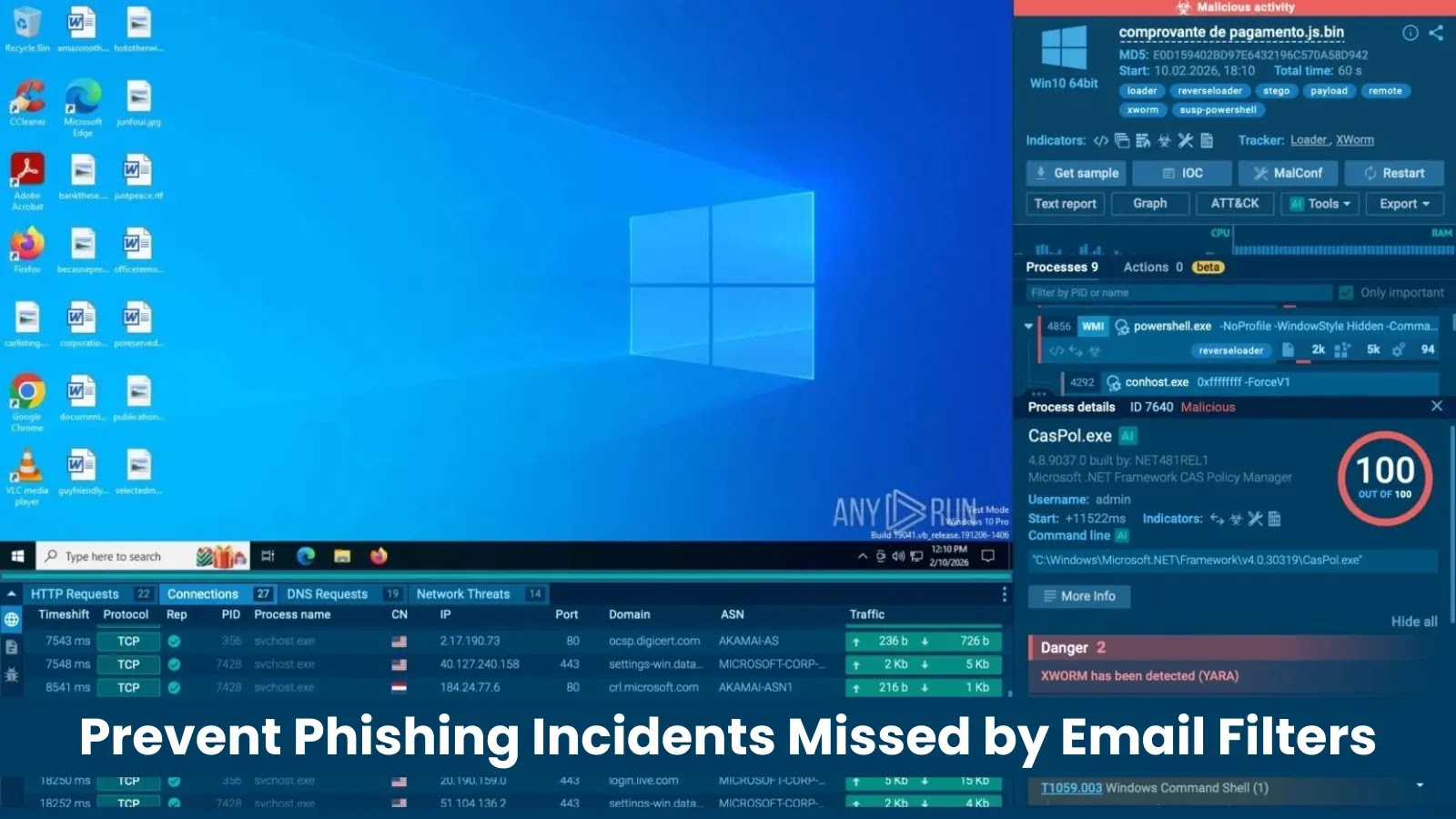
Instead of relying only on the email verdict, teams can safely open the link in a cloud environment and observe the full phishing path: redirects, fake login pages, OTP prompts, automatic downloads, RMM delivery, and related network activity.
This helps teams:
- confirm phishing threats faster
- reduce time spent on unclear alerts
- see whether credentials, MFA codes, or endpoints are at risk
- decide what needs to be contained
- give leadership clearer evidence for response decisions
- stop missed emails before they become wider incidents
Strengthen Phishing Response with Behavior-Based Analysis
- 21-minute reduction in MTTR per case
- 94% of users reporting faster triage
- 30% reduction in Tier 1 to Tier 2 escalations
- Up to 20% decrease in Tier 1 workload
- Fewer gray-zone investigations and faster threat confirmation
For SOCs and MSSPs, this means less time spent guessing, fewer unnecessary escalations, and stronger confidence when deciding whether a phishing alert requires containment.