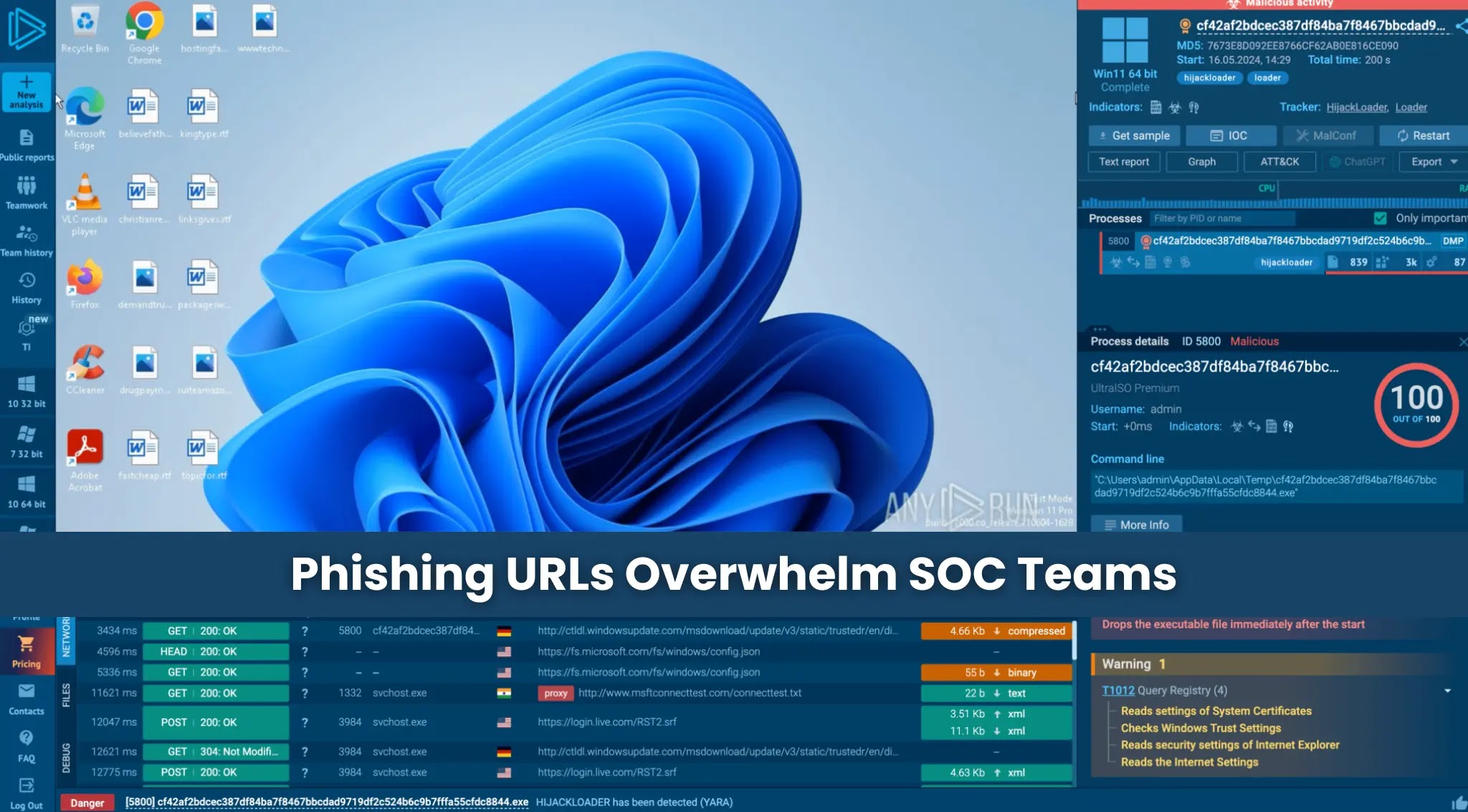
URL phishing is becoming harder to triage at scale. Suspicious links can hide behind redirects, fresh domains, and browser-side changes that basic URL checks often miss. For analysts, that means more time spent rebuilding what the page actually does before they can make a clear decision.
To respond faster, SOC teams need browser-level visibility: what the page loads, changes, and triggers, so analysts can reach clear verdicts sooner and avoid wasting time on manual reconstruction.
The Triage Gap: Suspicious Is Not Enough
Most phishing alerts do not arrive with enough context to act on immediately. A URL may look suspicious, but analysts still need to prove what it does before they can block it, escalate it, or close the case. That proof often sits in different places: redirects, page content, scripts, DOM changes, domain details, and collected indicators.
This gap between “suspicious” and “confirmed” is where SOC teams lose time. The faster analysts can collect that evidence, the faster they can move from alert review to real response.
How Browser-Level Full Visibility Speeds Up URL Triage
To confirm a phishing URL faster, analysts need to see what happens after the page opens and have the full context to act on it.
Analyze Browser-Level Behavior in a Dynamic Environment
Instead of switching between separate checks or rebuilding the attack flow manually, analysts can review redirects, requests, page content, screenshots, forms, scripts, DOM changes, indicators, verdict details, and triggered detections in one analysis.
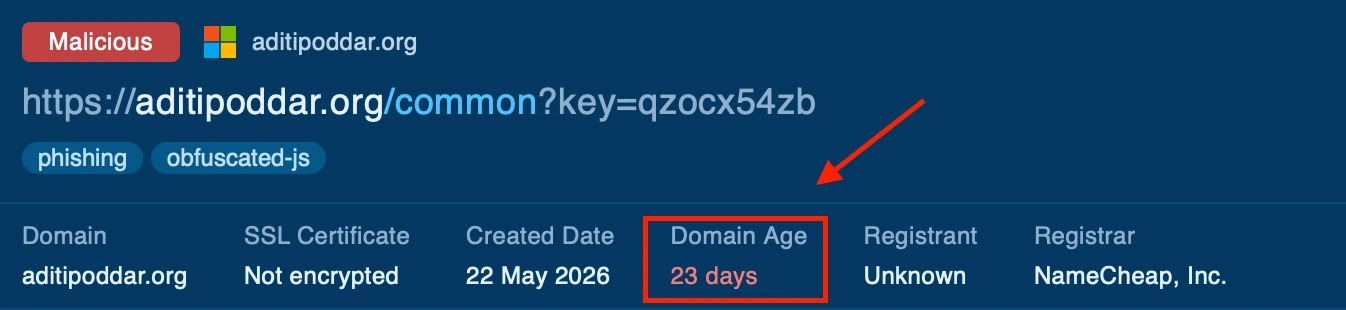
In this phishing case, the URL Details view immediately shows why the page deserves attention: a phishing verdict, triggered signatures, a rendered screenshot of the fake login page, related URL and domain details, IP statistics, and domain age.
Domain age is especially useful during phishing triage. A recently created domain can be a stronger warning sign when it appears together with suspicious page behavior, credential-focused content, or obfuscated scripts.
During browser execution, that code is forced to reveal its logic. Scripts run, DOM elements are generated, redirects happen, and the phishing flow becomes visible. HTML DOM Changes captures this dynamic state of the page, helping analysts see what was added, modified, or triggered after the page opened.
This gives analysts a clearer view of the real page behavior, including hidden forms, generated elements, redirects, and user interaction logic that would be difficult to understand from static code alone.
So, instead of guessing how the phishing page behaved, analysts can validate the threat faster, collect response-ready evidence, and pass cleaner context to Tier 2/3 or detection engineering.
Turn Browser Evidence into Threat Intelligence and Detection Coverage
Once analysts confirm what the phishing page does in the browser, the next step is to understand how far the threat goes.
This is where the investigation moves from one phishing URL to broader threat context. A domain, script, web-content hash, or page fragment can help uncover related activity, attacker-controlled infrastructure, and possible campaign links.
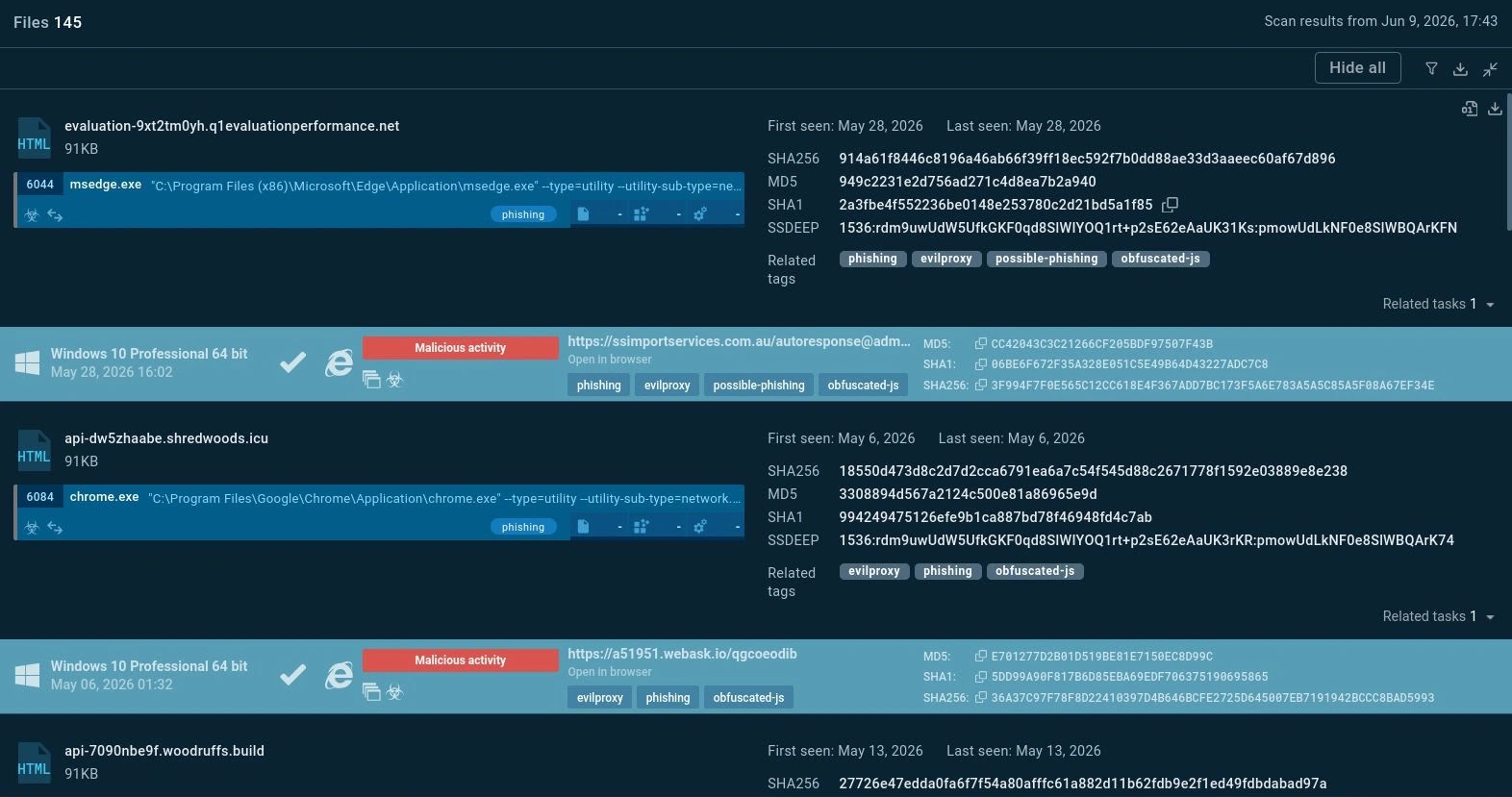
In this example, a YARA rule built from the phishing page helped identify 145 related samples in Threat Intelligence Lookup and YARA Search. This shows how one URL analysis can become a starting point for wider hunting and detection coverage.
Strengthen SOC Operations with Faster URL Phishing Triage
URL phishing investigations should not slow the entire SOC down. When analysts can see browser behavior, collect evidence, and expand the investigation from one place, every step becomes faster: triage, escalation, response, hunting, and reporting.
- Faster threat detection: MTTD is reduced to 15 seconds, helping analysts identify malicious activity earlier in the triage process.
- Lower response time: MTTR is reduced by up to 21 minutes per case by giving teams clearer evidence, faster verdicts, and fewer manual checks.
- Fewer unnecessary escalations: Tier 1 analysts get enough context to close or confirm more cases without sending every unclear URL to senior teams.
- Smoother handoffs: When escalation is needed, Tier 2/3 teams receive a clearer evidence package instead of disconnected screenshots, indicators, and notes.
- Stronger detection work: Browser-level evidence, page artifacts, and related threat context help teams build better rules, hunting logic, and phishing coverage.
- More efficient SOC operations: Analysts spend less time rebuilding attack flows manually and more time acting on threats that matter.
For security leaders, the value goes beyond faster analysis. Shorter triage cycles, better use of analyst resources, and earlier phishing detection help reduce operational pressure, improve response readiness, and lower the risk of costly incidents.