Enterprise cybersecurity is no longer delivered through isolated initiatives. It is delivered through portfolios.
A modern security roadmap may include an identity modernization program, MFA rollout, privileged access management, cloud remediation, backup resilience, third-party risk reviews, vulnerability reduction, audit commitments, application security improvements, and a dozen smaller initiatives that are all competing for the same people, budgets, systems, and executive attention.
On paper, each project may look manageable. In practice, the portfolio can become fragile very quickly.
A delayed IAM dependency can slow down the rollout of privileged access controls. A cloud remediation stream can miss an audit commitment because the infrastructure team is already overloaded.
A vulnerability management initiative can report “green” while the application owners responsible for fixing critical issues are committed to two other transformation programs. None of these situations begin as major failures. They begin as small gaps in visibility.
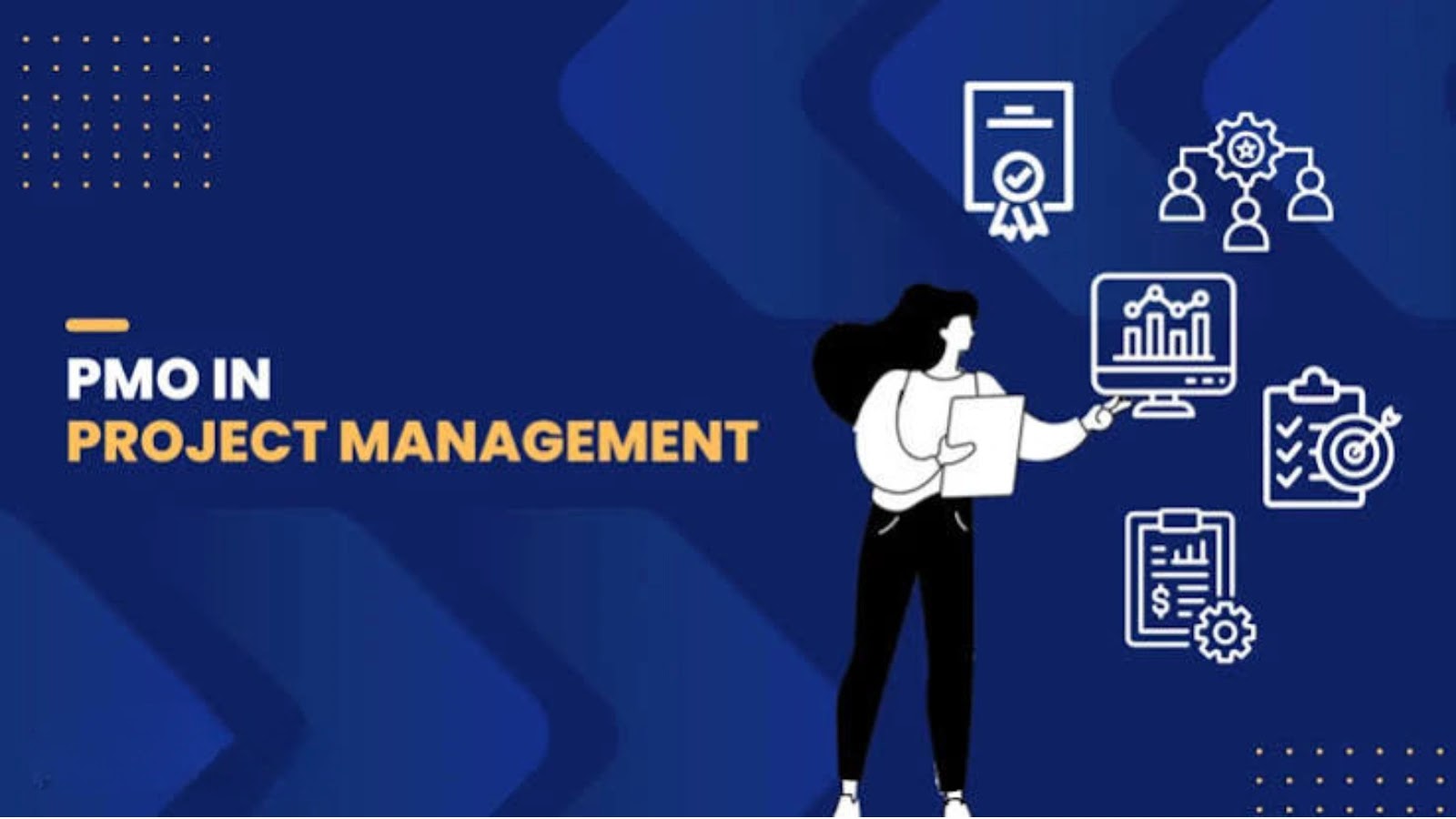
That is why enterprise PMOs need a different role in cybersecurity-led transformation. A PMO is not just an administrative layer. In large organizations, it should act as a governance function that helps leaders understand where strategic work is moving, where it is blocked, and where delivery risk is quietly turning into cyber risk.
Visibility Is Not Reporting
Many enterprises already produce more reports than anyone can read. Monthly dashboards, traffic-light summaries, steering committee packs, audit trackers, risk registers, and spreadsheets are everywhere.
The issue is not the absence of reporting. The issue is that reporting often arrives too late, at the wrong level of detail, or without the context needed for a decision.
Visibility is not reporting. Visibility is the ability to understand, in time, how project execution affects business risk, regulatory exposure, resilience, and operational capacity. This distinction matters. A project status report may say that an MFA rollout is 70% complete.
A portfolio view should show whether that rollout depends on identity data cleansing, whether the IAM team is over capacity, whether critical business units are still outside the scope, whether exceptions have been approved, and whether the delay affects an upcoming audit or board commitment.
That is a very different conversation.
In cybersecurity, a weak view of dependencies can create a false sense of progress. One team may report successful completion of endpoint hardening while another is still waiting for network segmentation decisions.
A cloud security program may appear to be on schedule, while remediation of high-risk workloads is stuck because business owners have not approved downtime windows. A third-party risk improvement plan may be funded, but the legal and procurement teams may not have the capacity to update contractual controls at the required pace.
These are not only delivery issues. They are governance issues.
The PMO as a Control Tower for Cyber Change
The role of the enterprise PMO has expanded because the nature of enterprise change has changed. Cybersecurity programs now cut across technology, operations, legal, finance, procurement, risk, compliance, and business leadership.
No single project manager, security architect, or CISO office can maintain a reliable view of every dependency and resource conflict without a structured portfolio layer.
This is where the PMO becomes valuable.
The best PMOs do not simply collect updates. They create a common operating model for governance, prioritization, escalation, and decision-making. They help the organization answer practical questions that matter:
· Which projects reduce the most material risk?
· Which initiatives are competing for the same critical resources?
· Which delays affect compliance commitments?
· Which dependencies are invisible at project level but material at portfolio level?
· Which risks need executive intervention rather than another working group?
That is the only list this article needs, because the point is simple: enterprise PMOs create decision-quality visibility.
The Project Management Institute has long positioned PMO work in relation to portfolio and program governance, not merely project administration. In cybersecurity, that distinction is especially important.
A PMO that only records status becomes a reporting office. A PMO that connects strategy, risk, resources, dependencies, and executive action becomes part of the organization’s control environment.
Cyber Governance Needs a Portfolio View
Cybersecurity governance is becoming more explicit and more demanding. The NIST Cybersecurity Framework 2.0 introduced “Govern” as a core function, emphasizing organizational context, roles, responsibilities, oversight, policy, and supply chain risk management. The message is clear: cyber risk cannot be managed only through tools and controls. It has to be governed.
For enterprise PMOs, that creates a natural point of connection.
A security roadmap is not just a backlog of technical work. It is an execution model for governance. It shows whether the organization is actually implementing the controls, programs, and operating changes it has committed to. It also shows whether those commitments are realistic.
This becomes particularly important when leadership needs to understand the relationship between project delivery and risk exposure. A board may ask whether the organization is improving its cloud security posture.
The answer should not be a vague statement about progress. It should be possible to show which remediation streams are complete, which workloads remain exposed, which teams are blocked, which vendors are involved, and which deadlines affect regulatory or audit obligations.
The SEC’s cybersecurity disclosure rules have also raised the level of attention around risk management, strategy, governance, and incident disclosure for public companies. Even when a company is not directly subject to those rules, the broader expectation is moving in the same direction: leadership needs clearer evidence that cybersecurity risk is being actively managed, not merely discussed.
That evidence often lives inside projects.
If an enterprise cannot see the status, ownership, dependencies, risks, and constraints across its cyber-related initiatives, it cannot confidently explain how its security strategy is being executed.
Where Poor Visibility Becomes Operational Risk
The danger of poor portfolio visibility is that it rarely announces itself early.
It usually appears as friction. A project slips by two weeks. Then another slips because it depended on the first. The same security architect is assigned to three high-priority initiatives. The audit team asks for evidence that has to be assembled manually.
Business units request exceptions because rollout planning did not account for local operational constraints. A senior steering committee sees the issue only when the delay is already material.
By that point, the PMO is not managing the problem. It is explaining the damage.
Consider a common enterprise scenario: a global MFA rollout. The cybersecurity team owns the control objective. IT operations owns deployment. HR systems influence identity records. Application teams need to validate access patterns. Regional business units need communication and exception handling. Compliance needs evidence. The CISO needs risk reduction.
The board wants confidence. A simple project plan cannot fully capture that complexity unless it is connected to a broader portfolio model. Without portfolio-level decision-making, the rollout may look like a technical implementation when it is actually a business-wide governance initiative.
The same pattern appears in cloud remediation. Security teams identify misconfigurations. Engineering teams need to fix them. Product owners must approve changes. Finance may need to fund tooling. Legal may care about data residency. Audit may already have a finding open. If these activities are tracked in separate systems, leadership sees fragments instead of a risk picture.
That is how organizations end up with reports but no clarity.
Better Visibility Requires Better Data Discipline
It is tempting to treat PMO visibility as a dashboard problem. It is not. Dashboards are useful only when the underlying operating model is disciplined.
A strong PMO visibility model requires common project definitions, consistent risk scoring, clear ownership, dependency mapping, resource capacity data, escalation thresholds, and a reporting cadence that supports decisions rather than theatre.
If every team defines “done” differently, if risks are written in vague language, or if project dates are updated only before a steering committee, no tool can produce a trustworthy view.
Wellingtone’s State of Project Management research has repeatedly highlighted persistent problems around project visibility, manual reporting, and access to real-time project KPIs. That should not surprise anyone who has worked inside a large organization. The mechanics of reporting often consume PMO time that should be spent on analysis, intervention, and governance improvement.
Manual reporting also creates a latency problem. In cybersecurity, latency matters. A portfolio view that is three weeks old may be too old to guide prioritization around vulnerabilities, compliance deadlines, resource conflicts, or incident-readiness work.
This is why enterprise PMOs need systems that allow them to move from status collection to active governance. For security and transformation leaders evaluating Best PPM Project Management Software, the priority should not be more reporting volume.
The priority should be a single environment that connects portfolio governance, resource planning, risk visibility, dependency management, and executive decision-making.
The Board Does Not Need More Detail. It Needs Better Signals.
Board-level cybersecurity conversations have matured. Directors increasingly understand that cyber risk is not only a technical issue. It is a business risk, an operational risk, a legal risk, and sometimes a market-confidence risk.
But board reporting is still difficult. Too much technical detail obscures the message. Too little detail creates false reassurance. The PMO can help bridge this gap when it translates delivery data into governance signals.
The board does not need to know every task in a PAM implementation. It does need to know whether the program is on track, whether privileged accounts in critical systems remain outside control, whether dependencies are delaying rollout, and whether current resource levels match the risk appetite the organization has approved.
That is the value of board reporting when supported by a mature PMO. It does not reduce cyber risk by itself. It makes risk visible enough for leaders to act before the organization is forced to react.
IBM’s Cost of a Data Breach research has shown the financial consequences of cybersecurity failure, with the global average breach cost reaching millions of dollars. That kind of figure is often used to justify cyber investment. But investment alone is not enough. Organizations also need the execution discipline to make sure funded initiatives actually reduce risk.
A poorly governed portfolio can waste money while still leaving the enterprise exposed.
PMO Visibility Is Becoming Part of Cyber Resilience
Cyber resilience depends on more than incident response plans. It depends on whether the organization can change safely, prioritize intelligently, and recover confidence when conditions shift.
A PMO with strong cross-project visibility helps resilience in three ways.
First, it makes trade-offs explicit. If the same IAM team is needed for MFA, privileged access, and identity governance, leaders can see the conflict and decide what matters most.
Second, it exposes hidden dependencies. If backup modernization depends on cloud architecture decisions, or if audit remediation depends on application owner availability, those links need to be visible before deadlines are missed.
Third, it creates an evidence trail. When regulators, auditors, insurers, or executives ask how cyber risk is being managed, the organization can point to structured decisions, ownership, timelines, risks, and corrective actions.
This is not bureaucracy. It is operational memory.
In large organizations, people move roles, vendors change, priorities shift, and incidents interrupt planned work. A mature PMO gives the enterprise continuity. It keeps the portfolio understandable even when the environment changes.
The Future PMO Is a Governance Partner
The enterprises that will handle cyber transformation best are not necessarily those with the most projects. They are the ones that can see clearly across the projects they already have.
That requires a PMO model built around visibility, governance, dependencies, resource conflicts, cyber risk, and portfolio-level decision-making. It also requires the humility to admit that a green status report is not the same as control.
Cybersecurity programs fail as portfolios before they fail as individual projects. A missed dependency, an overloaded team, a delayed remediation stream, or a weak reporting model can quietly increase risk long before the issue reaches the board.
Enterprise PMOs are in a position to change that. Not by adding another layer of administration, but by giving leaders a clearer view of execution reality. In cyber governance, that view is no longer optional. It is part of how modern organizations protect trust, prove accountability, and deliver security change at enterprise scale.