Security operations center (SOC) automation has become one of the biggest trends in cybersecurity. Organizations are investing heavily in AI, orchestration, and automated response technologies in pursuit of faster detection and reduced operational costs.
However, effective SOC automation requires a practical approach grounded in business priorities, realistic expectations, and measurable outcomes.
SOC Automation Starts with Better Data, Not Bigger Promises
For security leaders, the goal should not be to replace analysts overnight with a fully autonomous detection and response pipeline. Even the most advanced SOCs continue to rely on human expertise for investigation, decision-making, and threat hunting.
The winning approach is not to get rid of analysts — it is to supercharge them. Start by deploying proven, battle-tested tools that have already demonstrated their ability to lift workloads, slash manual effort, and eliminate the alert fatigue that burns out even the best security talent. Build your automation stack layer by layer, beginning with the workflows where speed and consistency matter most: threat detection, alert enrichment, triage, and response.
Threat Intelligence Feeds sit at the heart of this pragmatic, high-impact automation strategy. They are not futuristic promises. They are production-ready capabilities delivering measurable MTTR reductions in SOCs right now.
Where the Intelligence Comes From
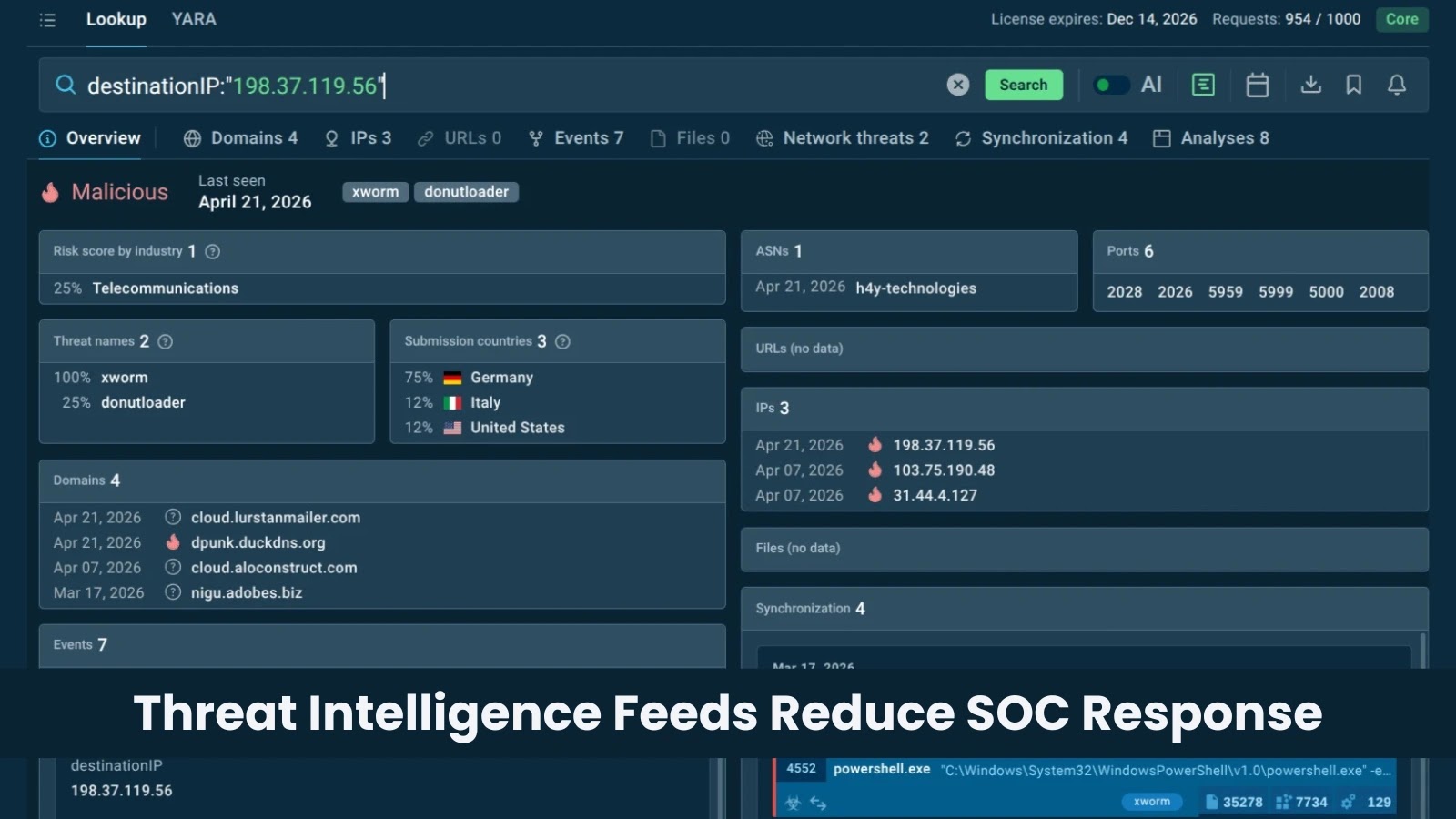
This is not threat intelligence assembled from passive honeypots or recycled from third-party aggregators. It is verified, sandbox-confirmed intelligence harvested from millions of hands-on malware analysis sessions conducted on live samples.
The result is a continuously refreshed stream of high-confidence, low-noise Indicators of Compromise (IOCs) — malicious IP addresses, domains, and URLs.
Every IOC in the feed is enriched with a full sandbox report, giving analysts not just the indicator itself, but the complete behavioral picture behind it: file drops, registry changes, network activity maps, C2 connection graphs, and the corresponding MITRE ATT&CK TTP mapping.
How TI Feeds Automate Key SOC Workflows
1. Automated Alert Triage and False Positive Elimination
Alert fatigue is not just an annoyance — it is a systemic failure mode that degrades detection quality and accelerates analyst burnout. The root cause is almost always the same: too many alerts lacking context, forcing analysts to manually investigate noise alongside signal.
Only high-confidence, contextually rich threats surface for human review — dramatically reducing the false positive burden and allowing your team to triage faster and smarter.
2. Real-Time Detection Enhancement for SIEM, IDS/IPS, and EDR
Fresh intelligence is only useful if it reaches your detection tools before the attack does. TI Feeds integrate seamlessly with SIEM platforms, IDS/IPS systems, and EDR solutions via API, SDK, and standard feed connectors, enabling continuous, automated updates to detection rules and blocklists.
The feed supports the creation and automated updating of new detection rules across your environment, ensuring your defenses evolve in step with the threat landscape rather than chasing it.
3. Automated Threat Hunting at Scale
Threat hunting often requires analysts to manually collect indicators from multiple sources before searching for them across the environment.
With Threat Intelligence Feeds, organizations can continuously import fresh indicators into their security infrastructure and automatically search for matches across logs, endpoints, and network telemetry. This allows hunting activities to operate at machine speed while enabling analysts to focus on investigation and validation.
4. Automated Response via SOAR Integration
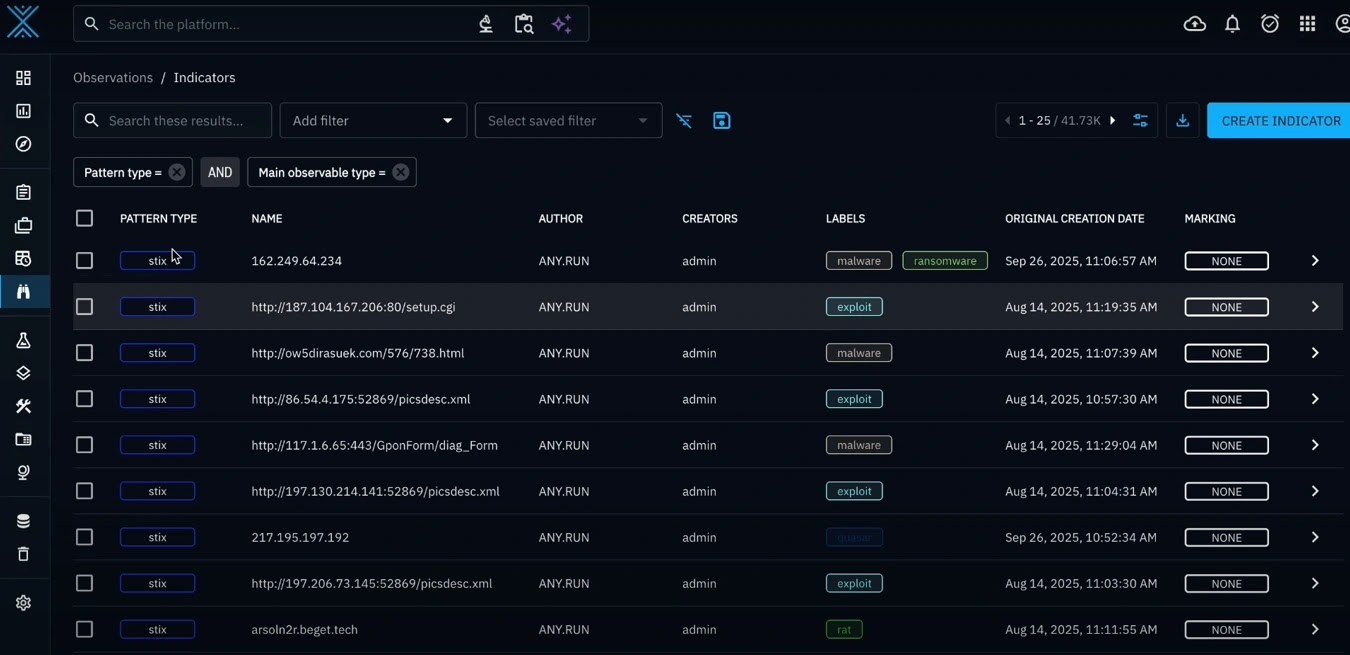
When a new malicious indicator is confirmed and matched in your environment, automated playbooks can immediately execute containment actions: blocking IPs at the firewall, quarantining suspicious files, isolating endpoints, or triggering escalation workflows.
This is where MTTR reductions become dramatic. Response times that previously measured in hours, dependent on analyst availability, shift coverage, and manual handoffs, compress to minutes. And crucially, the consistency and quality of response do not degrade under pressure or at 3 a.m.
5. Enabling Junior Analysts to Operate at Senior Level
One of the most underappreciated ROI drivers of TI Feed automation is the leverage it gives to less experienced analysts. When every alert arrives pre-enriched with behavioral context, sandbox reports, TTP mappings, and clear threat classification, a Tier 1 analyst can confidently handle incidents that would previously have required senior escalation.
The intelligence does the heavy lifting; the analyst focuses on judgment and action. This expands your effective capacity without expanding your headcount.
Integration Potential: Fitting Into Your Existing Stack
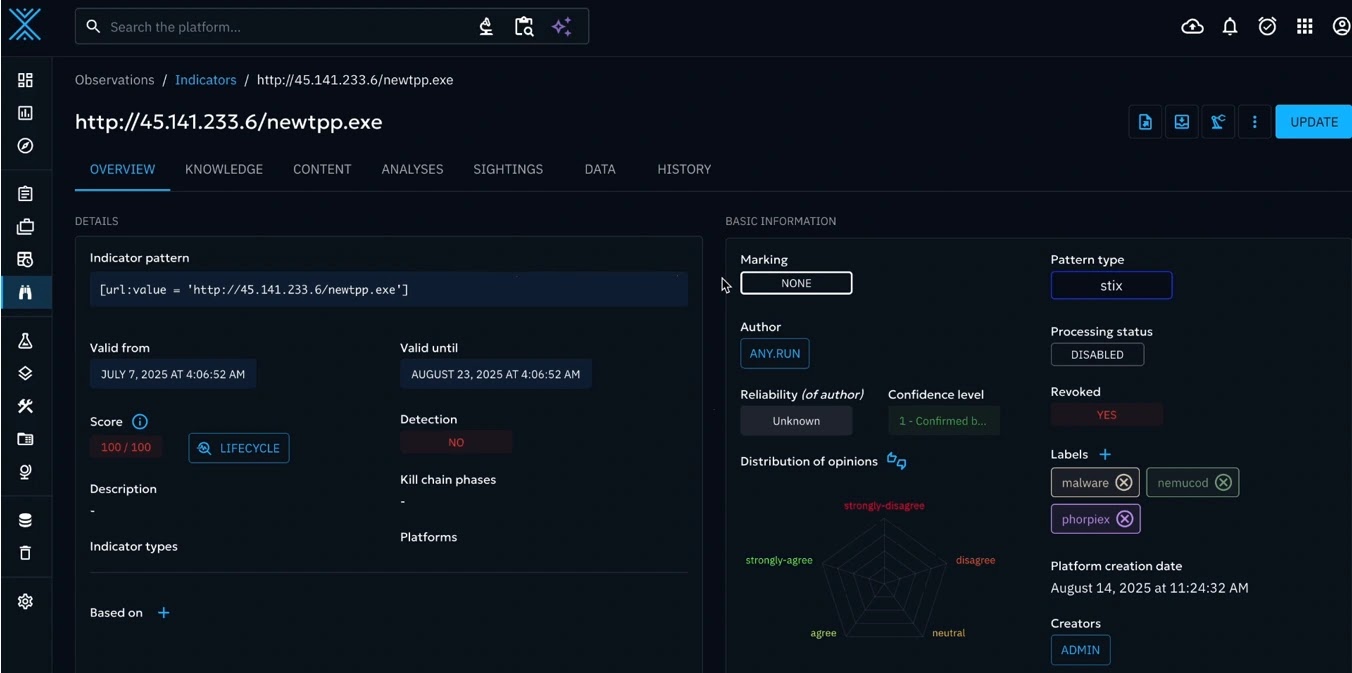
The feeds deliver IOCs and contextual intelligence in structured, automation-ready formats — meaning your existing investment in security tooling is amplified, not replaced.
Conclusion: Automate Intelligently, Starting Where It Counts
SOC automation done right is not about replacing human judgment. It is about making human judgment faster, sharper, and less exhausting. The organizations that will win the automation race in the next few years are not the ones that rush to deploy the most sophisticated AI.
They are the ones that systematically remove friction from their analysts’ most time-sensitive workflows: detection, enrichment, triage, hunting, and response.
By feeding sandbox-verified, continuously refreshed intelligence directly into their SIEM, SOAR, IDS/IPS, and EDR stack, they address the root causes of high MTTR: stale detection rules, alert noise, manual enrichment bottlenecks, and slow response handoffs.
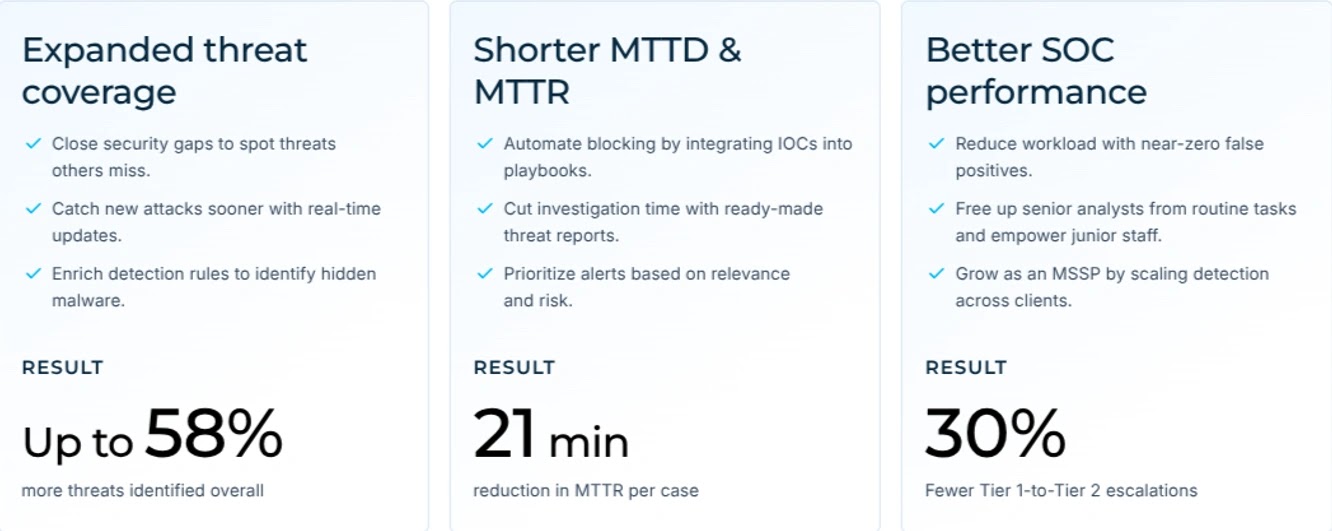
The path to a high-performance and lower-MTTR SOC starts with empowering your analysts with the right intelligence at the right time — automatically. That is not tomorrow’s vision. That is a capability you can deploy today.