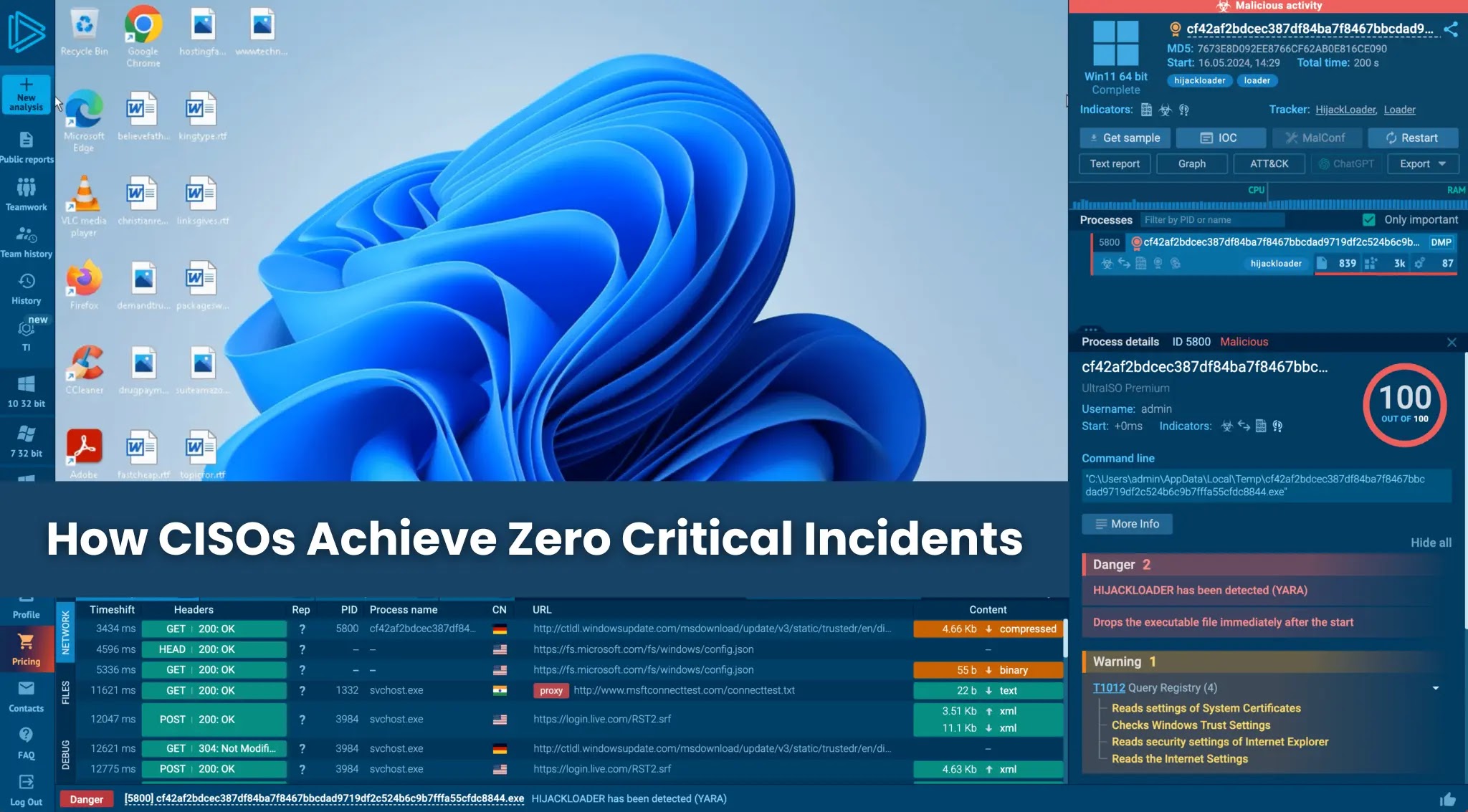
How many alerts in your SOC are truly business-critical, and how many only look urgent because the team lacks context? This is one of the hardest questions for CISOs today. Without clear visibility, teams can waste time on noise while real phishing and malware threats move deeper into the environment.
Top CISOs are solving this by treating visibility as a core risk-control strategy. The goal is not just to detect more, but to understand threats faster, connect weak signals earlier, and give the SOC enough evidence to prevent incidents before they become critical.
Why SOCs Miss Business-Critical Risk
Most SOCs miss threats because the full picture is split across too many signals, tools, and investigation steps. This creates several visibility gaps:
- Weak signals look harmless until they are connected to a larger phishing or malware chain.
- Teams lose time switching tools instead of confirming risk fast.
- Threat behavior stays unclear when files, URLs, domains, and network activity are reviewed separately.
- Senior staff get overloaded because Tier 1 teams do not always have enough context to close cases confidently.
- Business risk stays open longer while the SOC works to answer what happened, how far it went, and what action is needed.
The Fastest Way to Close Visibility Gaps
The fastest way to close visibility gaps is to connect every stage of investigation: known indicators, live threat behavior, historical context, and response-ready evidence. Without that connection, teams lose time rebuilding the story behind each alert. With it, they can confirm risk faster and respond before a weak signal turns into a serious incident.
1. Expose the Full Attack Chain in Seconds
The first step to closing visibility gaps is seeing what the threat actually does. A suspicious file or phishing link may look limited at first, but once it runs in a live environment, the real behavior becomes clear: redirects, payload delivery, network connections, process activity, persistence attempts, and other signals that help the SOC understand risk fast.
For CISOs, this means faster validation and stronger evidence. Teams can quickly understand whether an alert is noise, suspicious activity, or a real threat that needs action.
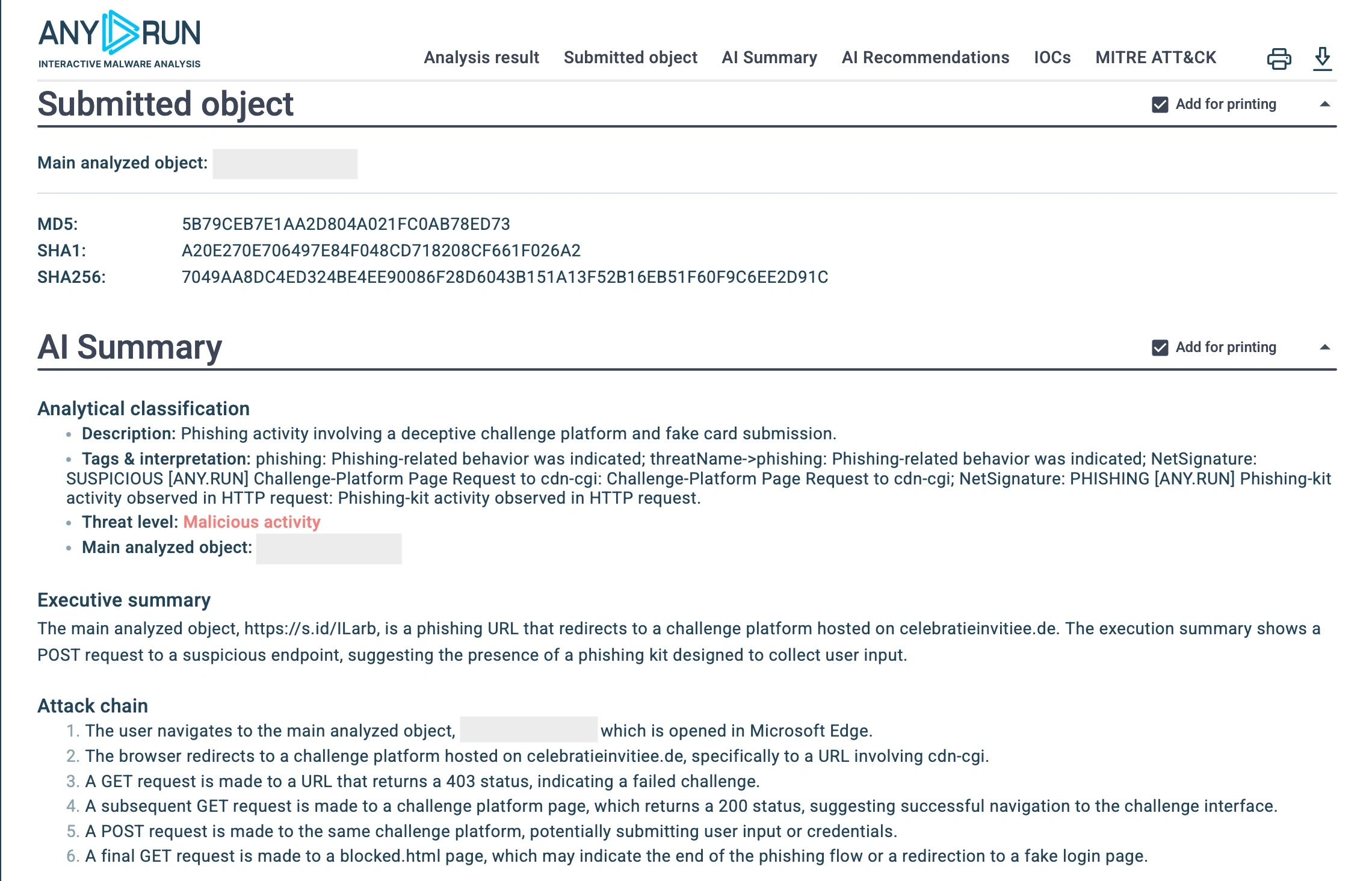
2. Connect Every Indicator to Wider Threat Context
Seeing the attack behavior is only part of the picture. CISOs also need to know whether the same indicators, infrastructure, or techniques have appeared before. A single IP, domain, file hash, or URL can show whether the case is isolated or part of a wider phishing or malware campaign.
This gives teams stronger visibility into:
- Known malicious activity connected to the same IPs, domains, URLs, or hashes
- Related samples and attack chains that show how the threat behaves in other cases
- Malware families and campaign patterns linked to the same infrastructure
- Additional IOCs that can be added to SIEM, SOAR, EDR, or detection rules
- Threat relevance by industry, region, or target type to understand business exposure
- Early warning signals from attacks already seen across other organizations
- Stronger evidence for escalation when a case needs senior review or incident response
- Faster case closure when the threat is confirmed as known, low-risk, or already tracked
For CISOs, this turns isolated alerts into risk intelligence. The SOC can understand not only what happened in one sandbox session, but also how that threat fits into the wider attack landscape. That context helps teams prioritize faster, improve detection coverage, and respond with more confidence.
3. Bring Threat Visibility into Existing SOC Workflows
Visibility should not stay inside one investigation. To reduce critical incidents, threat intelligence needs to reach the tools where SOC teams already detect, triage, and respond. This is where real-time threat feeds help CISOs turn investigation findings into broader protection.
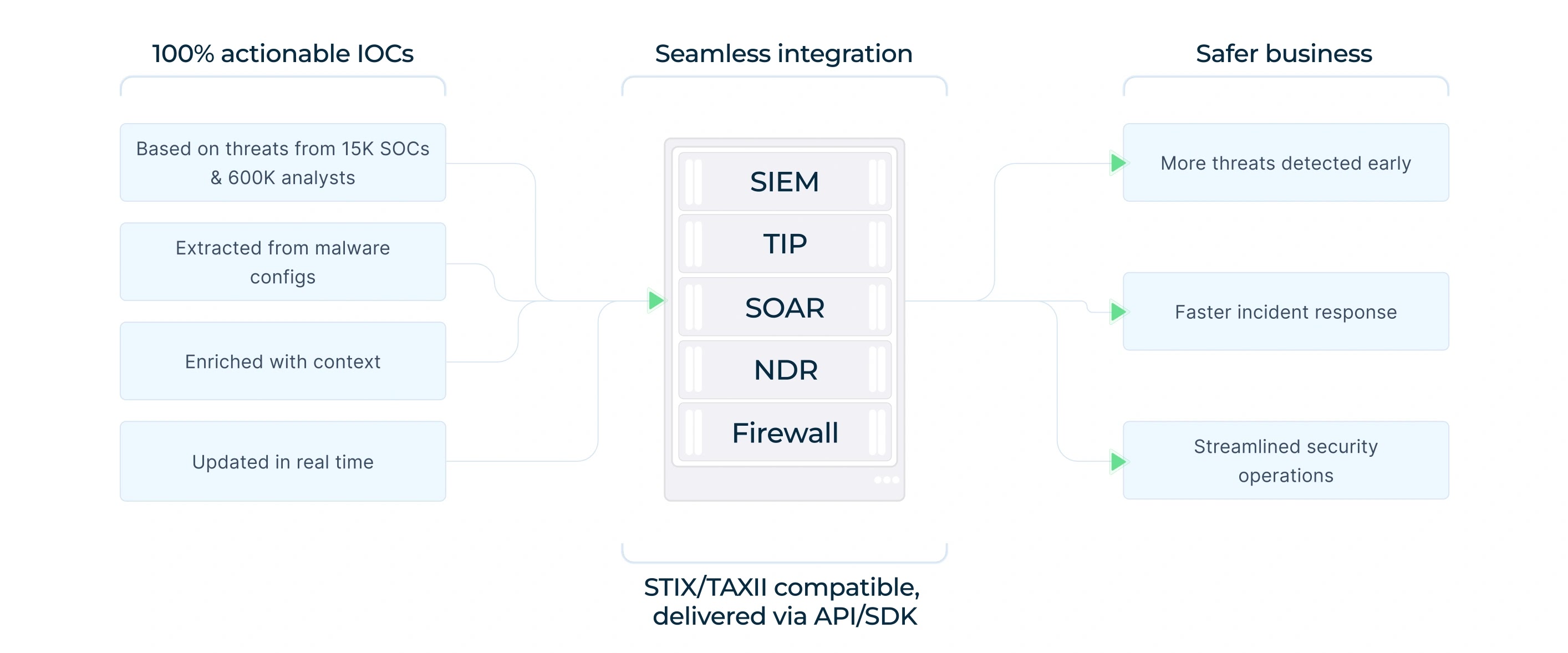
With malicious IPs, domains, URLs, and file hashes delivered into SIEM, SOAR, TIP, EDR, and other security systems, teams can spot known threats earlier and strengthen detection before similar activity reaches more users, endpoints, or clients.
For CISOs, this closes the loop between investigation and prevention. The SOC does not only analyze one phishing link or malware sample; it turns that visibility into intelligence that can support faster detection, stronger response, and better protection across the environment.
Strengthen Risk Visibility with ANY.RUN Enterprise Suite
For enterprise teams, better visibility also needs control: privacy for sensitive cases, coverage across major operating systems, shared context across teams, and enough evidence to move investigations forward without overloading senior staff.
- Analyze threats across Windows, macOS, Linux, and Android to reduce blind spots across mixed enterprise environments.
- Keep sensitive investigations private with private analyses, advanced privacy controls, SSO, and team-based access.
- Confirm high-risk behavior faster by seeing whether a case involves credential theft, payload delivery, C2 communication, remote access abuse, or fileless execution.
- Give Tier 1 teams clearer evidence with sandbox sessions, AI Summary, and Tier 1 Reports that help reduce unclear escalations.
- Help senior teams act faster with behavior details, IOCs, historical context, and reports ready for IR, SOC managers, and leadership.
- Improve detection coverage with TI Lookup and YARA Premium to connect related infrastructure, malware families, attack patterns, and additional indicators.
- Scale investigations across the SOC with API access, workspace analytics, full task history, and shared visibility across team workflows.