Robust defense systems are built on a clear understanding of current threats and the ability to translate it into consistent decisions and measurable outcomes at optimal cost.
High-performing SOCs achieve this by eliminating unnecessary work and operationalizing threat data. At the core of this model lies threat intelligence that is:
- Relevant to active threats
- Actionable within existing workflows
- Curated to reduce false alerts
Not all threat data sources meet these criteria. The difference becomes evident in how effectively they reduce investigation efforts and overall SOC costs.
To Improve Triage, Start At the Source
Inefficient triage is often not an operational issue. More commonly, the challenge stems from the quality of data analysts rely on. When intelligence lacks context, clarity, and validation, analysts are forced to prioritize speed over accuracy.
On one side, every false alarm consumes valuable time. On the other, missed signals increase risk exposure. With SOC teams caught between the two fires, real threats slip through.
The core issue in this scenario isn’t process related. It’s low-quality threat data that allows false alerts to flood detection systems. That’s why streamlined alert triage starts with reducing noise at the source.
When threat intelligence is derived from real-world attack behavior and gets validated before entering detection pipelines, the dynamic changes. Alerts become clearer signals; enriched with context that supports all subsequent decisions.
Strong alert triage depends on context-rich intelligence that doesn’t require external manual verification. When alerts are structured and pre-validated, the focus shifts from filtering noise to prioritizing risk.
Operational Impact of High-Quality Threat Intelligence Feeds
- 99% unique indicators, structured for fast access
- Near-zero false positives rate that reduces alert fatigue
- Embedded behavioral context for faster investigations
- Smooth integration into SIEM, SOAR, EDR workflows
That’s what fuels a strong triage workflow. Reduced noise and fewer redundant alerts lower analyst workload and lead to more consistent outcomes, prioritized incidents, and automated playbook refinement.
This becomes possible with high-quality threat intel derived from investigations done by 15,000 SOC teams and 600,000 security professionals across industries and regions.
Relevant Threat Context For Alert Enrichment
Beyond initial alert processing, investigations often stall during enrichment. Tool sprawl, isolated indicators, and lack of context: these common factors make it hard for analysts to filly understand threats and proceed with confidence.
In practice, this results in excessive manual effort spent gathering context during investigation across multiple external sources. Decision-making slows down, causing escalations that could be prevented.
Earlier access to reliable threat context simplifies this pipeline and reduces the overall incident investigation cost.
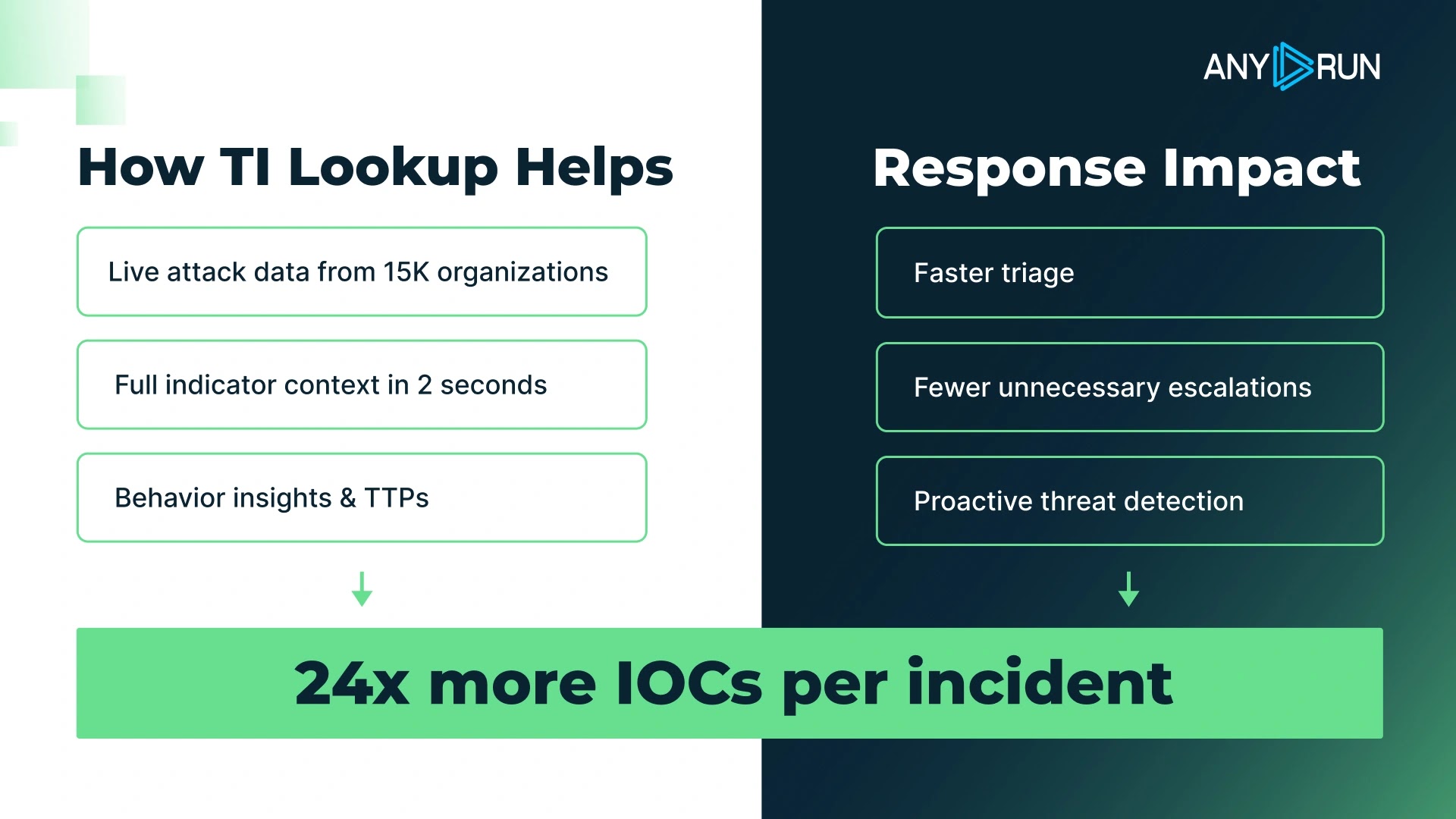
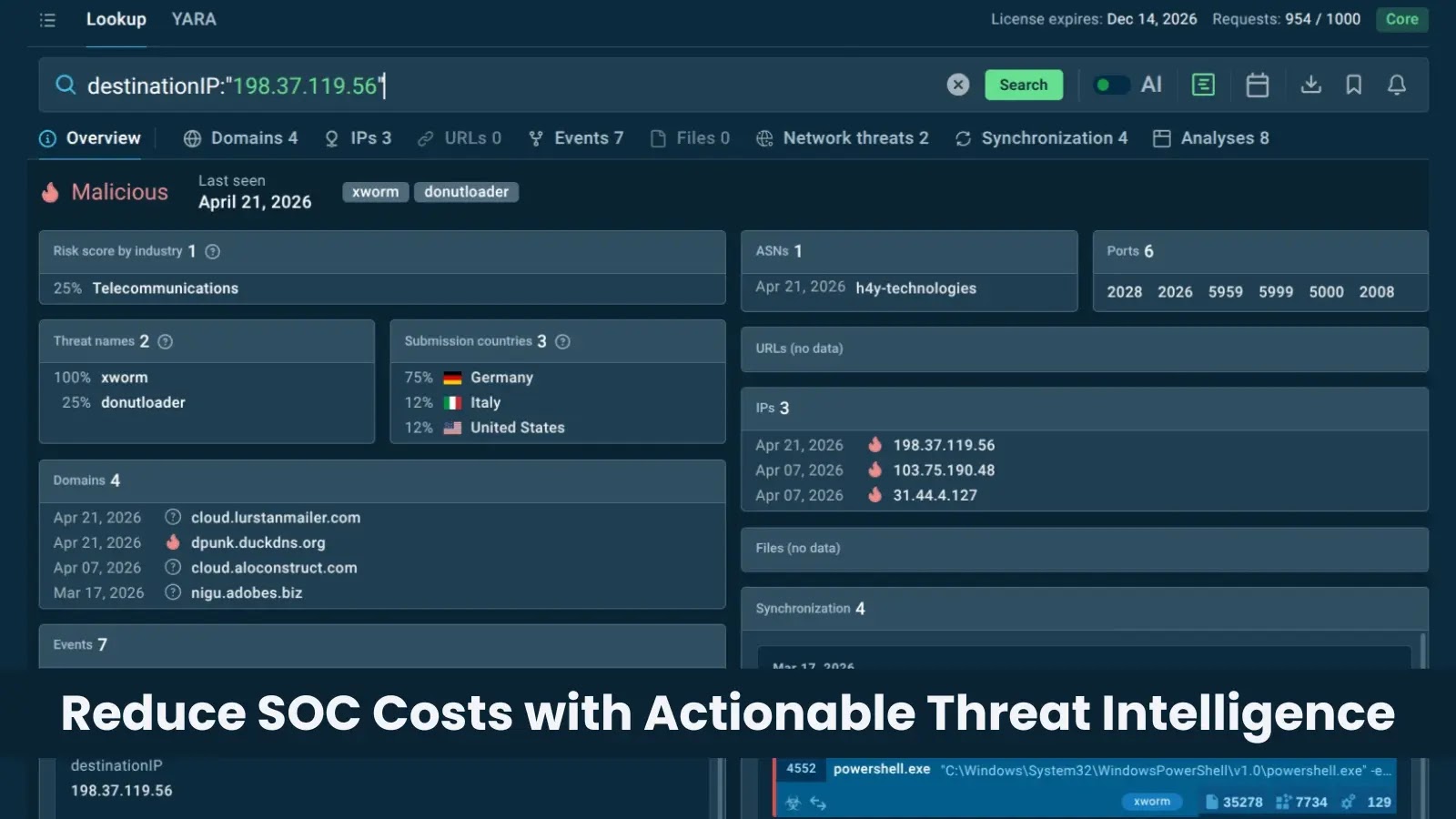
Using TI Lookup, analysts enrich any incident-related artifact like IP, domain, hash, or URL with verified context, threat connections, and associated TTPs. It takes seconds to go from a single IOC to full threat context:
Operational Impact of TI Lookup
- Reduced need for manual enrichment
- Instant visibility into threat context and connections
- Reduced investigation time per incident
- Behavioral insights aggregated from 15K SOC teams’ investigations
Actionable Threat Intelligence Layer
Fewer escalations, less manual work, and more confident decisions are the outcomes of embedding threat context grounded in real, relevant attack activity.
Conclusion
Threat intelligence reduces the uncertainty around alerts and indicators for better detection and investigation cycles, improving decision accuracy while lowering operational cost.
Incident costs decrease through earlier threat detection and understanding, incident response accelerates with access to current, validated intelligence, and security investments deliver stronger ROI when team capacity is focused on confirmed threats.