Katrina Thompson
Walk into any major security conference in 2026 and you will encounter vendors from every category claiming to be AI SOC solutions: from legacy SIEM vendors with bolted on AI assistants to SOAR platforms rebranded as agentic.
For security teams evaluating their options, this terminology has become something of a liability. According to Prophet Security, a provider of AI-powered SOC analyst technology, the most common mistake buyers end up making is evaluating vendors within the wrong category entirely.
This article provides a practical guide to the four categories that actually matter when differentiating between “AI SOCs” : AI-first platforms, incumbents with AI extensions, MDR, and automation with AI.
What “AI SOC” Actually Describes
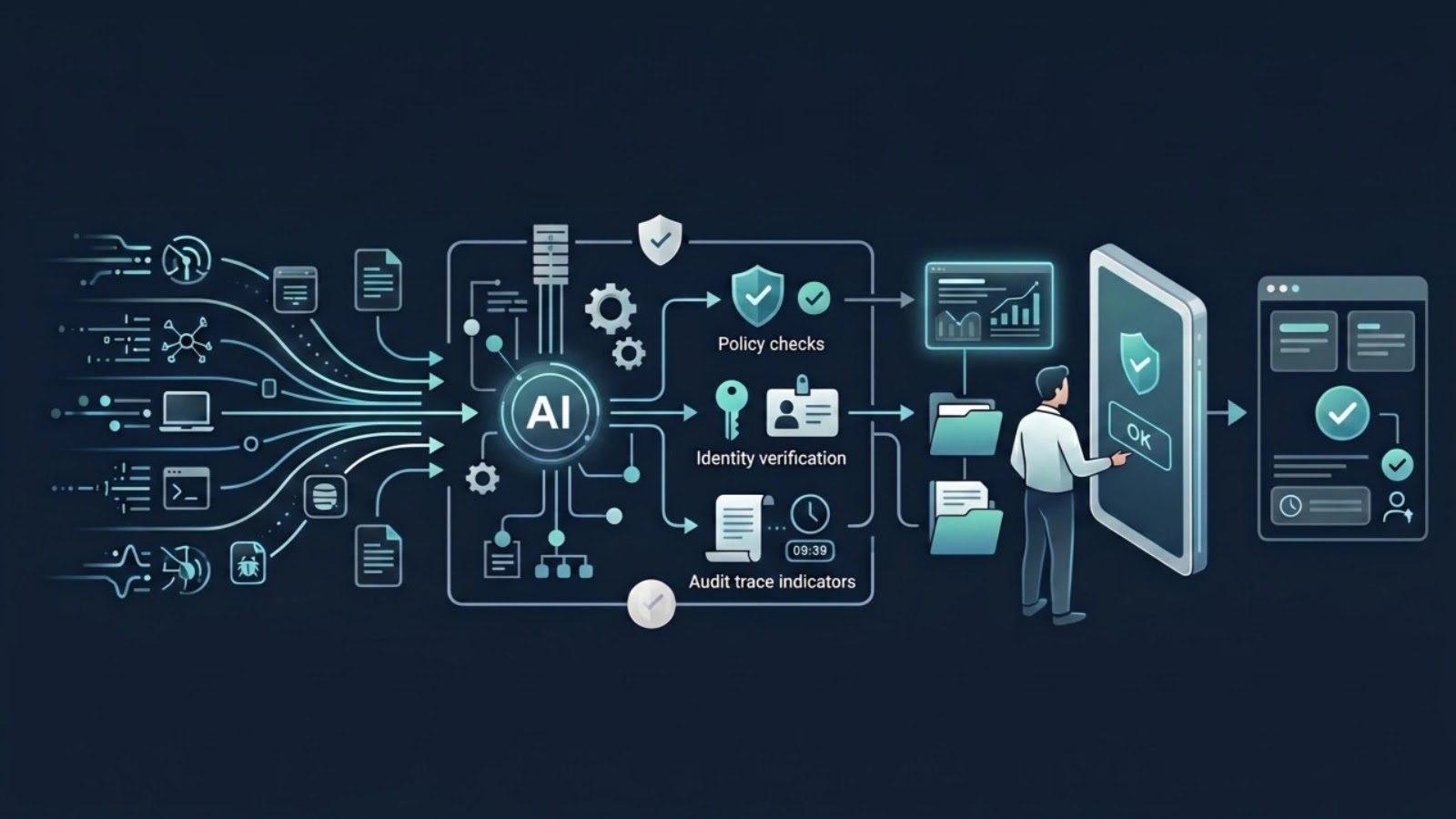
An AI SOC is a security operations environment that uses AI to handle alert investigation autonomously, rather than simply lining up work for human analysts to process manually. The defining characteristic is agentic behavior: AI plans the steps of the investigation, gathers evidence across tools, correlates telemetry, and comes up with conclusions, backed up by documented logic.
These agentic capabilities differ from an AI assistant that only summarizes alerts, or a SOAR playbook that only routes tickets based on predefined rules. The ability to act autonomously sets true AI SOCs apart.
Category 1: AI-First Platforms
AI-first platforms are built from the ground up with autonomous investigation as the core objective. Instead of lining up alerts in a queue, they dispatch AI agents to investigate each alert with little to no human intervention. The result is more than a summary: it’s a case file for analysts to action, complete with a conclusion and supporting evidence.
Prophet Security falls into this category. AI agents execute end-to-end investigation workflows, producing fully documented conclusions that analysts can review, override, or act on. Its emphasis on explainability differentiates it from black-box systems that fail to show how the AI reached its conclusions.
Command Zero, whose expert-question-driven investigations span Tier 1 through Tier 3 work, and 7AI, which runs swarms of specialized security agents, are also building in this category.
For organizations that need to investigate 100% of incoming alerts (rather than triaging only a portion of them), AI-first platforms are the only category capable of accomplishing that at scale. No stone left unturned.
Category 2: Incumbents with AI Extensions
The major security platforms (Microsoft Sentinel with Security Copilot, CrowdStrike Falcon, Splunk Enterprise Security, Google Chronicle, Palo Alto Networks Cortex XSIAM) have all added AI capabilities in the last 18 months.
These solutions are not AI-native, but rather extensions of platforms built around different core functions: log aggregation, endpoint detection, SIEM, or XDR.
The AI layer improves analyst productivity within those environments, but it does not replace the analyst’s role in connecting findings across them. The analyst must still perform that legwork themselves.
Category 3: Managed Detection and Response (MDR)
Modern MDR providers have embedded AI into their triage and investigation workflows, using it to handle high-volume, lower-complexity alerts and prioritize findings for human analysts. ReliaQuest, for example, reports a 70% increase in detection speed for enterprise customers using its GreyMatter platform, a marked improvement over analyst efforts alone.
AI-assisted MDR is the right choice for organizations that want a boosted SecOps capabilities without building them out internally, but MDR does not offer the same degree of visibility or customization that an internal team using an AI-first platform would have.
Category 4: Automation Platforms (SOAR with AI)
SOAR platforms automate repeatable SOC workflows: alert routing, containment actions, ticket creation, notification. Vendors like Torq, Swimlane, and others have added AI agents to their orchestration platforms, branding the combination as an agentic SOC capability.
This is known as AI-extended automation. The upside is AI assistance, improving investigation speed by up to 61% according to the Cloud Security Alliance; the downside is that investigation playbooks still need to be updated by humans, adding time on the back end.
By contrast, agentic AI (“AI-native”) autonomously adapts its investigative approach based on the (changing) evidence it encounters, without waiting for a human to update a playbook.
AI-extended automation is better for orgs with well-understood threat patterns. AI-native investigation is better for orgs facing novel threat patterns and limited capacity updating and maintaining static playbooks.
The Questions That Matter in Evaluation
To avoid the growing confusion of the AI SOC market, procurement teams can cut through marketing claims with the following set of questions:
Does the AI investigate autonomously, or does it assist a human who is investigating?
Assistance means it supports a human who is still doing the analytical work. Autonomous investigation means the system executes the full inquiry.
Can the AI explain its reasoning?
Black-box verdicts are not ideal or even operationally viable in highly regulated environments or when audits are on the line.
Does the system work across the tools you already have?
Integration across your toolstack determines how much of the investigation workflow can actually be automated (EDR, identity, cloud, email).
What is the human’s role in the model?
What decisions does the AI make independently, and what requires analyst review? Can that threshold easily be moved to accommodate changes in alert volume or risk?
Why the Category Distinction Changes the Evaluation
Security buyers who approach the AI SOC market as a single, undifferentiated category risk making decisions based on marketing claims rather than key architectural differences; which can result in widely different outcomes: in mean time to investigate, in coverage rates, in efficiency gains.
A legacy SIEM with a tacked-on AI layer and an AI-native agentic platform may appear in the same vendor shortlists, but the operational gap between them is significant. Buyers owe it to themselves to know the difference.
Author – Katrina Thompson
An ardent believer in personal data privacy and the technology behind it, Katrina Thompson is a freelance writer leaning into encryption, data privacy legislation, and the intersection of information technology and human rights. She has written for Bora, Venafi, Tripwire, and many other sites.