
Persistence mechanisms play a critical role in modern cyberattacks, helping malware remain active on compromised systems even after reboots, log-offs, or restarts.
By exploiting built-in system features, attackers ensure their malicious programs continue operating undetected.
Learn to analyze cyber threats
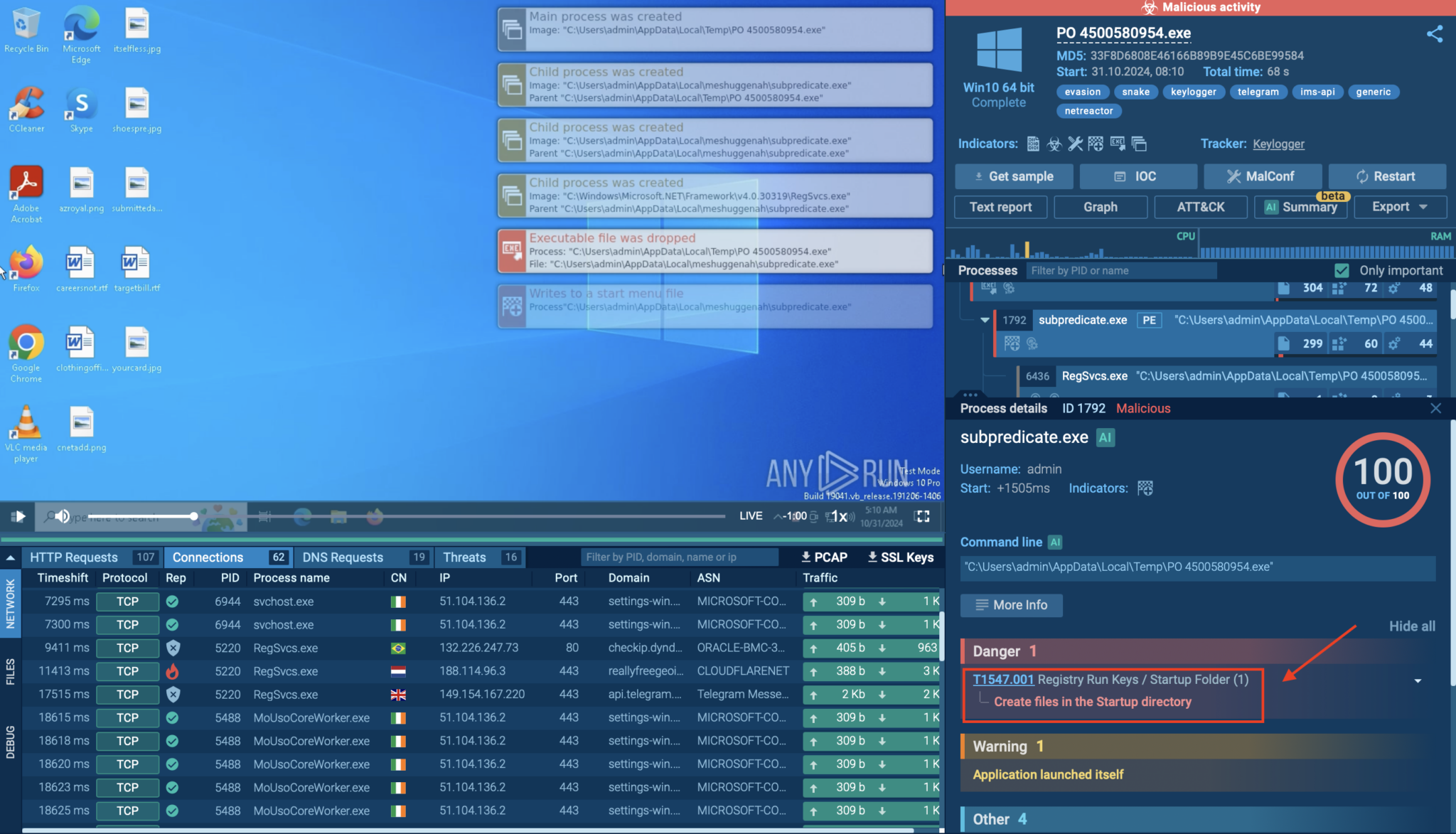
1. Startup Directory Execution – MITRE ATT&CK ID: T1547.001
Attackers often exploit the Windows Startup directory to achieve persistence. By placing malicious files in this folder, which is designed to automatically execute programs at login, malware ensures it launches every time the system boots up.
-
Why it works : Most users don’t check their Startup folder, allowing malware to operate unnoticed.

2. Registry Autorun Key Modification – MITRE ATT&CK ID: T1547.001
Malware can modify registry keys to ensure automatic execution upon system startup. By altering specific AutoStart Extension Points (ASEPs), attackers embed malware directly into the system’s boot process.
User-level keys targeted :
-
HKEY_CURRENT_USER\Software\Microsoft\Windows\CurrentVersion\Run -
HKEY_CURRENT_USER\Software\Microsoft\Windows\CurrentVersion\RunOnce
System-level keys targeted (requires admin privileges) :
-
HKLM\SOFTWARE\Microsoft\Windows\CurrentVersion\Run -
HKLM\SOFTWARE\Microsoft\Windows\CurrentVersion\RunOnce
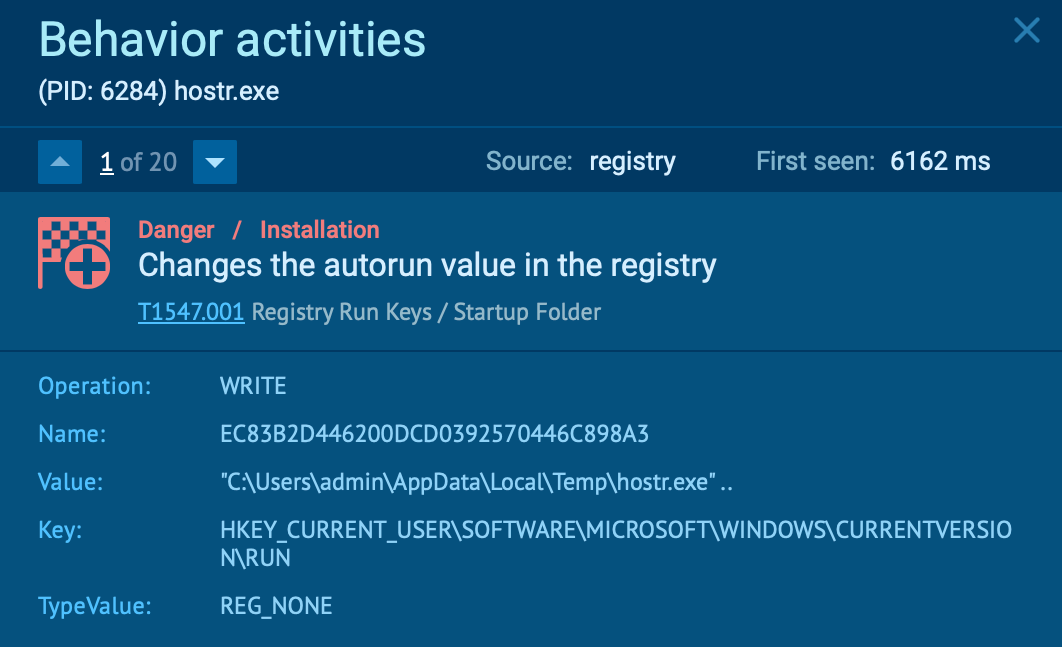
File execution in Startup folder
3. Logon/Logoff Helper Path Modification – MITRE ATT&CK ID: T1547.004
Windows uses registry “helper” paths to execute scripts or programs during user login or logoff. Attackers modify these paths to ensure their malware runs every time a session starts or ends.
Registry path targeted :
HKEY_LOCAL_MACHINE\Software\Microsoft\Windows NT\CurrentVersion\Winlogon
- Example : In this ANYRUN sandbox session Malware inserts itself into the helper sequence to relaunch at every logon.
4. Kernel Modules and Extensions (Linux)
MITRE ATT&CK ID: T1547.006
Linux systems are vulnerable to persistence mechanisms involving kernel modules. These modules run with root privileges and can be used to embed malicious code directly into the operating system’s core.
Attack process:
-
Malware gains root access.
-
The module hides its presence by modifying kernel-level functions.
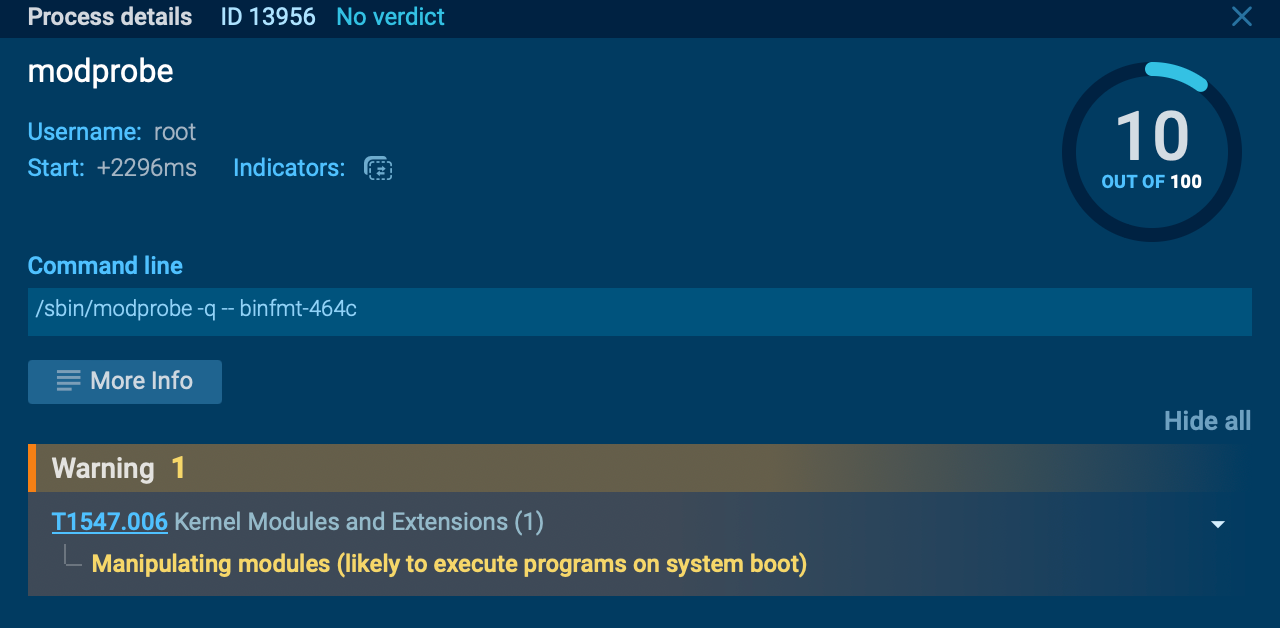
Why it’s stealthy : Standard antivirus tools operate at the user level and can’t detect kernel-level threats.
5. Office Application Startup – MITRE ATT&CK ID: T1137
Attackers target Microsoft Office’s startup features to execute malicious code whenever an Office application is launched. Two common methods include:
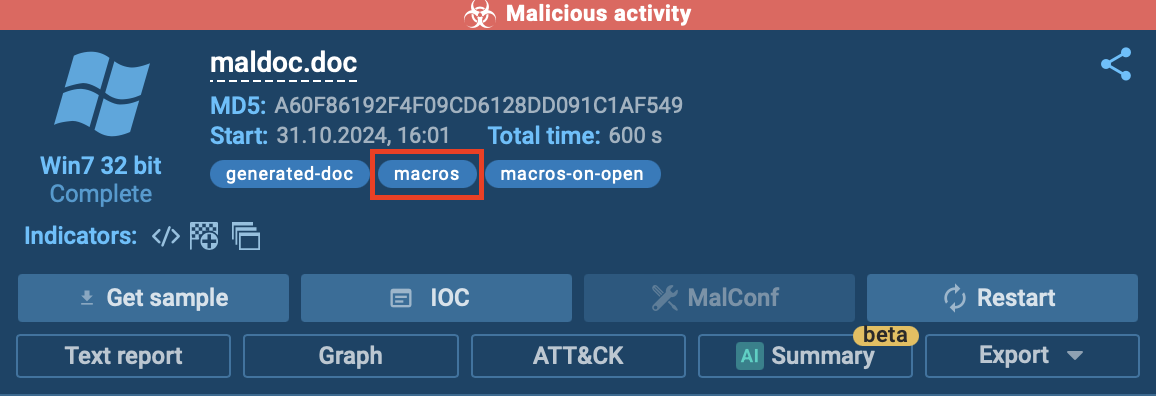
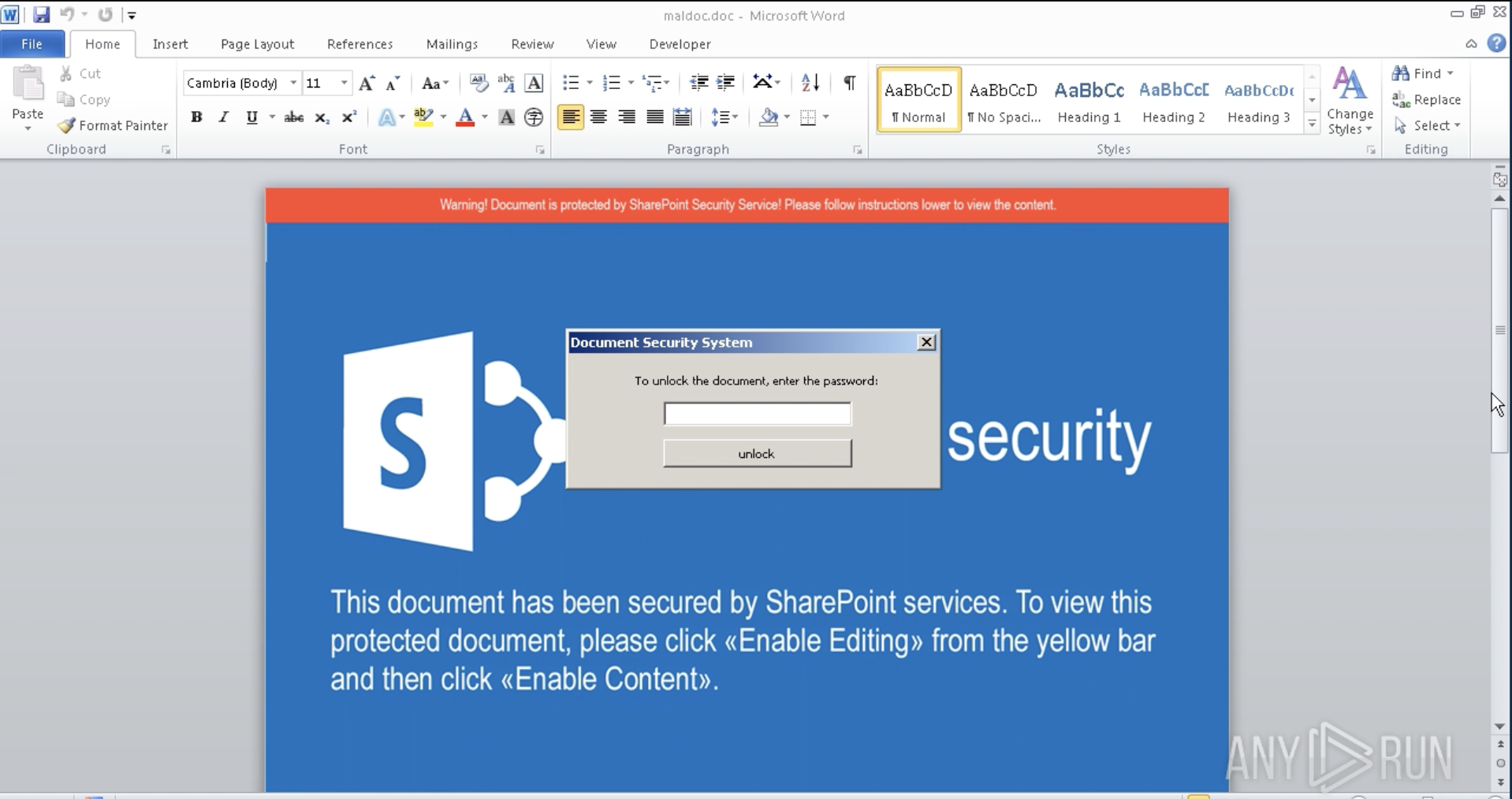
Similarly, attackers can place malicious add-ins in Office’s add-in directories, ensuring the code activates every time the application is opened. These methods provide persistent access and pose significant security risks.
6. Boot or Logon Initialization Scripts – MITRE ATT&CK ID: T1037
Attackers modify initialization scripts that run during system boot or user logon to maintain persistence. These scripts, often used for administrative functions, can be altered to execute malware.
-
Example : RC scripts in Linux systems are modified to include malicious code.
-
Why it’s effective : These scripts run automatically, ensuring malware launches without user intervention.
Persistence mechanisms are vital tools for attackers, ensuring malware remains active even after system restarts. From modifying registry keys to embedding malicious kernel modules, these techniques exploit legitimate system features to evade detection.