The longer it takes to confirm a threat, the longer the business stays exposed. Slow triage leaves SOC teams stuck between suspicious alerts and clear response decisions, giving malware, phishing attacks, and other threats more time to progress.
For CISOs and security leaders, this is no longer just an analyst productivity issue. It is a risk to containment speed, business continuity, and the organization’s ability to respond with confidence when an incident starts moving fast.
What Slows Down Triage in a Modern SOC?
Modern SOC teams struggle because each alert takes work to verify. Analysts need to connect scattered signals, understand real behavior, and decide whether the case can be closed, monitored, or escalated.
Common triage blockers include:
- Manual validation of suspicious files, URLs, emails, and indicators
- Switching between security tools
- Phishing chains with redirects, CAPTCHA pages, fake login screens, or payload delivery
- Raw logs and technical data that take time to interpret
- Limited visibility into what actually happens after execution
- Weak evidence for Tier 2 or incident response teams
- Too many escalations caused by unclear first-level findings
How Top SOCs Accelerate Triage Without Adding Overhead
The fastest SOC teams do not solve triage delays by adding more manual steps. They reduce the work needed to reach a confident decision.
Instead of asking analysts to collect evidence from multiple tools, rebuild attack flows, and write reports from scratch, they use workflows that make threat behavior visible early and turn investigation data into clear, usable output.
Here’s how you can implement this in your team, too:
1. Give Your Team Full Attack Visibility in a Safe Environment
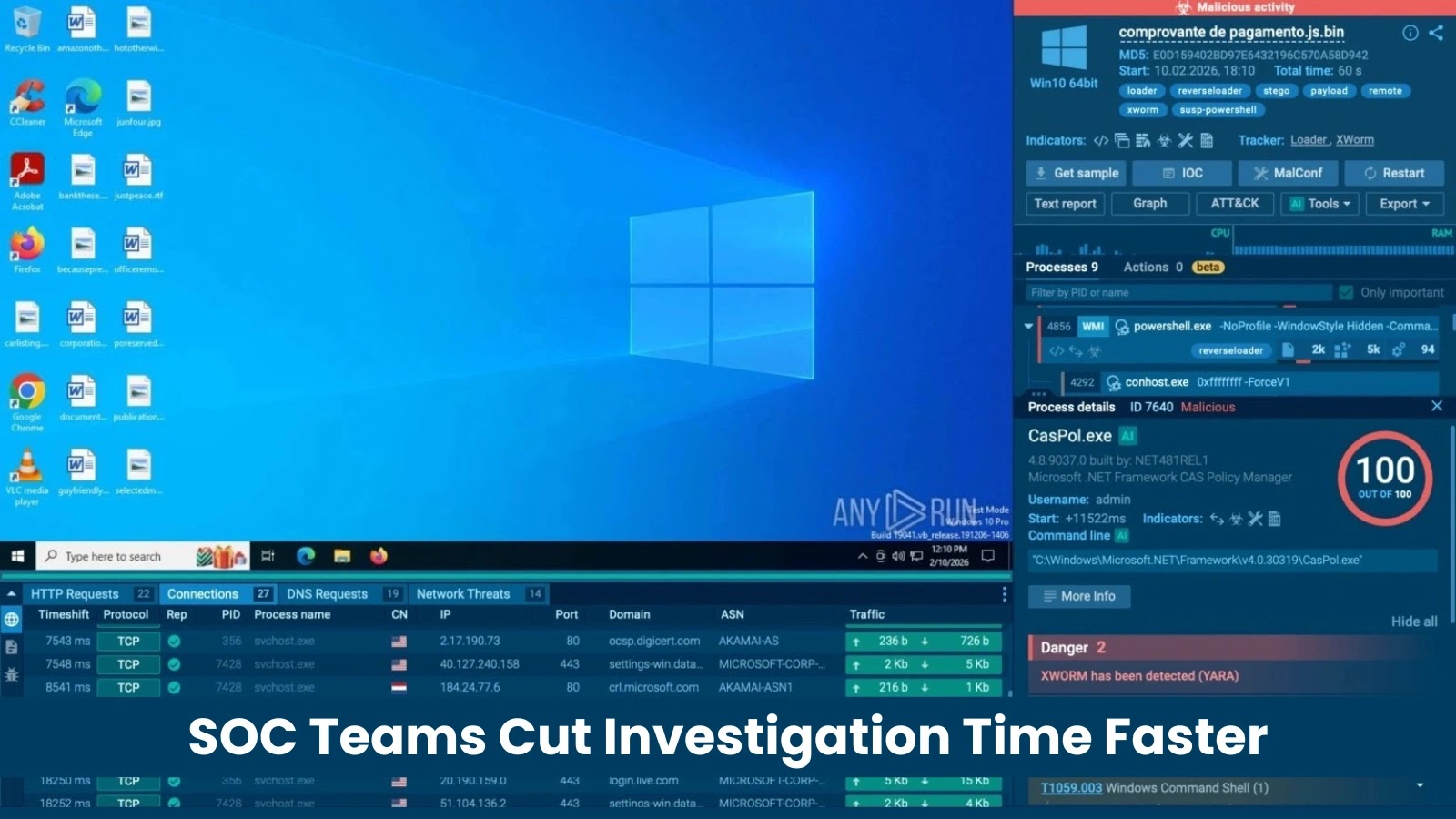
Instead of working with isolated indicators, your team can see and interact with the attack as it unfolds. Analysts can follow processes, network connections, redirects, dropped files, screenshots, command-line activity, and other evidence that helps confirm the risk faster.
This helps SOC teams:
- Validate suspicious files, URLs, and phishing pages faster with behavior-based evidence
- Reduce time spent switching between tools or manually rebuilding the attack flow
- Give Tier 1 analysts clearer evidence to decide whether to close, monitor, or escalate the case
2. Turn Sandbox Results into Clear, Response-Ready Reports
Fast triage depends on how quickly your team can turn technical findings into a clear decision. Even when the right evidence is available, analysts still need to explain what happened, why it matters, and what should happen next.
The impact for SOC leaders is clear:
- Less time spent on manual write-ups, screenshots, and scattered investigation notes
- Fewer weak escalations that force senior analysts to re-check the same case
- Faster response decisions because Tier 2, IR, and SOC managers receive cleaner evidence from the start
3. Add Threat Intelligence Context to Prioritize the Right Cases
Fast triage is not only about confirming whether something is malicious. SOC leaders also need their teams to understand how relevant the threat is to the business. Is it an isolated file? Part of a larger campaign? Seen in the same industry, region, or infrastructure type?
For SOC leaders, this means:
- Faster prioritization of threats that could create the highest business impact
- Stronger visibility into whether a case is isolated or part of broader malicious activity
- Better evidence for detection, hunting, blocking, escalation, and leadership-level risk discussions
Turn Faster Triage into Measurable Business Impact
Slow triage increases risk because every delayed decision gives threats more time to spread, hide, or create damage. But when SOC teams can validate suspicious files, URLs, and phishing attacks faster, they shorten the path from alert to evidence, escalation, and response.
- 94% of users report faster triage during suspicious file, URL, and phishing investigations
- 21 minutes reduction in MTTR per case, helping teams move faster from detection to containment
- 30% reduction in Tier 1 to Tier 2 escalations, protecting senior analyst capacity
For SOC leaders, this is the real value of faster triage: fewer delays, cleaner evidence, better use of expert time, and stronger readiness when a real incident requires fast action.