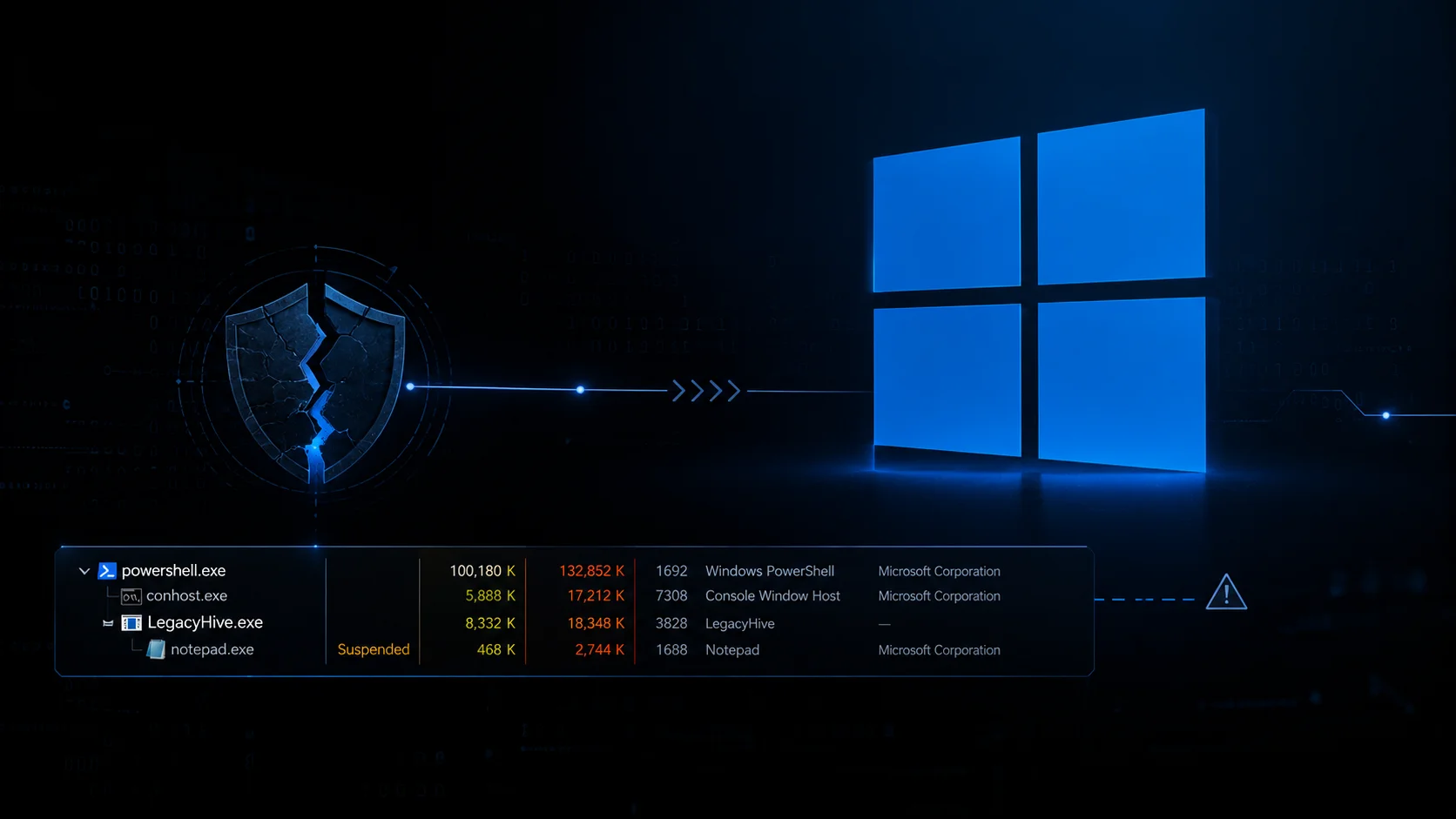
A newly disclosed exploit dubbed LegacyHive is raising alarms across the cybersecurity community after researchers confirmed it executes successfully on fully patched Windows systems running the July 2026 Patch Tuesday updates.
Unlike conventional exploits that rely on memory corruption or unpatched software bugs, LegacyHive takes a structural approach. It abuses how Windows initializes user profiles and loads registry hives during the logon sequence.
LegacyHive Exploitation Chain Bypasses Windows Security
Security teams at LevelBlue, specifically the OpsIntel CTI and Threat Operations and Research (THOR) groups, independently reproduced the full attack chain to verify the proof-of-concept (PoC) behavior.
Their technical breakdown reveals a technique that blends legitimate, built-in Windows APIs in an illegitimate sequence, making it exceptionally difficult to flag using standard signature-based detection models.
The attack initiates from a low-privileged user account that possesses credentials for a secondary “helper” account. Rather than exploiting a driver or kernel flaw, LegacyHive manipulates the Windows NT Object Manager, a low-level namespace underneath the standard Win32 API that most desktop applications never interact with directly.
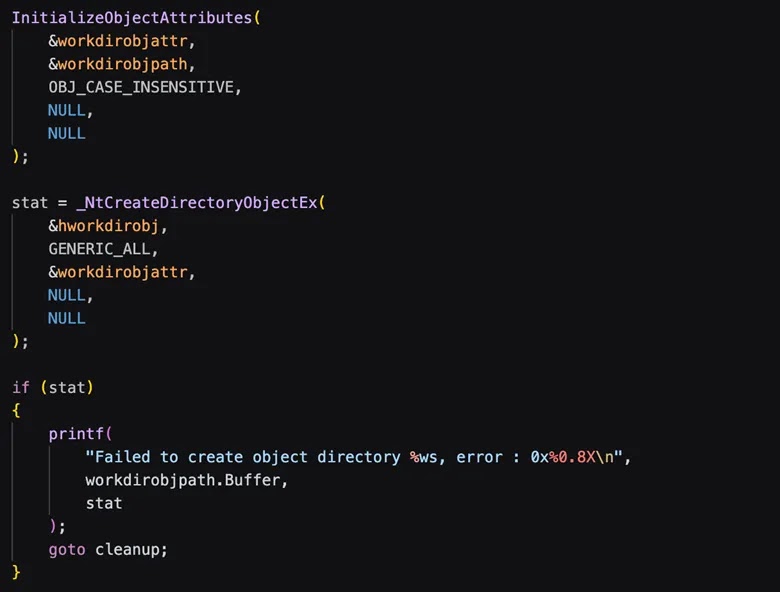
Using native low-level functions such as NtCreateDirectoryObjectEx and NtCreateSymbolicLinkObject, the exploit constructs a hidden directory hierarchy and symbolic links designed to redirect critical file path resolutions later in the execution flow.
Next, the attacker modifies the helper account’s ntuser.dat registry hive while it is offline using Microsoft’s native Registry Offline API.
This modification alters the Local AppData environment path so that it points directly into the attacker-controlled Object Manager namespace rather than the user’s authentic profile directory.
As highlighted in the LevelBlue threat analysis, every individual API call used during this stage is legitimate, allowing the payload modification to bypass traditional endpoint security controls without generating obvious flags.
To ensure Windows ingests this manipulated configuration at the precise moment during authentication, LegacyHive implements a timing mechanism using a batch opportunistic lock (oplock) placed on UsrClass.dat.
This lock forces the operating system to pause profile initialization at a controlled stage, effectively hijacking Windows’ own internal synchronization mechanisms rather than racing against them.
The attacker triggers a full profile load using CreateProcessWithLogonW configured with the LOGON_WITH_PROFILE flag.
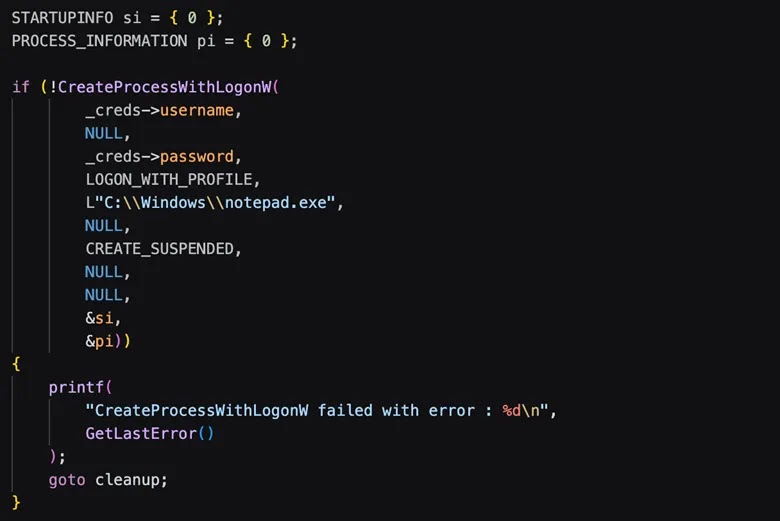
This forces Windows to load the tampered hive and activate the redirected paths under the secondary account’s context.
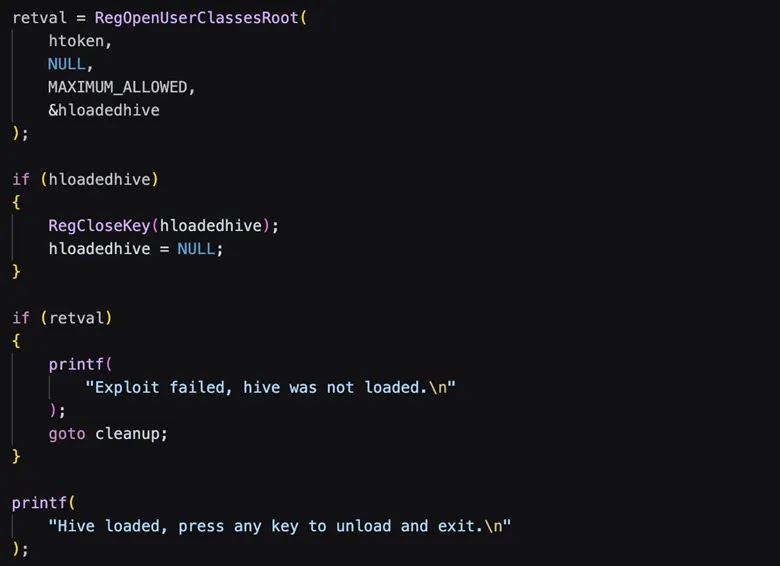
A validation check via RegOpenUserClassesRoot confirms whether the redirection succeeded. Temporary staging files are cleaned up immediately afterward, but the persistent registry alterations and Object Manager symbolic links remain active.

| Attack Lifecycle Stage | Native Mechanism / API Abused | Operational Objective |
| Namespace Staging | NtCreateDirectoryObjectEx / NtCreateSymbolicLinkObject | Construct redirected symbolic links in kernel namespace. |
| Hive Tampering | Registry Offline API | Alter Local AppData path in ntuser.dat. |
| Execution Delay | Batch Opportunistic Lock (oplock) | Pause UsrClass.dat loading to synchronize path swap. |
| Profile Ingestion | CreateProcessWithLogonW (LOGON_WITH_PROFILE) | Force Windows to consume the redirected registry hive. |
| Access Verification | RegOpenUserClassesRoot | Confirm successful profile hijack and clean up artifacts. |
Detection Strategies and Defensive Guidance
Defenders evaluating Windows security posture must account for these non-traditional escalation vectors. Security operations centers (SOCs) should correlate behavioral telemetry rather than relying on static file signatures, especially when auditing recent patch Tuesday updates across enterprise endpoints.
Key behavioral detection indicators include:
- Anomalous AppData Paths: Monitor for
Local AppDataregistry keys referencingBaseNamedObjectsor kernel-level namespaces. - Off-Path Hive Access: Flag non-standard processes attempting to read, overwrite, or copy
ntuser.datorUsrClass.datoutside standard system locations. - Cross-Account Activity: Detect rare combinations where NT Object Manager API calls occur in close temporal proximity to cross-account profile loading events (
LOGON_WITH_PROFILE).
Because the public proof-of-concept currently requires valid helper account credentials, LegacyHive primarily acts as a post-compromise privilege escalation tool.
However, security teams should prepare for future iterations that may swap out individual components while retaining the core architectural redirection strategy to exploit windows privilege escalation flaws across domain environments.