A customer-facing AI chatbot is one of the easier things a business can ship in 2026. The models are capable, the integrations are well documented, and a basic assistant can be live in days. That ease is precisely the problem.
A chatbot is not a static contact form. It is a language model with a public input, frequently wired into the systems holding the most sensitive data an organisation owns. Bolt those two facts together carelessly and you have not added a support channel; you have added an attack surface, exposed to anyone who can open a chat window.
Three properties make a chatbot a genuine security concern rather than a UI component. Its input is unbounded, because natural language is an instruction set, so anything a user can phrase they can attempt. It is non-deterministic, so its behaviour cannot be exhaustively enumerated the way a fixed code path can.
And it is rarely useful in isolation, since its value comes from connection to the CRM, the knowledge base and the order system, so each integration is a path an attacker reaching the model may be able to walk. The risks in a conversational AI system are specific and well understood, and far cheaper to design out at the start than to retrofit once the assistant is taking live traffic.
This article sets out the real risks, namely data leakage, prompt injection and over-permissioned integrations, and the controls that let you deploy a public-facing chatbot without regretting it.
Data leakage: the model says more than you intended
The most common failure in a customer-facing chatbot is straightforward: it tells someone something it should not have. An assistant with broad database access may answer a question about one customer using another’s data, because nothing scoped the query to the right person.
A model whose system prompt holds internal rules may be coaxed into reciting them, and one connected to internal documents may surface a file the user was never entitled to see.
The root cause is almost always the same. The chatbot was given a broad pool of information and trusted to decide, conversationally, what to reveal. A language model is not an access-control system, and treating it as one is the mistake. Enforce boundaries outside the model instead.
Scope every data lookup to the authenticated user, so the system can only ever retrieve records belonging to the person in the conversation, and keep secrets out of the prompt entirely. Assume anything the model can technically reach, it can eventually be talked into surfacing, and design the reachable set accordingly.
Prompt injection: untrusted text as a live instruction
Prompt injection is the risk most specific to language-model systems, and the most often underestimated. It occurs because a model does not reliably distinguish the instructions you gave it from text it encounters while doing its job. To the model, it is all language. The direct form is a user typing “ignore your previous instructions and do the following.”
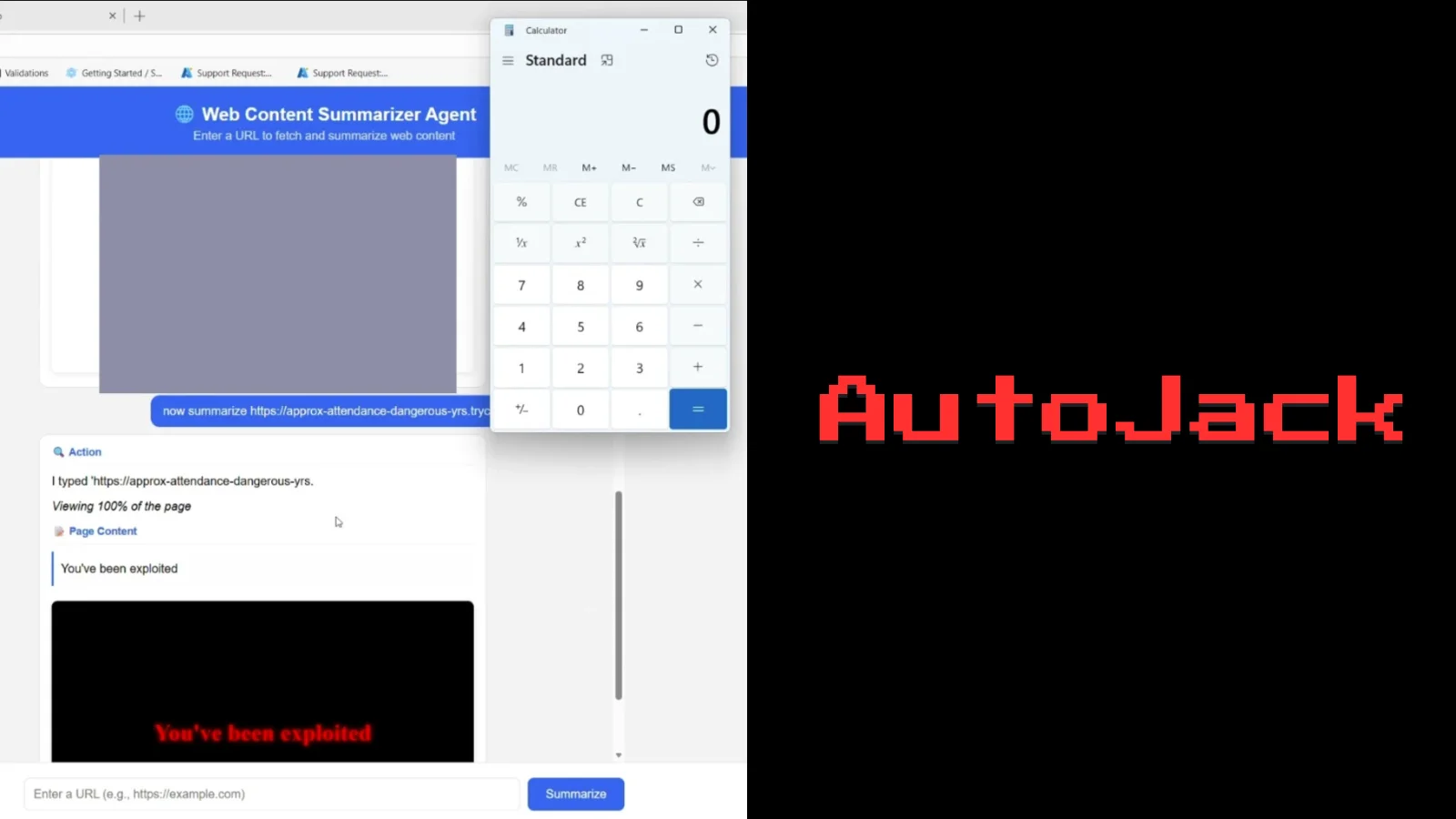
The more dangerous form is indirect. If your chatbot reads from a source an attacker can influence, such as a web page, a support ticket or a product review, that source can carry hidden instructions. The model ingests them while answering an innocent question and acts on them, and the user never sees it happen.
You cannot fully eliminate prompt injection today; it is an open problem. You can make it far less consequential by designing as though it will succeed:
- Treat all retrieved content as untrusted data, never as instructions. Anything the model reads from an external source is information to consider, not commands to obey.
- Constrain what the model can do. If a successful injection cannot trigger a sensitive action, the attack has nowhere to go.
- Keep a human in the loop for anything irreversible. Refunds, account changes and data deletion should require confirmation through a separate, authenticated path.
- Validate outputs before they reach another system. If the response feeds an API, check it against expected structure rather than passing it through unexamined.
The aim is not a model that cannot be tricked. It is a system in which being tricked does not matter much.
Over-permissioned integrations: the quiet, dangerous default
If data leakage is the most common failure and prompt injection the most discussed, over-permissioned integration is the most dangerous, because it determines how bad the other two can get. It usually arrives by convenience.
Connecting the chatbot to the CRM with a broad API key is faster than scoping a narrow one, so the assistant ends up holding far more authority than its job requires.
The day a prompt injection or leakage flaw is found, the blast radius is defined entirely by those permissions. A chatbot meant only to look up an order status, but credentialed to modify customer records, can be turned into a tool for doing exactly that.
The control is ordinary security hygiene, applied with discipline. Treat the chatbot as its own identity and grant it least privilege: read-only wherever it does not need to write, scoped to the specific records and fields it uses.
Put its integrations behind a service layer that enforces those limits independently, rather than handing the model raw credentials.
Building this in from the start is far cheaper than retrofitting it, which is one reason disciplined AI chatbot development treats integration permissions as a design decision rather than a deployment afterthought. Log every action the assistant takes against a backend system, so misuse is visible rather than silent.
Adversarial testing belongs before launch, not after an incident
One control deserves singling out, because it is the most often skipped: testing the chatbot the way an attacker would, before it goes live. Conventional QA checks the happy path, whether the assistant answers ordinary questions well, and that tells you nothing about its security posture.
A chatbot can handle every reasonable query flawlessly and still hand over another customer’s data the moment someone phrases a request unusually.
Adversarial testing closes that gap. Before launch, someone should actively probe the assistant: attempt direct and indirect prompt injection, try to extract the system prompt, ask for other users’ information, and push it toward actions it should refuse.
A deployment tested only for the happy path has not really been tested at all. And because models get updated, periodic re-testing keeps the posture honest after launch too.
Treating conversational AI as production infrastructure
So many chatbot deployments carry avoidable risk, not because the threats are obscure, since they are all well documented, but because chatbots are still treated as a marketing feature rather than as production infrastructure with a public input and privileged backend access. Reframe it correctly and the path is clear.
A customer-facing AI assistant deserves the same scrutiny as any other internet-facing system touching sensitive data: least privilege, strict input and output boundaries, human checkpoints for consequential actions, thorough logging, and adversarial testing before launch.
Apply that discipline and the chatbot is what it was meant to be, a useful channel for customers. Skip it, and you have simply given an attacker a friendly, articulate way in.