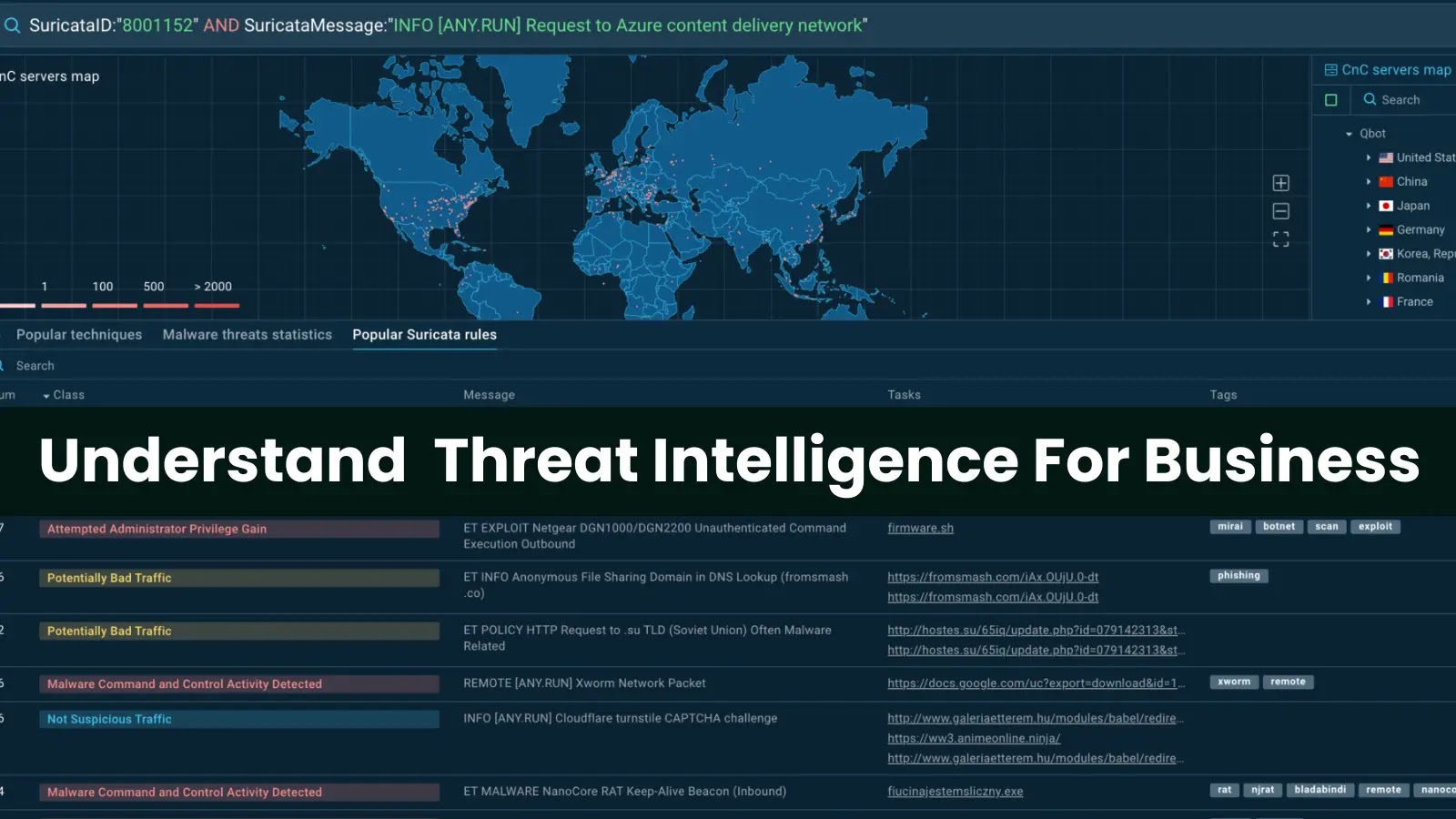

As a business owner, you’ve likely invested in various security tools such as SIEMs, antivirus software, and IDS/IPS systems.
You may also have a dedicated cybersecurity team, like a SOC (Security Operations Center) or a DFIR (Digital Forensics and Incident Response) team.
However, are your teams equipped to go beyond merely reacting to cybersecurity incidents? If your company underutilizes threat intelligence, the answer is probably no.
Understanding Cyber Threat Intelligence
Cyber threat intelligence(CTI) involves collecting, analyzing, and interpreting data on potential or current cybersecurity threats.
It helps organizations detect and prevent cyberattacks by offering insights into adversaries’ tactics, techniques, and procedures (TTPs).
CTI covers a wide range of activities, from identifying malware variants to monitoring trends in cybercrime, using specialized tools to protect against evolving threats.

Types of Threat Intelligence Tools
Here’s a table summarizing the primary uses and consumers of various threat intelligence tools:
The Importance of Threat Intelligence
Without threat intelligence tools, your teams are essentially flying blind. Consider a situation where a suspicious artifact appears in your system logs, like an unfamiliar IP address.
Without threat intelligence, your SOC team cannot quickly identify and address it. Manual research will be needed, which takes time—time you can’t afford to lose during an active attack.
Benefits of Threat Intelligence
Benefit Description Reducing the Risk of Successful Cyberattacks Real-time threat intelligence feeds help SOC teams anticipate and block emerging threats, reducing attack success rates. Preventing Financial Loss Early detection of phishing, fraud, and data exfiltration helps prevent costly breaches, regulatory fines, and legal fees. Improving Security Operations Allows SOC teams to prioritize high-risk alerts, reducing false positives and improving the efficiency of threat detection. Managing Vulnerability More Accurately Helps the vulnerability management team prioritize patches by focusing on vulnerabilities being actively exploited. Refining Risk Analysis Provides a dynamic, real-time view of the threat landscape, aiding better resource allocation and incident response. Improving Threat Hunting Capabilities Understanding attackers’ TTPs helps security teams proactively search for and mitigate potential threats before escalation. Learning from Real-World Examples Access to real-world threat analysis and malware behavior improves defenses and informs better response strategies.
This expanded table includes specific details for each point, providing a balanced overview of each benefit.
Enhancing Defense with Threat Intelligence Lookup
This service helps your team gain a clearer understanding of cybersecurity threats, leading to faster and more informed responses.
Key Features of TI Lookup
Key benefits of implementing TI Lookup:
Instant Context: Quickly links indicators like IP addresses and file hashes to known threats, speeding up response times and reducing incident risks.
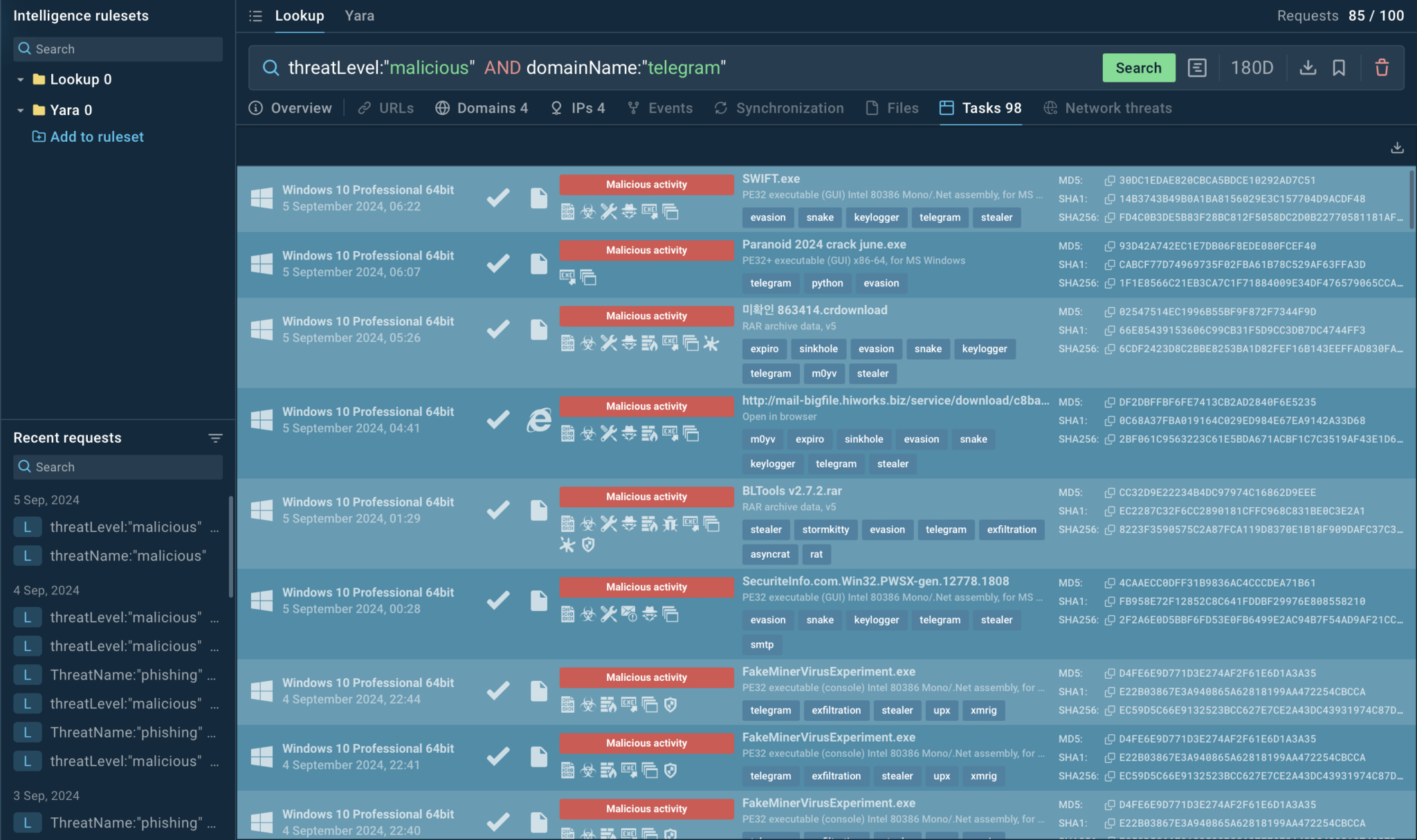
Advanced OS Artifacts: Provides deeper visibility into command lines, registry changes, and mutexes for thorough threat investigation.
Malware Detection with YARA: Uses YARA rules to detect malware variants, identifying similar malicious files in your infrastructure.
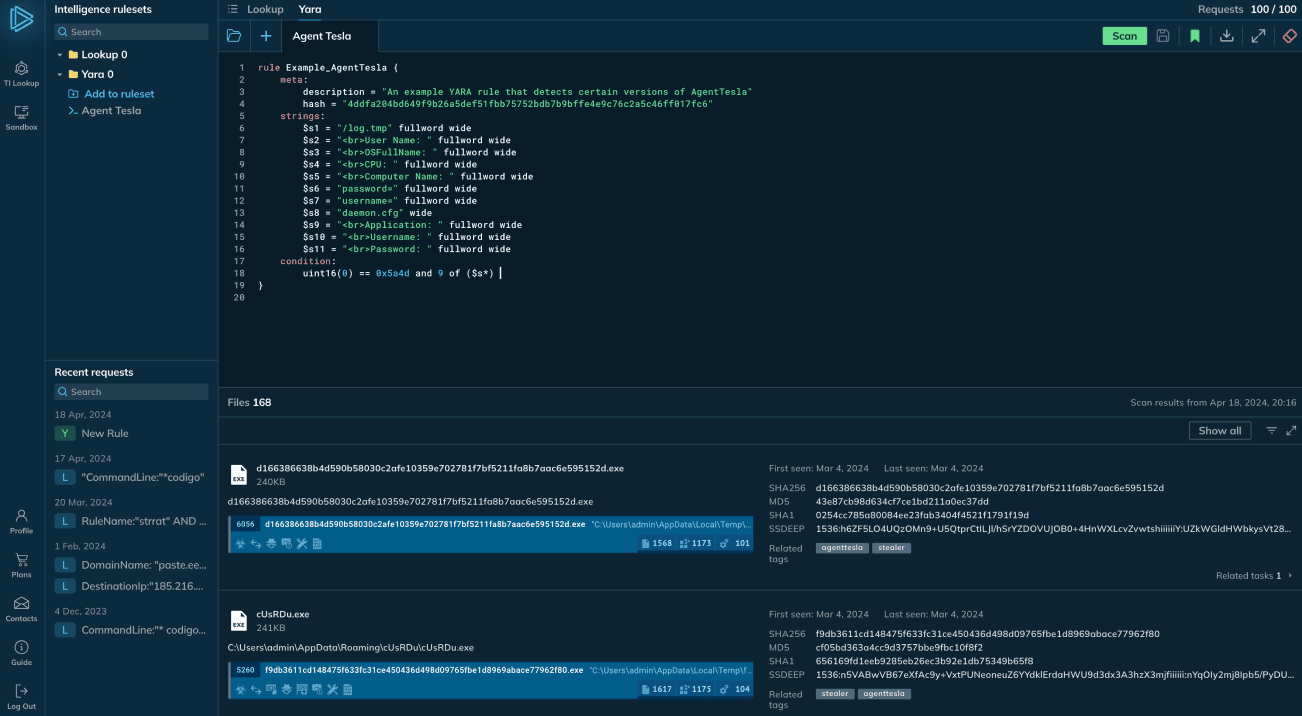
Suricata Network Protection: Integrates Suricata rules to detect malicious network traffic and enhance defense strategies.
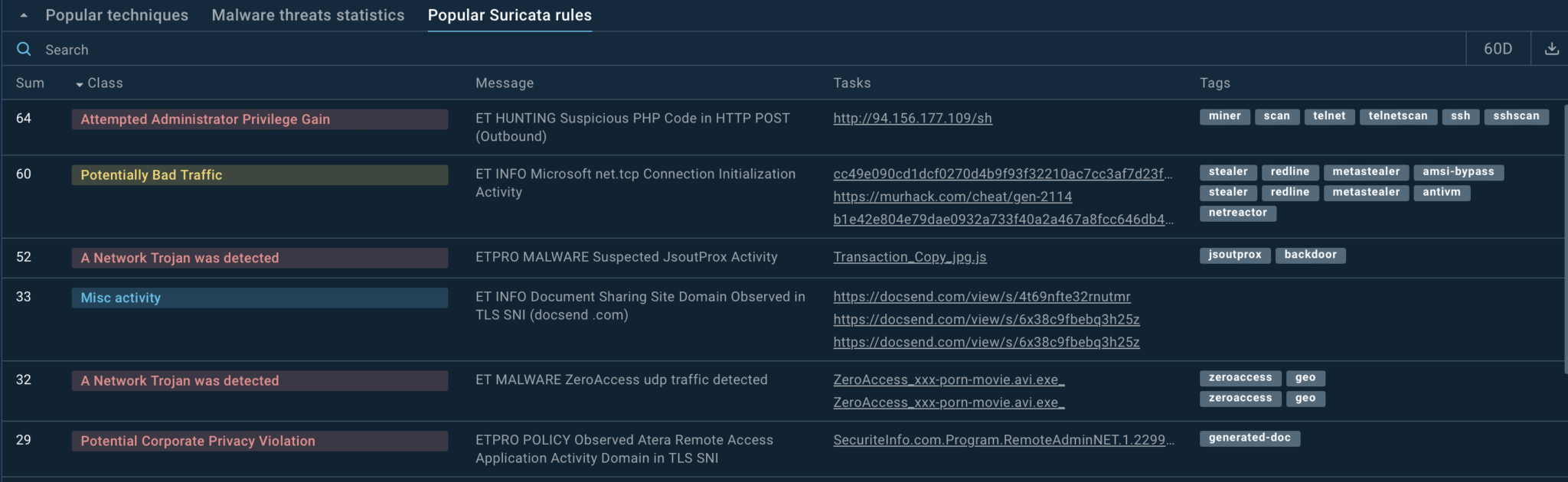
Real-World Threat Intelligence: Offers live, actionable intelligence for faster decision-making and threat mitigation.
C2 Locations Lookup: Tracks Command and Control (C2) servers, enabling geographic filtering and malware family analysis.
Malware Popularity Tracking: Monitors real-time trends in malware, helping you adjust defenses based on regional and threat-specific insights.
Threat intelligence offers numerous business benefits, including reducing the risk of successful attacks, preventing financial losses, boosting security operations efficiency, enabling precise vulnerability management, and enhancing risk analysis.